
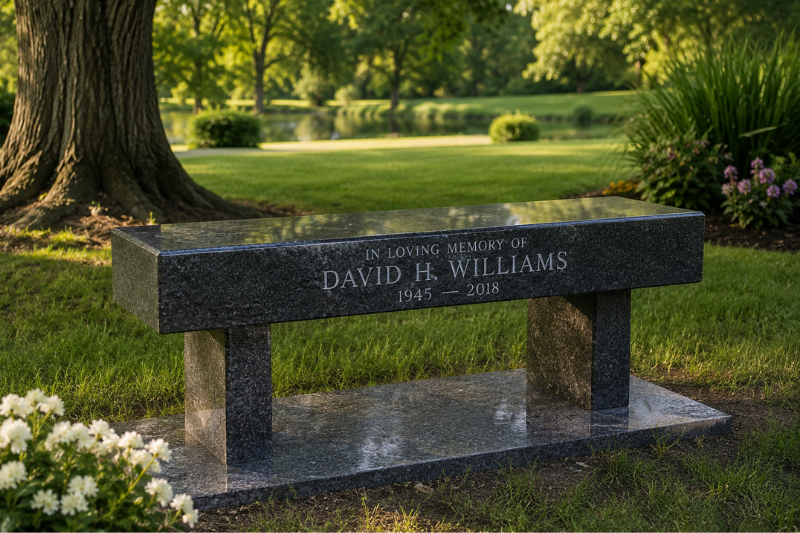
A cemetery bench usually costs $2,000 to $6,000 for a standard granite memorial bench, while larger custom benches, cremation benches, and family estate benches can range from $6,000 to $20,000 or more depending on common headstone cost factors, including material, size, engraving, cemetery fees, foundation requirements, and installation.
That wide range exists because a cemetery bench is not simply outdoor seating. In most cemeteries, it is a permanent memorial structure that must meet cemetery regulations, withstand decades of weather, sit safely on a proper foundation, and often serve as both a place of reflection and a marker for a loved one’s grave.
Key Takeaways
- Most cemetery benches cost between $2,000 and $6,000, but custom and cremation designs can cost much more.
- Granite is the most common cemetery bench material because it is durable, engravable, and accepted by many cemeteries.
- Installation, cemetery permits, foundations, and setting fees can significantly affect the final price.
- Cemetery rules determine whether a bench is allowed, where it can be placed, and what size or style is acceptable.
- Online bench prices may exclude engraving, delivery, cemetery coordination, foundation work, and installation.
How Much Does a Cemetery Bench Cost?
Most cemetery bench prices fall into a broad range because the final cost depends on the bench type, stone, personalization, and cemetery requirements. A simple granite bench may begin around the low thousands, while larger personalized benches can move into the mid-thousands. Custom bench headstones, cremation benches, and family estate benches can cost considerably more.
Several monument providers list standard granite bench pricing in the approximate $2,000 to $5,000 range, with more elaborate designs exceeding that amount. Most standard granite memorial benches commonly range from $2,000 to $5,000 or more, depending on size, design, and customization. Another cemetery bench portfolio describes simple gray granite bench memorials as starting around $1,500, while recommending $3,000 to $6,000 for more personalized bench memorials and higher budgets for bench headstones or family designs.
Average Cemetery Bench Price Range
A practical pricing breakdown looks like this:
| Cemetery Bench Type | Typical Cost Range |
|---|---|
| Simple granite cemetery bench | $2,000 to $4,000 |
| Personalized granite memorial bench | $3,000 to $6,000 |
| Bench headstone | $5,000 to $12,000 |
| Cremation bench | $7,000 to $20,000+ |
| Family estate bench | $10,000 to $40,000+ |
| Highly custom sculptural bench | $15,000 to $50,000+ |
These ranges are general planning figures. The actual quote can be lower or higher depending on the cemetery, the granite color, the size of the lot, the amount of engraving, the foundation requirement, and whether the cemetery or monument company handles installation.
Why Cemetery Bench Pricing Varies So Much
Two benches that look similar in a photo may have very different prices. One may be a basic granite bench delivered to a commercial address with no cemetery work included. Another may include cemetery verification, a design proof, engraving, granite supports, doweling, a reinforced foundation, delivery to the cemetery, setting, and coordination with cemetery staff.
That distinction matters. Cemetery memorials are governed by cemetery rules, and many cemeteries have specific requirements for size, material, placement, foundation depth, and installation. Memorial bench descriptions often emphasize that cemetery approval should happen before production, because benches must match the cemetery’s permitted styles, colors, dimensions, and placement rules.
Cemetery Bench Cost at a Glance
For most families, the realistic question is not “What is the cheapest bench online?” but “What will a cemetery-approved bench cost once it is engraved, delivered, approved, installed, and set on a proper foundation?”
A low advertised price may only reflect the stone bench itself. The complete project may also include:
- Cemetery approval
- Design layout
- Names, dates, and inscription
- Religious or personal emblems
- Granite color selection
- Polishing and finishing
- Delivery
- Concrete foundation
- Setting fee
- Installation labor
- Long-term warranty or service terms
What Is a Cemetery Bench?
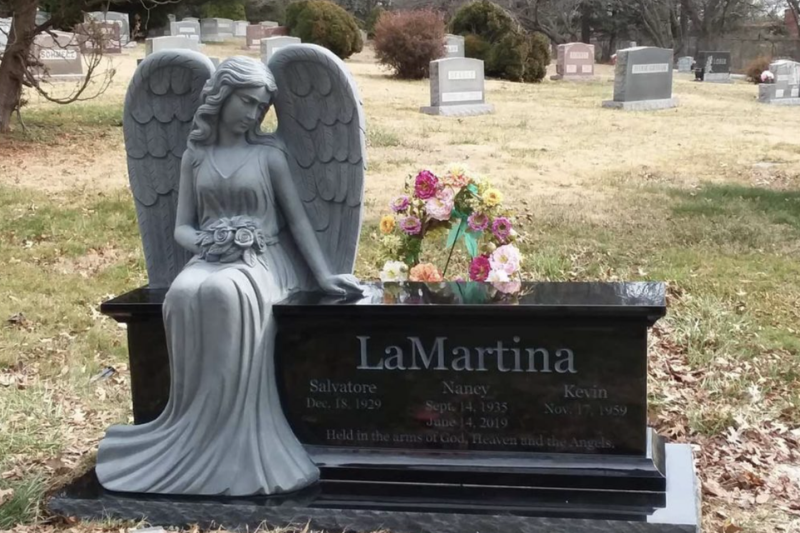
A cemetery bench is a permanent memorial seat placed in a cemetery, usually made of granite, marble, or another durable material. It may mark a grave, accompany a headtone, sit within a family estate lot, or provide a place for visitors to sit, pray, remember, and spend quiet time.
Unlike a park bench, a cemetery bench is usually treated as a memorial monument. It must be made from cemetery-approved materials and installed according to cemetery rules.
Memorial Bench vs. Bench Headstone
A memorial bench is a bench placed in memory of a loved one. It may be located near a grave, in a family estate, along a cemetery path, or in a designated memorial area.
A bench headstone is more specific. It functions as the primary grave marker or monument. It may include the loved one’s name, birth date, death date, epitaph, religious symbols, family name, and sometimes cremation compartments.
Bench headstones generally cost more than simple memorial benches because they use more stone, require more design planning, and may need to meet the same rules as upright monuments.
Cemetery Bench vs. Park Memorial Bench
A cemetery bench and a park memorial bench are not the same.
A park bench may be made of metal, wood, recycled material, or concrete. It may include a small plaque and be installed through a municipal donation program.
A cemetery bench is typically made from granite or another stone material and may include full memorial engraving. It must be stable, permanent, and compatible with cemetery maintenance equipment. For that reason, cemetery benches often require more design review and a stronger foundation than public park benches.
When a Bench Can Replace or Complement a Headstone
In some cemeteries, a bench can serve as the main memorial. In others, it may only be allowed on larger family lots, estate sections, cremation gardens, or special memorial areas.
A bench can also complement a traditional headstone. When choosing a memorial, families sometimes select a headstone at the grave and a bench nearby for reflection. Others choose a family bench to visually connect multiple graves within one lot.
Main Types of Cemetery Benches and Their Costs
The type of bench has one of the largest effects on cost. A simple two-leg granite bench is very different from a custom family bench with polished panels, carved emblems, and cremation chambers.
Standard Granite Cemetery Bench
A standard granite cemetery bench is usually made from a granite seat supported by two granite legs. It may have a flat seat, polished top, simple inscription, and basic design.
Typical cost: $2,000 to $4,000
This is often the most affordable cemetery-appropriate bench style. It provides seating and a memorial presence without the complexity of a full bench headstone or cremation bench.
Common features include:
- Granite seat and supports
- Polished or partly polished finish
- Basic name and date engraving
- Short epitaph
- Simple emblem
- Cemetery-approved dimensions
Personalized Memorial Bench
A personalized memorial bench includes more detailed engraving, a larger inscription area, custom emblems, decorative panels, shaped legs, or special granite colors.
Typical cost: $3,000 to $6,000
This range is common when families want the bench to feel more personal but do not need a highly complex structure. Personalization may include religious symbols, floral carvings, family names, meaningful quotes, military emblems, or artwork.
Bench Headstone
A bench headstone functions as both a bench and a grave marker. It is usually larger, more formal, and more visually prominent than a basic memorial bench.
Typical cost: $5,000 to $12,000
Bench headstones may include upright-style inscription panels, a family name, companion inscriptions, individual name panels, or a larger polished backrest. Custom bench headstones can cost significantly more, especially if they are part of a family lot or estate design.
Cremation Bench
A cremation bench is designed to hold cremated remains inside one or more sealed compartments. It may be used in a cremation garden, family lot, or cemetery section that permits above-ground cremation memorialization.
Typical cost: $7,000 to $20,000+
Online granite bench catalogs show cremation benches starting much higher than standard bench models, with some multi-compartment cremation benches listed in the high-thousands to nearly $20,000 range.
Cremation benches cost more because they require additional engineering, internal chambers, secure closures, and cemetery approval for cremated remains.
Family Estate Bench
A family estate bench is part of a larger memorial setting. It may be placed within a private family lot, surrounded by coping, walkways, ledgers, monuments, landscaping, or multiple grave spaces.
Typical cost: $10,000 to $40,000+
In larger estate designs, the bench is only one element of the total memorial. Costs may include granite paving, borders, ledgers, upright monuments, family name features, multiple inscriptions, and extensive installation work.
Custom Sculptural Bench
A custom sculptural bench may include carved wings, hearts, books, religious forms, curved seats, custom supports, statues, bas-relief carving, portrait etching, or architectural details.
Typical cost: $15,000 to $50,000+
These designs require more design time, heavier stone, more fabrication labor, and careful cemetery coordination. They are most common in family estate sections or cemeteries that allow custom monuments.
Cemetery Bench Materials and Price Differences
Material affects cost, appearance, longevity, engraving quality, and cemetery approval. The most common cemetery bench material is granite, but marble, bronze accents, and other materials may appear in certain settings.
Granite Cemetery Benches
Granite is the standard choice for cemetery benches because it is strong, weather-resistant, and suitable for engraving. It comes in many colors, including gray, black, red, pink, blue, mahogany, and other regional or imported varieties.
Granite is favored because it can withstand freeze-thaw cycles, rain, sun, and cemetery maintenance conditions. It can be polished, steeled, honed, sandblasted, carved, or laser etched.
Granite prices vary by:
- Color
- Quarry origin
- Availability
- Thickness
- Polish level
- Shape
- Shipping weight
- Custom carving
Classic gray granite is often more affordable than premium black, blue, red, or specialty imported colors. Granite memorial cost varies by type, size, color, carving complexity, and special features such as laser-etched photographs, non-English characters, custom artwork, emblems, and special-order finishes.
Marble Cemetery Benches
Marble has a softer, traditional appearance and has been used in cemeteries for centuries. It can look elegant, especially in historic cemetery settings.
However, marble is more porous than granite and usually weathers faster outdoors. In many climates, inscriptions can soften over time as marble is exposed to rain, pollution, biological growth, and freeze-thaw conditions.
Typical cost: similar to or higher than granite, depending on the type and availability.
Some cemeteries restrict marble because of long-term maintenance concerns. When marble is allowed, it may be chosen for historic matching, religious design, or aesthetic reasons.
Bronze Elements and Plaques
Bronze is commonly used for plaques, emblems, military markers, or decorative panels on granite benches. A bronze plaque can add detail and contrast, especially when the cemetery requires bronze memorials or when a family wants raised lettering.
Bronze can increase cost because it requires casting, finishing, mounting, and sometimes a granite base. Bronze grave markers are often priced separately from granite memorials, and bronze-on-granite memorials can cost more depending on size and design.
A cemetery bench may include:
- Bronze name plaque
- Bronze military emblem
- Bronze religious symbol
- Bronze portrait medallion
- Bronze dedication plate
Concrete, Wood, and Metal Benches
Concrete, wood, and metal benches are more common in parks, gardens, and civic memorial programs than in traditional cemetery grave sections.
Some cemeteries may allow metal benches in designated areas, but many grave sections require granite or bronze because those materials are permanent, uniform, and compatible with cemetery maintenance practices.
Wood is usually not ideal for cemetery grave memorials because it decays, requires ongoing care, and may not meet permanence requirements.
Best Material for Long-Term Cemetery Use
For most families, granite is the best cemetery bench material. It offers the strongest balance of durability, cost, personalization, cemetery acceptance, and long-term appearance.
A well-made granite cemetery bench can last for generations when properly installed and maintained.
What Affects the Cost of a Cemetery Bench?
A cemetery bench quote is shaped by many details. Understanding these factors helps families compare quotes fairly.
Size and Weight
Larger benches cost more because they require more stone, heavier supports, more labor, larger foundations, and more careful installation.
A small bench may be suitable for a cremation garden or compact memorial space. A large companion or family bench may span a wider lot and require more structural planning.
Weight also matters. Granite benches can weigh hundreds of pounds. One listed granite bench model describes a 5-foot bench with granite supports and a total weight of approximately 575 pounds. Larger benches can weigh much more.
Granite Color and Origin
Granite color can significantly change the price. Common gray granite is often the most economical. Premium black granite, blue pearl, red granite, mahogany tones, and special imported stones usually cost more.
Color also affects engraving visibility. Light gray granite works well with traditional sandblasted lettering. Dark granite is excellent for laser etching and high-contrast designs.
Shape, Polish, and Finish
A simple rectangular bench with straight supports costs less than a curved, carved, or sculptural bench.
Finishes can include:
- All-polished surfaces
- Polished top with rock-pitched edges
- Honed or steeled finish
- Rough natural edges
- Carved panels
- Rounded corners
- Custom-shaped legs
More polishing and shaping require more labor, which increases cost.
Engraving, Lettering, and Emblems
Most cemetery benches include at least a name, dates, and a short inscription. Additional lettering, family names, poems, religious text, or multiple inscriptions can increase design and engraving costs.
Some monument providers include standard engraving in the base price, while others charge by character, panel, emblem, or artwork complexity. Online bench listings sometimes separate engraving costs by character count and location on the bench.
A fair quote should make clear whether engraving is included.
Laser Etching and Portraits
Laser etching allows detailed artwork, portraits, landscapes, religious imagery, and fine decorative elements. It works best on dark granite because the contrast is sharper.
Laser etching may cost more than standard sandblast engraving because it requires image preparation, layout work, and specialized equipment.
Families often choose laser etching for:
- Portraits
- Wedding scenes
- Religious imagery
- Nature scenes
- Military imagery
- Hobbies
- Family homes
- Detailed symbols
Vases, Panels, and Accessories
Accessories add beauty and function, but they also affect price.
Common additions include:
- Granite flower vases
- Bronze vases
- Side panels
- Back panels
- Porcelain portraits
- Ceramic photos
- Bronze medallions
- Religious emblems
- Military insignia
- Companion inscription panels
Before choosing accessories, confirm that the cemetery allows them. Some cemeteries restrict vases, loose decorations, or protruding elements because of maintenance rules.
Cremation Compartments
Cremation compartments add cost because the bench must be designed to safely and respectfully hold cremated remains.
A cremation bench may include one, two, four, or more compartments. Each compartment must be accessible for placement and sealed afterward. Cemeteries may have specific rules about how cremated remains are placed, recorded, sealed, and marked.
Delivery Distance and Equipment Needs
A heavy granite bench requires proper delivery and setting equipment. Costs may increase if the cemetery is far from the monument provider, if the lot is difficult to access, or if specialized machinery is required.
Installation may be more complicated when:
- The grave is on a slope
- The cemetery road is narrow
- The bench is oversized
- The cemetery has strict equipment rules
- The foundation location is difficult to reach
- Existing monuments or landscaping limit access
Installation and Cemetery Fees
Installation is one of the most important parts of cemetery bench pricing. A bench must be secure, level, and properly supported. A beautiful bench that is poorly installed can become unsafe or settle unevenly.
Why Cemetery Benches Usually Need a Foundation
Most cemetery benches require a concrete foundation. The foundation supports the bench, distributes weight, and helps prevent sinking, shifting, or tilting.
The foundation may need to extend beyond the bench base. Monument foundations can add several hundred dollars depending on size and cemetery requirements. Bench foundations may cost more than simple marker foundations because benches are heavier and wider.
Cemetery Setting Fees
Some cemeteries charge a setting fee, installation fee, inspection fee, or foundation fee. In some cases, the cemetery requires its own staff to pour the foundation or set the memorial. In other cases, an approved monument company may do the work.
These fees vary widely by cemetery. A rural cemetery may have modest fees, while a large urban or private cemetery may charge more.
Permit or Approval Fees
Many cemeteries require a memorial application before a bench can be made or installed. The approval process may include:
- Lot verification
- Owner authorization
- Bench drawing
- Dimensions
- Material description
- Inscription layout
- Foundation plan
- Placement diagram
- Fee payment
The approval fee may be separate from the installation fee.
Who Installs the Bench?
Installation may be handled by:
- The cemetery
- The monument company
- A cemetery-approved contractor
- A combination of cemetery and monument staff
Families should ask who is responsible for delivery, foundation, setting, leveling, and final inspection. The answer affects both price and accountability.
Why Online Pricing May Not Include the Real Total
Some online benches appear inexpensive because they may only include the bench itself. A granite bench advertised for hundreds of dollars may not include cemetery verification, foundation, installation, engraving, setting, or local delivery. One online bench seller lists granite benches in the $600 to $1,200 range, while noting custom engraving and features can add cost.
That kind of pricing can be useful for comparison, but it should not be confused with a complete cemetery-installed memorial bench project.
Before purchasing any bench online, families should confirm:
- Will the cemetery accept the bench?
- Who submits the cemetery application?
- Who receives the delivery?
- Who installs the bench?
- Is the foundation included?
- Is engraving included?
- What happens if the cemetery rejects the design?
- Is there a local warranty or service contact?
Cemetery Rules That Affect Bench Pricing
Cemetery regulations are one of the most important cost factors. A bench that is acceptable in one cemetery may be rejected in another.
Whether Benches Are Allowed
Not every cemetery allows benches. Some allow them only in family estate sections. Others allow them only in cremation gardens, mausoleum areas, or private lots. Some cemeteries allow flat markers only and prohibit above-ground benches entirely.
Before choosing a bench, confirm that the cemetery allows:
- Bench memorials
- Bench headstones
- Cremation benches
- Granite benches
- Benches on single graves
- Benches on companion graves
- Benches in family lots
Approved Sizes, Colors, and Styles
Cemeteries may regulate the bench’s:
- Length
- Width
- Height
- Seat thickness
- Leg size
- Overall footprint
- Granite color
- Finish
- Polish level
- Shape
- Placement
- Inscription location
Some cemeteries want visual uniformity. Others allow more creative monument designs in specific sections.
Single Grave, Companion Grave, and Family Lot Rules
A single grave may not have enough space for a bench. Companion graves and family lots often provide more flexibility.
A cemetery may allow a bench only when it does not interfere with adjacent graves, maintenance equipment, burial access, or future interments.
Family lots are usually the best setting for larger benches because they can be incorporated into a broader memorial layout.
Placement and Orientation
Placement rules can affect cost because the foundation and installation must match the cemetery’s approved layout.
A bench may need to face:
- The grave
- A pathway
- The family monument
- A designated landscape feature
- A specific direction according to cemetery rules
Placement also affects inscription visibility and visitor experience.
Rules for Cremation Benches
Cremation benches require special approval because they hold cremated remains. The cemetery may regulate the number of compartments, sealing method, inscription format, opening procedure, and interment documentation.
Families should not order a cremation bench until the cemetery confirms that it is permitted on the selected lot.
Cemetery Bench Cost Examples
The following examples show how bench pricing can change based on design and cemetery requirements.
Simple Granite Bench Example
A family chooses a gray granite bench with a polished seat, two granite supports, one name, dates, and a short epitaph.
Estimated cost: $2,500 to $4,000
Possible included items:
- Standard granite bench
- Basic engraving
- Design proof
- Delivery
- Cemetery coordination
Possible extra costs:
- Cemetery foundation fee
- Setting fee
- Permit fee
- Additional emblems
- Premium granite color
Companion Memorial Bench Example
A family chooses a larger bench for two people with a family name, two inscription panels, a religious emblem, and a darker granite color.
Estimated cost: $4,000 to $8,000
Cost increases because the bench may require more stone, more engraving, a larger foundation, and additional design work.
Cremation Bench Example
A family chooses a granite cremation bench with two internal compartments, inscriptions for two people, a bronze vase, and a polished black granite finish.
Estimated cost: $8,000 to $18,000
Cost increases because cremation benches require specialized construction, secure compartments, cemetery approval for cremated remains, and careful installation.
Family Estate Bench Example
A family adds a custom granite bench to a private estate lot with coping, ledgers, walkway stones, and a central family monument.
Estimated cost: $12,000 to $40,000+
In this situation, the bench may be part of a larger memorial environment. The final cost depends on the entire design, not just the bench.
Is a Cemetery Bench More Expensive Than a Headstone?
A cemetery bench is often more expensive than a flat marker and may cost as much as or more than a traditional uprght headstone. The reason is simple: a bench uses more material, weighs more, requires seating structure, and often needs a larger foundation.
Cost Comparison With Flat Markers
Flat markers are usually less expensive than cemetery benches. Understanding ground-level memorial costs can help explain why a flat granite or bronze marker typically requires less stone, less installation labor, and a smaller foundation.
A cemetery bench is larger, heavier, and more complex. It also provides a place to sit, which a flat marker does not.
Cost Comparison With Upright Monuments
A standard upright monument may cost less, similar, or more than a cemetery bench depending on size and design.
A simple upright headstone may be less expensive than a bench. A large custom upright monument may cost more. A bench headstone with custom carving, premium granite, or cremation compartments may exceed the cost of many traditional monuments.
When a Bench Offers Better Value
A bench may offer better value when it serves multiple purposes:
- It marks a grave.
- It creates a place for reflection.
- It honors more than one person.
- It fits a family lot.
- It provides space for longer inscriptions.
- It can hold cremated remains when designed for that purpose.
- It creates a lasting gathering place for visitors.
For families who visit often, the seating function can be deeply meaningful.
What Should Be Included in a Cemetery Bench Quote?
A complete cemetery bench quote should be clear, itemized, and specific. Families should be able to understand what is included and what may be billed separately.
Material and Fabrication
The quote should identify:
- Granite color
- Bench dimensions
- Seat thickness
- Support style
- Finish
- Shape
- Polish details
- Any carved or sculptural features
This prevents confusion between a basic bench and a more customized design.
Engraving and Design Proof
The quote should explain whether engraving is included. It should also include a design proof before production.
The proof should show:
- Names
- Dates
- Epitaph
- Emblems
- Artwork
- Letter style
- Letter placement
- Spacing
- Panel layout
Families should review every detail carefully. Names and dates should be checked by more than one person whenever possible.
Cemetery Coordination
Cemetery coordination is often overlooked, but it is essential. A monument provider may need to verify cemetery rules, submit drawings, obtain approval, coordinate foundation work, schedule delivery, and confirm installation requirements.
This step helps avoid expensive mistakes.
Foundation and Installation
The quote should clearly state whether foundation and installation are included.
Ask these questions:
- Who pours the foundation?
- Is the foundation fee included?
- Who sets the bench?
- Is cemetery equipment required?
- Are setting fees included?
- Is delivery included?
- Who handles final leveling?
A bench quote that excludes installation may not be comparable to one that includes it.
Warranty and Maintenance Terms
Cemetery benches should be built for long-term outdoor use. The quote should explain any warranty on materials, workmanship, installation, or settling.
Families should also ask what happens if the bench becomes uneven over time. Some settling can occur because cemetery grounds change with weather, soil, and maintenance conditions.
How to Choose the Right Cemetery Bench
Choosing a cemetery bench is both practical and personal. The right bench should meet cemetery rules, fit the lot, honor the person’s memory, and feel appropriate for the family’s way of visiting.
Start With Cemetery Rules
Before selecting a style, confirm what the cemetery allows. This prevents disappointment and unnecessary redesign.
Ask the cemetery or monument professional:
- Are benches allowed in this section?
- What sizes are permitted?
- What materials are approved?
- Are cremation benches allowed?
- Are vases allowed?
- Who installs the bench?
- What fees apply?
- What drawings are required?
Consider Who Will Visit the Grave
A bench is often chosen because family members want a place to sit. That can be especially meaningful for spouses, children, grandchildren, and friends who visit regularly.
Consider:
- Is the bench comfortable for visitors?
- Is it placed where people can sit safely?
- Will it face the grave or the pathway?
- Is the location accessible?
- Will the bench interfere with maintenance?
Match Existing Family Memorials
If the cemetery lot already has headstones, footstones, ledgers, or coping, the bench should harmonize with them.
Matching may involve:
- Granite color
- Lettering style
- Emblems
- Polish finish
- Family name placement
- Overall scale
- Religious or cultural design elements
A well-matched bench feels intentional rather than added later.
Choose an Inscription That Fits the Bench
Benches offer more inscription options than many smaller markers, but space is still limited. The best inscriptions are clear, balanced, and readable.
Common inscription elements include:
- Full name
- Birth and death dates
- Family name
- Short epitaph
- Religious phrase
- Symbol or emblem
- Military service
- Marriage date
- Children’s or grandchildren’s names
Long poems can be meaningful, but they may require smaller lettering. Smaller lettering can be harder to read and may not age as well visually.
Balance Budget, Permanence, and Design
A cemetery bench is a long-term memorial. It is worth balancing cost with permanence. Choosing a slightly simpler design in high-quality granite is often wiser than selecting a highly decorative design that strains the budget or conflicts with cemetery rules.
The most meaningful bench is not always the most expensive one. It is the one that feels appropriate, durable, and thoughtfully designed.
How Long Does It Take to Make and Install a Cemetery Bench?
Production and installation timelines vary by material availability, design complexity, cemetery approval, and season.
Standard Production Timelines
A standard granite cemetery bench may take several weeks to a few months from approval to installation. Custom benches, premium granite colors, imported materials, cremation benches, and estate memorials may take longer.
Cemetery Approval Timelines
Cemetery approval can be quick or slow depending on the cemetery’s process. Some cemeteries review memorial applications regularly. Others require board approval, lot-owner signatures, or additional documentation.
Families should not schedule a dedication, unveiling, or memorial gathering until they understand the expected approval and installation timeline.
Factors That Can Delay Installation
Common delays include:
- Cemetery approval backlog
- Missing lot-owner authorization
- Special-order granite
- Complex design revisions
- Weather
- Foundation curing time
- Cemetery scheduling limits
- Shipping delays
- Seasonal installation restrictions
Planning early is especially important when a bench is needed before a religious ceremony, anniversary, unveiling, or family gathering.
Frequently Asked Questions About Cemetery Bench Cost
Can a cemetery bench be engraved?
Yes. Cemetery benches can usually be engraved with names, dates, epitaphs, emblems, religious symbols, military insignia, and sometimes portraits or scenic artwork. The type of engraving depends on the granite color, finish, and cemetery rules.
Can a cemetery bench hold cremated remains?
Yes, but only if it is designed as a cremation bench and the cemetery allows cremated remains to be placed in that type of memorial. Cremation benches require special compartments and cemetery approval.
Do cemeteries allow benches on single graves?
Some do, but many do not. Benches are more commonly allowed on companion graves, family lots, estate sections, cremation gardens, or designated memorial areas. Always verify cemetery rules before ordering.
Does the cemetery or monument company install the bench?
It depends on the cemetery. Some cemeteries require their own staff to install all memorials. Others allow approved monument companies to handle installation. The quote should clearly state who is responsible for foundation and setting.
How long does a granite cemetery bench last?
A properly made and installed granite cemetery bench can last for generations. Granite is one of the most durable outdoor memorial materials and is widely used because it resists weathering better than many alternatives.
Can a bench be added later to an existing family plot?
Often, yes, if the cemetery allows it and the lot has enough space. The bench should be designed to match existing monuments, footstones, ledgers, or coping so the family plot looks cohesive.
Are cemetery benches hard to maintain?
Granite cemetery benches are generally low maintenance. They may need occasional cleaning with water, a soft brush, and stone-safe cleaning methods. Avoid harsh chemicals, wire brushes, and pressure washing unless approved by a memorial professional or cemetery.
Planning a Cemetery Bench With Confidence
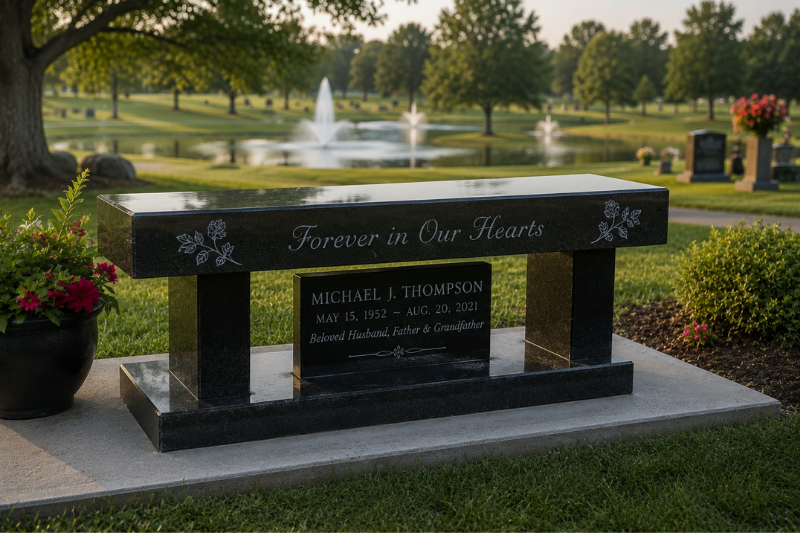
A cemetery bench is one of the most meaningful memorial options because it creates both a permanent tribute and a place to sit with memory. The cost depends on far more than the bench itself. Material, granite color, size, engraving, cemetery approval, foundation, installation, and long-term stability all shape the final price.
For most families, a realistic budget for a cemetery-approved granite bench begins around $2,000 to $6,000. More elaborate bench headstones, cremation benches, and family estate benches can range from $6,000 to $20,000 or more.
The best first step is always to confirm the cemetery’s rules. At Fram Monument Company, we help families understand cemetery requirements, choose appropriate materials, plan meaningful designs, and coordinate the memorial process from design to installation. A well-planned bench should feel personal, look balanced within the cemetery, and remain a dignified place of remembrance for generations.