

Cemetery regulations are not just paperwork. They determine whether a memorial can be approved, fabricated, delivered, installed, and maintained without delays or added costs. Because cemetery requirements may affect permits, foundation work, installation, and the final cemetery headstone cost, knowing the rules early helps families make confident decisions during a difficult time.
Key Takeaways
- Always verify cemetery headstone rules before approving a design or placing an order.
- Cemeteries may restrict memorial type, size, granite color, bronze style, inscription, symbols, and placement.
- The plot owner or person with burial rights usually must sign the memorial application.
- Permit, foundation, installation, and inspection fees may be separate from the headstone price.
- A professional monument company can help prevent rejected designs, installation delays, and costly corrections.
What Are Cemetery Headstone Rules?

Cemetery headstone rules are the requirements a cemetery sets for memorials placed on graves, crypts, niches, or family lots. These rules protect the cemetery’s layout, safety, appearance, maintenance process, and long-term recordkeeping.
Most cemeteries have written regulations that explain what kinds of memorials are allowed. These may include upright headstones, flat granite markers, bronze plaques, slant markers, bevel markers, ledgers, benches, coping, mausoleum plaques, or cremation memorials.
The rules often cover:
- Headstone height, width, thickness, and base size
- Approved materials such as granite, bronze, or marble
- Granite colors and finishes
- Bronze marker dimensions and background colors
- Placement at the head or foot of the grave
- Foundation and setting requirements
- Inscription layout and wording
- Religious symbols, portraits, emblems, and artwork
- Permit applications and authorized signatures
- Installation by the cemetery or an approved monument company
Families should never assume that a cemetery will accept any headstone style. A memorial must fit the cemetery’s rules before it can be installed.
Why Cemeteries Have Headstone Rules
Cemeteries regulate headstones to keep memorials safe, stable, maintainable, and consistent with the character of each section. A cemetery is both a sacred place and a managed property, so every memorial has to work within the surrounding grounds.
Rules help cemeteries prevent unsafe installations, uneven rows, oversized monuments, damaged lawn equipment, blocked pathways, and mismatched memorials in sections designed for a uniform appearance. They also help cemetery staff maintain accurate records of grave locations and burial rights.
For example, a lawn-level memorial section may require flat markers so mowing equipment can pass over the area safely. A traditional monument section may allow upright granite headstones but limit their height and width. A bronze memorial garden may require bronze plaques on granite bases and may not allow upright stones at all.
These rules are not always flexible, even when a family has a meaningful design in mind. The cemetery’s written requirements usually come first.
Cemetery Rules Can Change by Section
A cemetery can have different headstone rules for different sections of the same property. This is one of the most important details families should understand before ordering a memorial.
A cemetery may allow upright monuments in one area, flat bronze markers in another, and only small cremation plaques in a separate garden. Older sections may contain monuments that would not be approved under current rules. Family estate lots may allow larger memorials, benches, ledgers, or coping, while single-grave sections may have stricter limits.
Rules can vary by:
- Single grave sections
- Companion grave sections
- Family plots
- Upright monument sections
- Flat marker sections
- Bronze-only sections
- Veterans areas
- Religious sections
- Cremation gardens
- Columbarium niches
- Historic cemetery areas
This is why families should not choose a headstone based only on what they see nearby. A nearby memorial may be in another section, approved under older rules, or placed on a different type of lot.
The correct question is not simply, “What does this cemetery allow?” The better question is, “What does this exact grave, lot, or section allow?”
What to Confirm Before Ordering a Headstone

The safest time to review cemetery rules is before the headstone is designed, engraved, shipped, or paid for in full. Once a memorial is already fabricated, changes can be expensive or impossible.
Before ordering, families should confirm:
- Cemetery name
- Section, lot, and grave number
- Whether the grave allows an upright, flat, bronze, slant, bevel, ledger, bench, or other memorial
- Maximum height, width, depth, and thickness
- Required base size
- Approved granite or bronze materials
- Color and finish restrictions
- Foundation requirements
- Who installs the memorial
- Who must sign the application
- Permit and inspection fees
- Setting or foundation charges
- Design proof requirements
- Seasonal installation limits
- Rules for future engraving
Written confirmation is best. Verbal answers can be misunderstood, especially when cemetery rules vary by section. A written rule sheet, permit form, or approval email gives the family and monument company a clear record to follow.
Who Can Approve a Cemetery Headstone?
The person with legal authority over the grave usually must approve the headstone before the cemetery will allow installation. This person may be the plot owner, the burial rights holder, the right of interment holder, a surviving spouse, legal next of kin, or another authorized representative recognized by the cemetery.
This matters because a cemetery will usually follow its ownership and burial-rights records, not informal family opinion. If several relatives disagree about the wording, design, symbol, or name format, the cemetery may still require the signature of the person legally authorized to make the decision.
Families should settle important details before submitting the memorial application, including:
- Full name
- Maiden name or family name
- Birth and death dates
- Religious name or Hebrew name
- Nickname
- Family roles
- Epitaph
- Religious emblem
- Military emblem
- Portrait or artwork
- Future inscription space
Clear written approval protects everyone involved. It also helps avoid painful disputes after the headstone has already been engraved.
Headstone Types Cemeteries May Allow
Cemeteries often approve memorials by type first, then by size, material, and design. Before choosing a shape or inscription, families should confirm what category of memorial the grave allows.
Upright Headstones
An upright headstone is a vertical memorial, usually made from granite, that stands on a base. Cemeteries may regulate the height, width, tablet thickness, base length, base depth, polished surfaces, shape, and foundation.
Upright monuments are common in traditional cemetery sections, but they may not be allowed in lawn-level gardens or bronze-only areas.
Flat Granite Markers
A flat granite marker sits flush or nearly flush with the ground. These markers are common in sections designed for easier mowing and a uniform lawn appearance.
Cemetery rules may control thickness, granite color, concrete border size, placement, and whether the marker must be set at the head or foot of the grave.
Bronze Markers
A bronze marker is a cast bronze plaque, usually attached to a granite base. Some cemeteries require bronze memorials in specific sections.
Rules may control plaque size, granite base size, border design, background color, vase placement, emblem options, and whether the marker is for a single grave, companion grave, infant grave, or family lot.
Slant and Bevel Markers
Slant markers are raised memorials with an angled face. Bevel markers are lower, slightly raised stones that create a visible profile while remaining smaller than upright monuments.
These styles may be allowed in some cemeteries but restricted in others because they affect mowing clearance, section appearance, and foundation needs.
Ledgers, Benches, Coping, and Family Memorials
Larger memorials often need special approval. Grave ledgers cover a significant portion of the burial space. Memorial benches provide a place for reflection. Coping creates a granite border around a grave or family plot. Family memorials may span multiple graves.
These memorials are meaningful, but they usually require more space, stronger foundations, and careful cemetery coordination.
Size and Placement Rules
Headstone size rules define exactly how large a memorial can be and where it can be placed on the grave. These measurements are often strict.
Cemeteries may regulate:
- Total height above ground
- Width of the stone
- Thickness of the tablet
- Length and depth of the base
- Bronze plaque dimensions
- Granite base dimensions
- Ledger coverage
- Distance from grave boundaries
- Distance from walkways or roads
- Placement at the head or foot of the grave
- Centering over one grave or multiple graves
Even a small difference can matter. A headstone that is one inch too tall or one inch too wide may be rejected. A companion memorial may be allowed only when the family owns two adjoining graves. A family monument may require a specific lot size.
Families should ask for exact measurements, not general descriptions.
Material, Granite Color, and Finish Rules
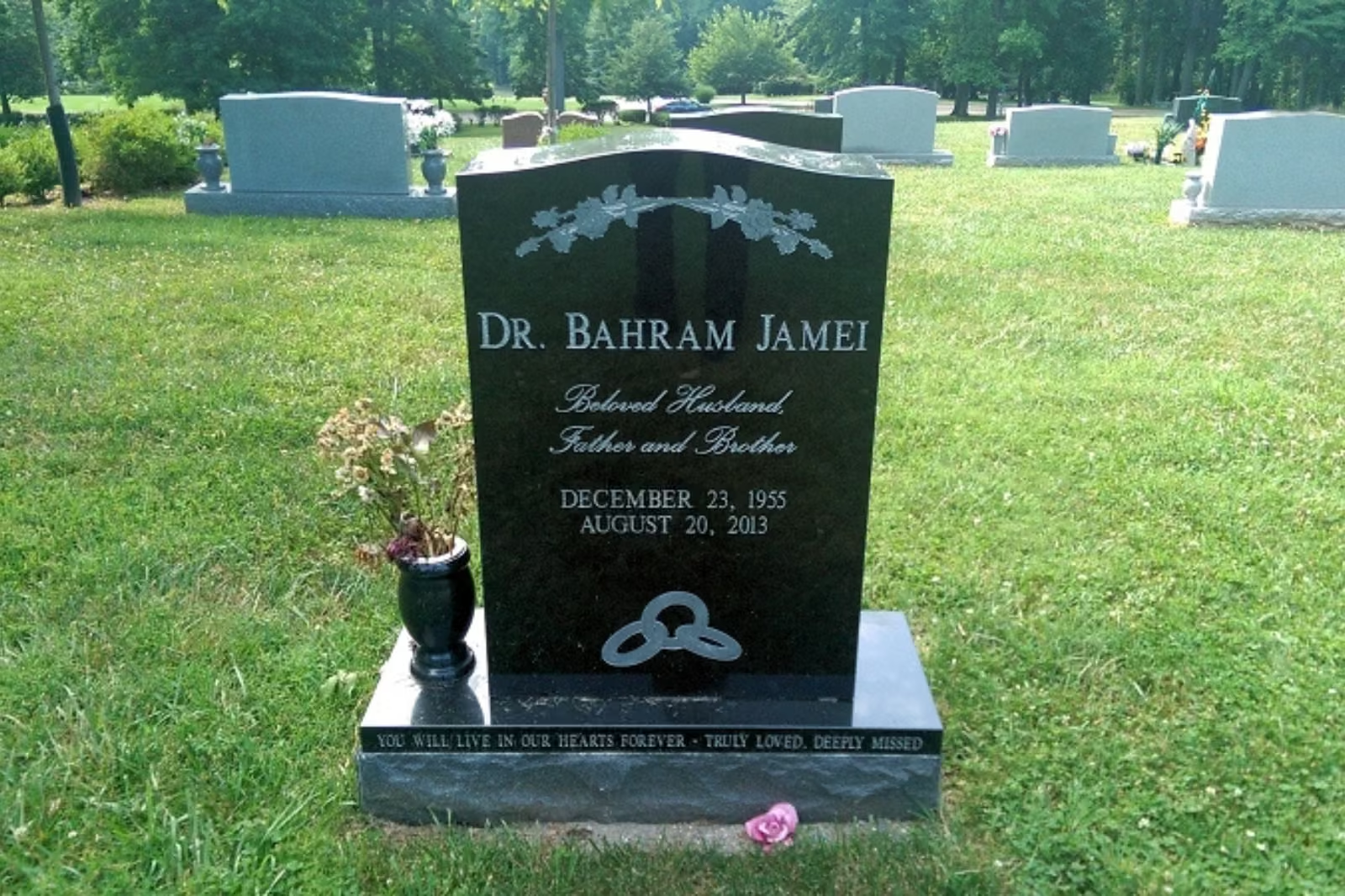
Cemeteries may limit headstone materials and colors to preserve durability, safety, and visual consistency. Granite and bronze are the most widely accepted memorial materials, but not every cemetery allows every color, finish, or style.
Granite is popular because it is strong, long-lasting, and available in many colors. Bronze is common in memorial parks and lawn-level sections. Marble may be restricted in some cemeteries because it weathers differently than granite. Artificial materials, fragile stone, loose tile, glass, and unstable decorative materials are often not allowed.
A cemetery may also restrict:
- Black granite
- Red granite
- Blue granite
- Highly polished backs
- Nontraditional shapes
- Rough edges
- Full-color images
- Ceramic portraits
- Certain bronze finishes
If a new headstone needs to match an existing family memorial, the existing stone should be measured and documented before the new design is finalized. Matching may involve granite color, polish, font, spacing, emblem style, base size, and inscription layout.
Inscriptions, Symbols, and Design Approval
Most cemeteries require a design proof before engraving so they can review the wording, layout, symbols, and dimensions. A proof is a scaled drawing of the memorial that shows how the finished headstone will look.
A cemetery may review:
- Name spelling
- Birth and death dates
- Epitaphs
- Religious symbols
- Military emblems
- Portraits
- Floral designs
- Cultural artwork
- Languages other than English
- Titles, ranks, and family roles
- Layout and spacing
Families should review the proof slowly and carefully. Names, dates, punctuation, spacing, and religious wording should be checked by more than one person when possible. Once engraving begins, corrections can be difficult.
A good proofing process also helps the cemetery confirm that the memorial meets its rules before production starts.
Permits, Applications, and Cemetery Fees
Many cemeteries require a memorial permit before a headstone can be installed. This permit gives the cemetery a written record of what is being placed, where it will be installed, who approved it, and which company is responsible for the work.
A memorial application may include:
- Deceased person’s name
- Cemetery section, lot, and grave number
- Memorial type
- Material
- Dimensions
- Design proof
- Applicant information
- Plot owner or rights holder signature
- Monument company information
- Foundation request
- Installation details
Families should also ask about fees before ordering. Cemetery fees may be separate from the headstone price.
Common fees include:
- Permit fee
- Foundation fee
- Setting fee
- Inspection fee
- Care or maintenance fee
- Additional inscription fee
- Removal and reset fee
- Delivery coordination fee
- Special scheduling fee
The most important pricing question is simple: “What cemetery fees will apply before this memorial can be installed?”
Foundation and Installation Requirements
A proper foundation helps keep a headstone level, stable, and secure for years. Foundation rules are especially important for upright monuments, slant markers, ledgers, benches, and large family memorials.
Some cemeteries pour or prepare foundations themselves. Others require the monument company to install the foundation. Some allow only approved or insured installers. Some require the cemetery to inspect the foundation before the memorial is placed.
Professional installation protects the memorial from leaning, sinking, twisting, or shifting. It also protects visitors, cemetery staff, and nearby memorials.
Timing can also affect installation. After a burial, some cemeteries recommend waiting for the ground to settle before installing a heavy memorial. Weather, soil conditions, cemetery scheduling, foundation preparation, and religious unveiling timelines can all affect the final installation date.
Families should ask whether the cemetery has:
- A required waiting period
- Seasonal installation restrictions
- Winter closing rules
- Foundation scheduling delays
- Inspection requirements
- Approved installer requirements
Special Rules for Religious, Veterans, Historic, and Cremation Sections

Special cemetery sections often have additional rules beyond ordinary headstone size and material requirements. Families should ask about these rules early because they can affect wording, symbols, placement, and timing.
Religious Cemeteries
Religious cemeteries may have requirements connected to faith tradition, language, symbolism, inscription format, or unveiling customs. Jewish cemeteries, Catholic cemeteries, church cemeteries, Muslim cemeteries, and other faith-based burial grounds may each have their own memorial standards.
Families should confirm whether the cemetery reviews religious symbols, Hebrew inscriptions, crosses, Stars of David, clergy titles, portrait use, or ceremonial timing.
Veterans Markers
Eligible veterans may qualify for a government-furnished headstone, marker, or niche marker through the U.S. Department of Veterans Affairs. In a private cemetery, families should still confirm installation requirements, cemetery fees, foundation needs, and whether a granite base is required or allowed.
A veterans marker may be provided through a government benefit, but cemetery placement and installation still need to be coordinated.
Historic Cemeteries
Historic cemeteries may restrict restoration, cleaning, replacement markers, inscription changes, or resetting work. Families should not clean, move, repair, or replace an older memorial without cemetery permission.
Cremation Memorials
Cremation gardens, urn plots, and columbarium niches often have different rules than full burial graves. A niche plaque may have strict size and wording limits. A cremation garden may allow only certain flat markers or small memorial tablets.
Families should confirm whether the memorial is for a full burial grave, cremation grave, shared grave, niche, or family cremation estate.
What Happens If a Headstone Does Not Meet Cemetery Rules?
A cemetery can reject, delay, or require changes to a headstone that does not meet its rules. The result may be a revised design, a new permit application, additional fees, delayed installation, or a remade memorial.
Common problems include:
- Wrong memorial type
- Oversized headstone
- Unapproved granite color
- Incorrect bronze plaque size
- Missing plot owner signature
- No cemetery permit
- Unapproved inscription
- Wrong foundation size
- Installation by an unapproved provider
- Delivery before cemetery approval
The best way to avoid these problems is to follow the correct order:
- Confirm the cemetery and grave location.
- Request the cemetery’s written memorial rules.
- Verify who has authority to approve the headstone.
- Select a compliant memorial type.
- Prepare a scaled design proof.
- Submit the cemetery application.
- Receive approval.
- Fabricate and engrave the memorial.
- Coordinate foundation, delivery, and installation.
This sequence keeps the process organized and reduces the chance of expensive changes.
Planning for Future Engraving and Long-Term Care
A headstone should be planned for future needs, not only for the first installation. This is especially important for companion memorials, family plots, and existing monuments.
Families should ask whether future engraving can be completed on-site. A companion headstone may need a second name, date, or inscription added later. A family monument may need additional names over time. A bronze marker may have limited space, while a granite monument may allow more flexibility.
Long-term care should also be clarified. Some cemeteries maintain the grounds but not the memorial itself. Families should ask who is responsible for cleaning, leveling, repairs, resetting, or repainting lettering if needed.
Useful questions include:
- Can future dates be engraved later?
- Is there enough space for another inscription?
- Does the cemetery require a permit for future engraving?
- Who handles leveling if the stone shifts?
- Does cemetery care include the headstone or only the surrounding grounds?
- Can a new inscription be matched to an existing one?
A little planning at the beginning can prevent difficulty years later.
Cemetery Headstone Rules Checklist
A headstone order is ready to move forward only after the cemetery’s requirements are confirmed for the exact grave. Families can use this checklist before approving a memorial design.
Confirm the following:
- Cemetery name
- Section, lot, and grave number
- Type of memorial allowed
- Maximum height
- Maximum width
- Required thickness
- Base size
- Foundation requirement
- Granite or bronze requirement
- Color and finish restrictions
- Inscription rules
- Symbol and portrait rules
- Permit form
- Authorized signer
- Cemetery fees
- Installation provider
- Delivery process
- Seasonal restrictions
- Future engraving rules
The most important question is always: “Will this exact memorial be approved for this exact grave?”
Start With the Cemetery Rules, Then Design With Confidence
Cemetery headstone rules should be confirmed before a family approves a design, because the cemetery’s requirements determine what can actually be installed. A meaningful memorial still has to meet practical standards for size, material, permit approval, placement, foundation, and installation.
The process becomes much easier when families begin with the cemetery’s requirements instead of discovering them after the headstone has already been ordered. Written rules, a careful design proof, proper authorization, and professional installation all help prevent unnecessary delays, unexpected costs, and difficult corrections.
At Fram Monument Company, we help make the process clearer from the beginning. From verifying cemetery regulations and creating a compliant design to coordinating approvals, completing engraving, and handling installation, we guide families through each step with care, experience, and attention to detail.
Frequently Asked Questions
What are the most common cemetery headstone rules?
The most common cemetery headstone rules cover memorial type, size, material, color, placement, foundation, wording, symbols, permit approval, and installation requirements.
Can a cemetery reject a headstone?
Yes. A cemetery can reject a headstone if it does not meet the cemetery’s rules or if the proper application, signature, permit, foundation, or installation process has not been completed.
Who approves a cemetery headstone?
The cemetery usually requires approval from the plot owner, burial rights holder, right of interment holder, legal next of kin, or another authorized representative listed in cemetery records.
Do all cemeteries have the same headstone rules?
No. Cemetery rules vary by cemetery, section, grave type, memorial style, burial tradition, and local policy. Even two graves in the same cemetery may have different requirements.
Can a cemetery control the wording on a headstone?
A cemetery may review and approve headstone wording, symbols, artwork, portraits, and layout before installation. Most standard names, dates, epitaphs, and religious symbols are accepted, but rules vary.
Can families buy a headstone from outside the cemetery?
Families can often buy from a monument company, but the headstone still must comply with cemetery rules. The cemetery may require permits, approved installation, delivery coordination, and cemetery fees.
Written by
CEO, Fram Monument Company
Niv Fishbein has helped families design, engrave, and install headstones since 2010. He brings deep knowledge of memorial traditions across many cultures, religions, and cemetery requirements.
More from Niv