
How Much Does a Headstone Cost? A Complete Guide to What Affects the Final Price in 2026

A headstone usually costs between $500 and $5,000, with simple flat markers on the lower end and upright, companion, or custom monuments costing more. The final price depends on the memorial style, material, size, engraving, cemetery installation requirements, and any added features such as vases, portraits, emblems, or bronze plaques.
Some families only need a modest flat grave marker. Others need a larger upright monument, a companion stone, or a custom memorial that reflects religious traditions, family history, or cemetery rules. The most helpful way to understand headstone pricing is to separate the base memorial cost from the costs that often appear later, such as foundation work, permits, delivery, setting fees, or cemetery-required approvals.
Key Takeaways
Not sure where to start? Tell us the cemetery and the style you're considering, and we'll put together a clear, itemized quote — no pressure, no obligation.
Get a Free Quote → Call (410) 486-8666- Built directly from our current pricing across every memorial category
- Reviewed alongside cemetery rules across Maryland, D.C., and Virginia
- Verified with our showroom consultants in Annapolis, Baltimore, and Rockville
- Updated as material costs, granite availability, and cemetery fees change
Which Headstone Is Right for You? Quick Comparison
Hover any row to see it highlight, then click it (or tap on mobile) to jump straight to that style's full breakdown below.
| Style | Typical Cost Range | Best For | Cost Level |
|---|---|---|---|
| Flat Marker | $200 – $1,500 | Simple, low-profile memorials | Lowest |
| Bevel Marker | $500 – $2,500 | Slightly raised marker with better visibility | Low–Mid |
| Slant Marker | $1,000 – $3,500 | Angled face with easier reading | Mid |
| Upright Headstone | $1,500 – $6,000+ | Traditional vertical monument | Mid–High |
| Companion Headstone | $2,000 – $8,000+ | Two people or family plots | High |
| Ledger Marker | $2,500 – $8,000+ | Full or partial grave coverage | High |
| Memorial Bench | $3,000 – $10,000+ | Reflection spaces or family areas | High |
| Custom Monument | $3,000 – $15,000+ | Specialty shapes, carvings, estates | Highest |
Estimate Your Headstone Cost
Select a style, granite tier, and any add-ons to see an estimated range based on Fram's current pricing. This gives you a starting point — not a final quote.
Understanding the Different Types of Headstones and Their Costs
Explore the most common headstone styles, including their purpose, durability, design options, and the families who choose them most often.
1. Flat Markers — Best for Simple, Cemetery-Required Low Profiles
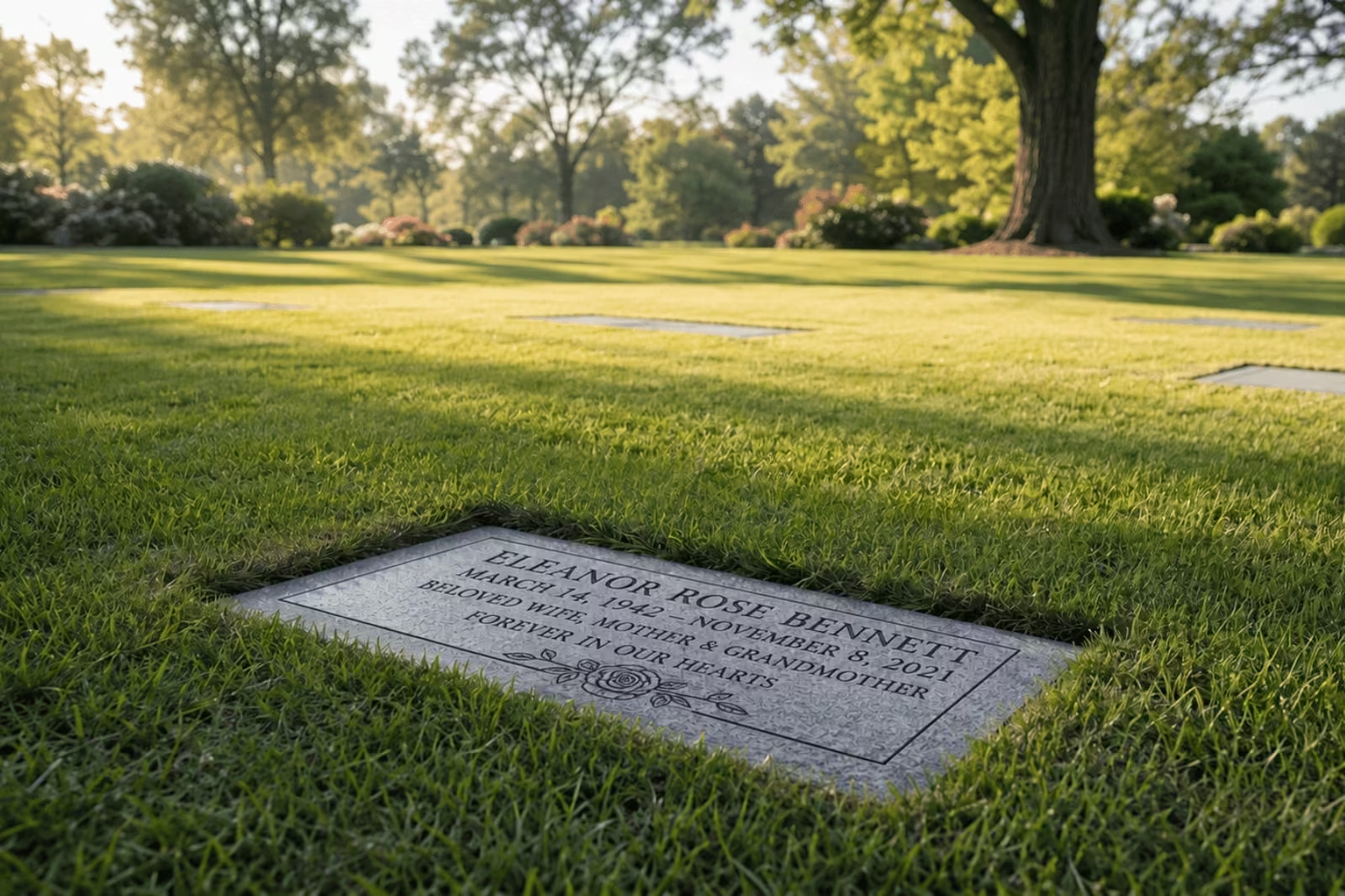
Flat markers, also called flush markers or grass markers, lie level with the ground. They are usually made of granite, bronze, or bronze mounted on granite. Because they use less material and are easier to set than large upright monuments, they are usually the most affordable headstone option. Flat markers are common in cemeteries that require uniform memorials for easier lawn maintenance. They are simple, dignified, and practical, but they have less visibility than upright or slant memorials. Grass, soil, or seasonal debris can also make them harder to see over time.
Pros
- Lowest cost of any style
- Meets uniform cemetery rules
- Simple, dignified, and practical to approve and install
Cons
- Less visible than upright or slant memorials
- Grass, soil, or debris can obscure it over time
2. Bevel Markers — Best for a Slightly Raised, Easier-to-Read Option

Bevel markers are slightly raised above the ground and slope from back to front. They are sometimes called pillow markers because of their low, angled profile. A bevel marker costs more than a flat marker because it uses more stone and has a more shaped form, but it is usually less expensive than a slant or upright monument. Families often choose bevel markers when they want something modest but easier to read than a flat marker.
Pros
- Easier to read than flat markers
- Still a modest, moderate cost
Cons
- Costs more than a flat marker
- Not as visible as slant or upright styles
3. Slant Markers — Best Middle Ground Between Flat and Upright

Slant markers stand higher than bevel markers and have a steep angled face. They provide stronger visibility without the height or cost of a full upright monument. A slant marker may be installed directly on a foundation or placed on a granite base, depending on cemetery rules. This style is often a good middle option for families who want a traditional appearance but need to stay below the cost of a larger upright memorial.
Pros
- Traditional look at a moderate price
- Strong visibility without upright cost
Cons
- Costs more than flat or bevel markers
- Foundation or base requirements vary by cemetery
4. Upright Headstones — Best for Maximum Visibility & Personalization

Upright headstones are the classic vertical monuments most people picture when they think of a cemetery headstone. They usually include a vertical tablet set on a granite base. The price depends heavily on the width, height, thickness, granite color, shape, finish, and engraving. Upright monuments cost more because they require more stone, more polishing, more carving, a heavier base, and more careful installation. They also tend to allow more personalization, including larger names, longer epitaphs, religious symbols, floral carving, family names, and portrait etching.
Pros
- Maximum personalization and visibility
- The most traditional, recognizable memorial style
Cons
- Higher material, labor, and installation cost
- Not permitted in every cemetery section
5. Companion Headstones — Best for Spouses & Family Plots

A companion headstone is designed for two people, often spouses or family members buried side by side. It is usually wider than a single marker and may include two names, two sets of dates, a shared family name, and a central design. A companion memorial often costs less than purchasing two separate upright headstones, but it still costs more than a single memorial because of the size, weight, and additional lettering.
Pros
- Often costs less than two separate headstones
- Honors two people with one shared design
Cons
- Costs more than a single memorial
- Heavier size and more lettering add to price
6. Ledger Markers — Best for Low-Profile Memorials With Maximum Presence

Ledger markers are large flat stones that cover much of the grave. Some cover the full burial space, while others cover part of the grave. They create a strong visual presence even when a cemetery restricts upright monuments. Ledger markers cost more than standard flat markers because they require a large stone slab, careful leveling, and often more engraving space. They can be especially useful when a family wants a low-profile memorial with room for names, dates, emblems, prayers, or decorative borders.
Pros
- Substantial presence while remaining low to the ground
- More inscription space than standard flat markers
Cons
- Costs more than standard flat markers
- Heavier stone increases handling and installation
7. Memorial Benches — Best for a Place to Sit and Reflect

A memorial bench serves as both a tribute and a place for visitors to sit. Benches are often used in family plots, cremation gardens, private estates, or sections of cemeteries where reflective seating is allowed. The cost depends on the bench design, granite type, size, carving, support structure, and installation requirements. Some cemeteries restrict benches, so approval should happen before the design is finalized.
Pros
- Doubles as a place for visitors to sit
- Distinctive presence in a family plot
Cons
- Higher cost than most marker styles
- Requires cemetery approval before production
8. Custom Monuments — Best for Fully Personalized Memorials

Custom memorials include specialty shapes, sculpted monuments, carved religious symbols, hearts, crosses, angels, family estate monuments, kerbed memorials, large bases, coping, and highly personalized designs. Custom work can vary widely because the cost is tied to material, labor, engineering, cemetery rules, and installation complexity. A custom memorial should always be quoted in detail. The estimate should identify the stone type, dimensions, finish, carving, lettering, accessories, foundation, delivery, and cemetery charges.
Pros
- Fully personalized design and symbolism
- No limit on creative expression, within cemetery rules
Cons
- Widest price range — needs a detailed itemized quote
- Longer production and approval timelines
Comparing two or three styles? We can price them side by side for your specific cemetery, so you're comparing real numbers, not guesses.
Compare My Options →Headstone Cost by Material
Material affects appearance, durability, engraving options, and cemetery approval — not just price.
- Granite — the most common headstone material because it is strong, weather-resistant, and available in many colors. Standard gray granite is usually the most budget-friendly; black, red, blue, mahogany, and imported colors typically cost more because of quarry availability, shipping, polishing, and demand. Granite also supports sandblasted lettering, shape carving, polished finishes, and laser etching.
- Bronze — commonly used for flat plaques mounted to granite bases; some cemeteries require bronze instead of upright granite monuments. Bronze markers often cost more than simple granite flat markers because they involve cast metal, a granite base, and foundry production, but they hold raised lettering, emblems, borders, and military or religious symbols especially well.
- Marble — a softer, traditional look, but less common today since it weathers faster than granite. Over time, marble inscriptions can soften or become harder to read, especially in areas with moisture, pollution, or freeze-thaw cycles — ask the cemetery about long-term maintenance before choosing it.
- Premium & imported granite colors — gray granite is typically the most affordable; premium black, deep red, blue-toned, and specialty imported colors cost more, partly because they provide better contrast for laser etching or a more formal appearance for polished monuments.
- Mixed-material — granite, bronze, porcelain photos, ceramic images, and decorative inlays combined; beautiful, but should be priced carefully since each added material can involve separate production, shipping, mounting, and maintenance considerations.
What Affects the Final Cost?
Style and material set the base price. These details shape the rest:
- Size & thickness — larger, thicker stones need more material, cutting, polishing, and a stronger foundation.
- Single vs. companion — companion memorials are wider, heavier, and carry more lettering, including two inscriptions and often shared family text.
- Shape & carving — serpentine tops, hearts, crosses, custom outlines, and sculpted detail add labor and precision time.
- Finish & polish — fully polished surfaces, especially on multiple sides, cost more than partial-polish or textured finishes.
- Lettering & engraving — longer epitaphs, multiple languages, custom or script fonts, or additional inscriptions can increase cost; ask what's included before comparing quotes.
- Photos, portraits, emblems, vases — meaningful additions, but worth quoting separately so you can decide what matters most.
- Cemetery rules & foundation requirements — this is one of the biggest cost factors, since a memorial that doesn't meet cemetery rules may need to be redesigned, resized, or remade.
Cemetery Fees, Installation & Other Costs to Ask About
The stone's price isn't always the final cost. Installation and cemetery-related fees can add hundreds, or thousands, of dollars.
| Cost Item | What It Covers |
|---|---|
| Foundation fee | Concrete base or support under the memorial |
| Setting / installation fee | Labor and equipment to place the stone |
| Permit fee | Cemetery approval or administrative processing (~$30 typical) |
| Delivery fee | Transportation to the cemetery |
| Inspection fee | Cemetery review before or after installation |
| Perpetual care fee | Cemetery maintenance-related charge, where applicable |
| Future engraving fee | Adding a second date or inscription later |
Installation costs vary by region and cemetery. Smaller stones are often set for a few hundred dollars, while larger monuments cost more to install because they require more labor, foundation work, and equipment. Sales tax is typically 6%, and stakeout fees vary by cemetery. The one question worth asking every provider: "What are all monument-related fees for this grave, including foundation, permit, inspection, setting, and future inscription requirements?"
How Do You Choose the Right Headstone for a Loved One?

What Does the Cemetery Actually Allow?
Start here, before style or budget. Some sections require flat or bronze markers only; others allow upright monuments. A beautiful design that the cemetery rejects means redesigning, or remaking, the memorial.
Is This for Immediate Need, or Pre-Planning?
Immediate need usually narrows the timeline and the decision. Pre-planning gives you room to compare styles, materials, and inscriptions carefully, without pressure.
How Much Personalization Actually Matters to Your Family?
A name and dates may be enough. Others want an epitaph, a portrait, a religious symbol, or a family design. This is often the biggest cost lever within any single style — and the most personal one.
How Do You Compare Quotes Fairly?
A lower price isn't always a lower final cost. A quote that excludes engraving, foundation, delivery, cemetery fees, or installation may look cheaper at first but cost more by the time the memorial is finished. Ask every provider the same questions:
- Is the stone, base, and finish included?
- How much lettering is included?
- Are emblems, borders, or religious symbols included?
- Is cemetery approval, delivery, and installation handled?
- Are foundation or permit fees included?
- What happens if the cemetery rejects the size or design?
- What will it cost to add a future date?
- Is a proof included before production?
The Federal Trade Commission (FTC) notes that itemized pricing helps families understand what they're selecting and paying for in funeral-related arrangements, and that some charges may be handled separately depending on the provider and service.
Here's the question worth sitting with: would you rather spend twenty minutes now getting a clear, itemized number — or find out after the fact that foundation, permit, and installation weren't included? We'll walk you through it either way.
Can Veterans Receive a Free Headstone or Marker?
Eligible veterans may qualify for a government-furnished headstone, marker, or medallion through the U.S. Department of Veterans Affairs. The VA provides eligible memorial items, but placement costs in a private cemetery may still be the family's responsibility. In national, military post, and military base cemeteries, cemetery staff generally set government markers at no cost to the applicant. Families considering a veteran marker should still ask the cemetery about setting fees, foundation requirements, and whether the chosen marker style is allowed in that section.
Final Cost Checklist
Before approving any headstone order, confirm these items in writing. Check them off as you go — nothing here is saved or sent anywhere, it's just for you.
Making Sense of the Final Cost
Headstone pricing is easiest to understand when every part of the memorial is explained clearly, from the stone and engraving to cemetery fees, foundations, delivery, and installation. The right choice is not always the lowest price. It is the memorial that fits the cemetery's rules, honors the person properly, and gives your family confidence in the final cost before anything is made.
For help comparing memorial options, cemetery requirements, engraving, installation, or final costs, reach out to our team. We have showrooms in Baltimore, Annapolis, and Greater Washington for families who prefer to meet in person.
Ready for real numbers? Get a clear, itemized quote for your cemetery and style — no pressure, and no obligation.
Get My Free Quote → Call (410) 486-8666