

Military memorial planning usually comes down to five decisions: eligibility, cemetery type, marker style, inscription, and installation. Families considering bronze grave markers or other memorial styles should confirm cemetery requirements before making a selection. When these pieces are handled in the right order, families can avoid delays, rejected forms, cemetery conflicts, and unexpected placement fees.
Key Takeaways
- The VA may provide a standard headstone, marker, or medallion at no cost for an eligible veteran or service member.
- Private cemeteries may charge for installation, foundations, setting, maintenance, or placement even when the marker itself is free.
- VA Form 40-1330 is used for a standard government headstone or marker, while VA Form 40-1330M is used for a medallion.
- Cemetery rules should be confirmed before selecting granite, marble, bronze, upright, flat, or niche options.
- Only the VA can inscribe a government-furnished headstone or marker, so inscription details must be accurate before submission.
What Is a Military Headstone?

A military headstone is a cemetery memorial that identifies military service and marks a grave, niche, or memorial location. In common use, the term can refer to an upright government headstone, a flat veteran grave marker, a bronze marker, a medallion attached to a private memorial, or a privately purchased headstone that includes military service details.
A government-furnished headstone or marker is supplied through the VA for an eligible person. It follows federal design, material, and inscription rules. A privately purchased memorial is ordered through a cemetery memorial provider and may include custom granite, bronze, religious symbols, portraits, family inscriptions, companion lettering, or design features that are not part of the standard VA format.
The difference matters because a VA marker is not simply a custom headstone paid for by the government. It is a standardized memorial item with approved styles, approved inscription rules, and cemetery placement requirements. Families who want a more personalized family memorial may choose a private headstone and, when eligible, request a VA medallion or service inscription instead.
Who Is Eligible for a VA Military Headstone or Marker?
An eligible veteran or active-duty service member may qualify for a VA-furnished headstone, marker, or medallion when service and discharge requirements are met. Spouses and dependent children have more limited eligibility, especially when burial is in a private cemetery.
For veterans and service members, eligibility generally depends on qualifying military service and separation under conditions other than dishonorable. Families usually prove service with discharge documents such as the Certificate of Release or Discharge from Active Duty, commonly called DD Form 214. For older service, substitute military records or other official documents may be needed.
Unmarked Graves
The VA can furnish a headstone or marker for the unmarked grave of an eligible veteran in any cemetery. That includes private cemeteries, local cemeteries, and burial sites outside the national cemetery system. The key issue is whether the applicant can document qualifying service and identify the grave location.
Previously Marked Graves
A veteran may still qualify for a government marker even when the grave already has a privately purchased headstone, but special rules apply. For veterans who died on or after the VA’s legal cutoff date for marked private graves, the VA may furnish a government headstone or marker regardless of whether the grave is already privately marked. In many private cemetery situations, families may also consider a medallion instead of a separate government marker.
This is one of the most misunderstood parts of military headstone planning. A private family headstone does not automatically prevent recognition of military service. The better question is whether the cemetery allows a second marker, whether placement near the grave is practical, and whether a medallion would be the cleaner option.
Spouses and Dependent Children
A spouse or dependent child may be eligible for a headstone or marker when buried in a national cemetery, state or tribal veterans cemetery, military post cemetery, or military base cemetery. In most private cemeteries, spouses and dependent children are not eligible for their own VA-furnished headstone or marker, although they may be eligible for an inscription on the veteran’s marker.
This distinction is important for companion graves. A veteran buried in a private cemetery may qualify for a VA marker, while a spouse in the same cemetery may not qualify for a separate government-furnished marker. Families often solve this by using a private companion monument with military service incorporated into the design.
When Remains Are Not Available
A memorial headstone or marker may be available when an eligible person’s remains have not been recovered, have not been identified, were buried at sea, were donated to science, were cremated and scattered, or are otherwise unavailable for burial. Memorial markers use wording that identifies the item as a memorial rather than a grave marker.
What Does the VA Provide at No Cost?
The VA provides the memorial item and shipping for eligible claims, but that does not always mean the full cemetery process is free. The free benefit generally covers the government-furnished headstone, marker, niche marker, or medallion itself. Private cemetery installation costs remain separate.
Families may request several standard options:
Upright Headstones
Upright government headstones are available in granite or marble. These are the traditional military-style headstones most people associate with national cemeteries. In private cemeteries, upright markers are allowed only if the cemetery permits that style in the burial section.
Flat Grave Markers
Flat markers may be available in granite, marble, or bronze. Families comparing granite vs bronze should also confirm which materials the cemetery permits. These markers are common in cemeteries that require memorials to sit flush with the ground, while bronze flat markers are often installed on a granite base depending on cemetery rules and local installation requirements.
Bronze Niche Markers
Bronze niche markers are used for cremation niches in columbaria. Their use depends on the cemetery or columbarium layout and the rules that apply to the specific niche.
Medallions for Private Headstones
A VA medallion is designed to attach to an existing privately purchased headstone, marker, mausoleum front, or niche cover. It identifies the deceased as a veteran or, in applicable cases, a Medal of Honor recipient. Standard veteran medallions are available in multiple sizes, while Medal of Honor medallions have their own size options.
A medallion can be especially useful when a family already has a custom granite memorial and does not want to add a separate flat marker at the foot of the grave. It preserves the private memorial design while adding official military recognition.
VA Form 40-1330: What Families Need Before Applying
VA Form 40-1330 is the claim form for a standard government headstone or marker. Families should gather service documents, grave location details, cemetery information, inscription choices, and cemetery approval before filing.
The form asks for information about the deceased, military service, burial location, marker type, and inscription. In private cemeteries, the cemetery must confirm that the marker selection is permitted and that placement follows cemetery rules. Federal rules also require certification that the marker will be placed on or near the grave for which it is requested.
Before applying, families should confirm:
- The veteran’s legal name and service branch
- Birth and death information
- Discharge or qualifying service documents
- Cemetery name, address, section, lot, and grave location
- Whether the grave is marked or unmarked
- Which marker style the cemetery allows
- Who will receive delivery
- Who will install the marker
- Whether the cemetery charges a placement or foundation fee
Only one marker style should be selected on the application. Choosing a style before checking cemetery rules can cause delays, because some cemeteries accept only flat bronze, only flat granite, only upright monuments in certain sections, or only specific dimensions.
VA Form 40-1330M: When to Request a Medallion Instead
VA Form 40-1330M is used when a family wants a government medallion placed on a privately purchased headstone or marker. A medallion is not the same as a full government headstone. It is a bronze emblem that adds official veteran recognition to an existing private memorial.
A medallion may be the best option when:
- The grave already has a private headstone.
- The cemetery does not allow a second marker.
- The family wants to preserve a custom memorial design.
- The grave is part of a companion or family monument.
- A bronze emblem would be more appropriate than adding another stone.
Families should confirm medallion placement with the cemetery before ordering. Some cemeteries have rules about where medallions may be attached, whether they may be placed on upright granite, and whether approval is needed from the lot owner or cemetery office.
VA Inscription Rules for Military Headstones
VA military headstone inscriptions follow a controlled format. Required inscription items identify the person and service, while optional items may include rank, awards, war service, an emblem of belief, nicknames, terms of endearment, or special unit designations when approved.
Required inscription information generally includes the legal name, service branch, and birth and death years. In state or national cemetery settings, section and grave information may also be included. Optional inscription requests are subject to available space, documentation, and VA approval.
Families may request the veteran’s highest rank, awards, war service, and an authorized emblem of belief. Supporting documentation may be required for rank and awards. VA rules also limit graphics. Government-furnished markers do not allow private logos, photos, or decorative artwork outside approved symbols such as authorized emblems of belief and certain military honors.
Only the National Cemetery Administration can inscribe a VA-furnished headstone or marker. Private contractors are not allowed to add inscriptions to government-furnished markers because consistency and condition must be protected.
This is why the application stage deserves careful review. A misspelled name, incorrect date, wrong branch, unsupported rank, or missing cemetery approval can slow the process or require a later correction request.
Cemetery Rules Before Ordering a Military Headstone
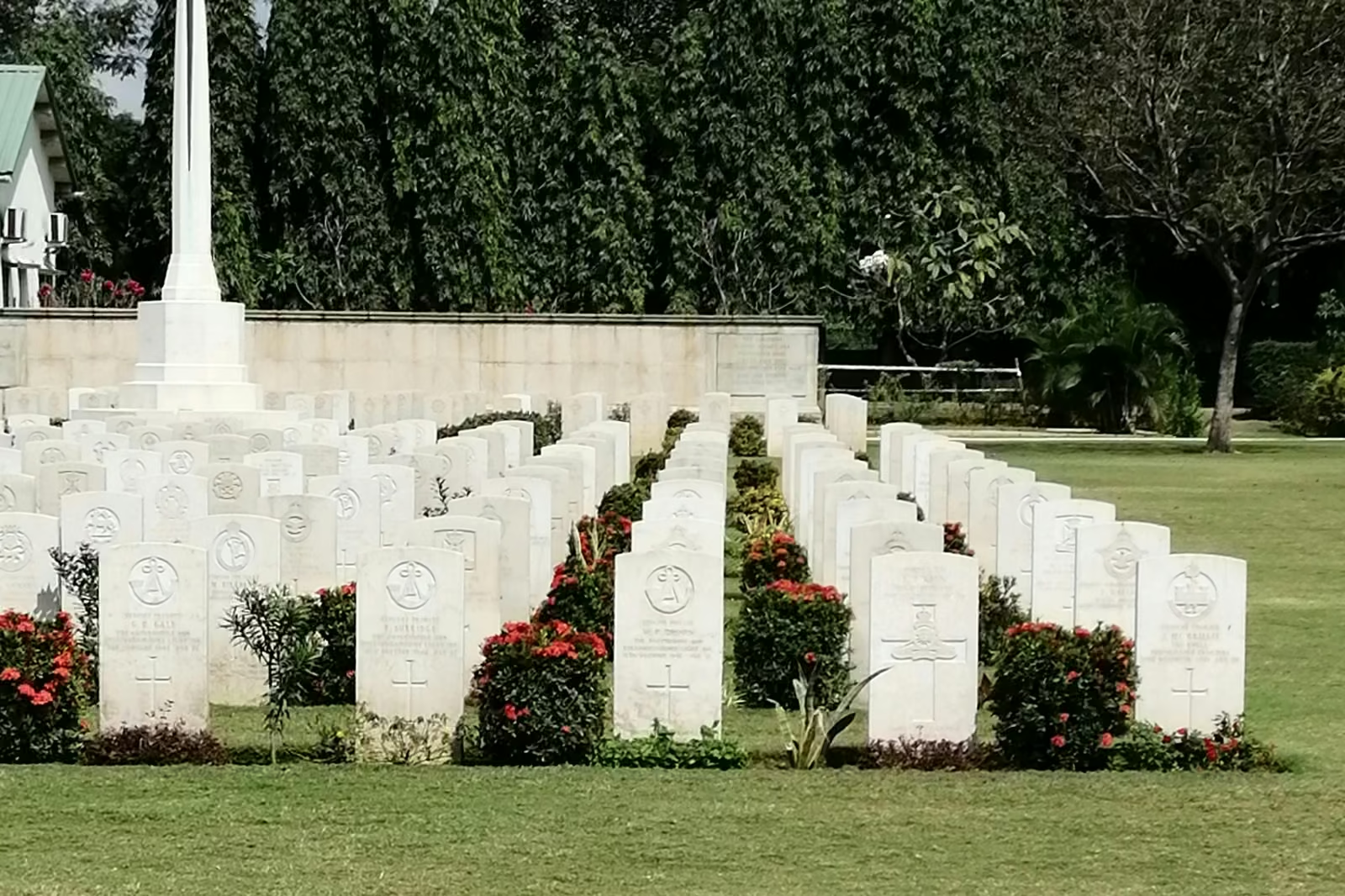
Cemetery approval should come before selecting the marker. A VA benefit does not override private cemetery design rules, monument sections, lot restrictions, foundation requirements, or placement policies.
Private cemeteries often regulate:
- Upright versus flat memorials
- Granite, marble, or bronze material
- Marker dimensions
- Bronze marker base requirements
- Concrete foundation size and depth
- Placement at the head or foot of the grave
- Whether companion graves may share a memorial
- Lot owner authorization
- Installation contractor requirements
- Cemetery fees and scheduling
The practical sequence is simple: check the cemetery first, select the marker second, submit the form third, and plan installation before delivery. This prevents the most common private cemetery problem, which is receiving an approved VA marker that the cemetery will not allow in the chosen style or location.
Military Headstone Installation Guide
Installation responsibility depends on cemetery type. In national, military post, and military base cemeteries, cemetery staff generally set the government headstone or marker at no cost to the family. Some state veterans cemeteries may charge a small setting fee. Private cemetery installation is the applicant’s responsibility and is paid privately.
Installation in National and Military Cemeteries
When burial occurs in a cemetery that uses the federal electronic ordering system, cemetery officials usually order the headstone or marker as part of the burial arrangement process. Families provide inscription information, but the cemetery handles ordering and placement.
Installation in Private Cemeteries
For private cemeteries, the VA ships the headstone or marker to the cemetery or a designated receiving agent. The family must arrange the foundation, setting, and cemetery coordination. Private cemeteries may charge for placement, maintenance, foundations, permits, or other related work.
A monument company or cemetery-approved installer may need to:
- Receive or coordinate delivery
- Prepare the foundation
- Install a granite base for bronze markers
- Set the marker level and aligned
- Follow cemetery placement rules
- Confirm that the grave location is correct
- Coordinate timing with cemetery staff
Families should not assume that a shipped marker means the grave will be marked automatically. In private cemeteries, the marker may arrive before the foundation is ready, before cemetery paperwork is complete, or before installation is scheduled.
Costs Families Should Expect
The VA memorial item may be provided at no cost, but families can still face expenses for foundations, setting, placement, receiving, maintenance, and installation. Bronze markers may also require occasional upkeep, and cleaning a bronze grave marker properly can help maintain its appearance and finish over time.
Costs vary because each cemetery controls its own rules. A flat bronze marker on a granite base may require different labor and materials than an upright marble headstone. A cemetery may also require its own foundation, charge its own setting fee, or limit outside installers.
Families may also choose optional private memorial upgrades, such as:
- A granite base for a VA bronze marker
- A companion headstone that includes the veteran and spouse
- A private upright memorial with military service engraved
- A medallion attached to an existing family monument
- Matching lettering for nearby family stones
- Cemetery lettering or added inscriptions on a private stone
The strongest budgeting approach is to separate the VA benefit from the cemetery work. The marker may be free. The installation process may not be.
Replacement, Correction, and Damage Requests
A government-furnished headstone, marker, or medallion may be replaced when it is damaged beyond repair, deteriorated to the point that it no longer identifies the decedent, stolen, vandalized, incorrect for the veteran’s service era, or needs certain approved inscription corrections or additions.
Replacement requests may involve VA Form 40-1330 or VA Form 40-1330M, depending on the item and cemetery type. Families should provide photographs, documentation, and a clear explanation of the issue. If the request involves a factual inscription error, the correction should be supported with official documents.
When a marker is located in a private cemetery, responsibility can depend on the cause of damage. Damage from mowing, cemetery equipment, improper handling, or local work may involve the cemetery rather than the VA. Families should document the condition with clear photographs before moving or altering the marker.
Practical Checklist Before You Apply
A smooth military headstone request starts before the form is filed. Families should confirm eligibility, cemetery rules, inscription details, delivery, and installation responsibility before submitting the claim.
Use this checklist before applying:
- Confirm the veteran’s eligibility and discharge status.
- Locate the discharge document or other official service proof.
- Confirm whether the grave is marked or unmarked.
- Contact the cemetery for permitted marker styles.
- Ask whether the cemetery requires flat, upright, bronze, granite, or marble.
- Ask about foundation, setting, placement, and maintenance fees.
- Confirm who may authorize the marker on the lot.
- Decide between a government marker, medallion, or private memorial.
- Prepare exact inscription details.
- Review spelling, dates, branch, rank, awards, and emblem requests.
- Confirm who will receive shipment.
- Arrange installation before the marker arrives.
- Keep copies of all forms, proofs, cemetery approvals, and correspondence.
This order protects the family from avoidable delays. It also gives the cemetery, installer, and applicant the same information before the marker is produced.
Military Headstone Planning and Installation Support

A military headstone is both a federal memorial benefit and a cemetery installation project. The VA may provide the marker, but the cemetery controls what can be placed, where it can be placed, and what fees apply in private cemetery settings. Families who confirm eligibility, cemetery rules, inscription details, and installation arrangements before filing can avoid most delays.
At Fram Monument Company, we help families coordinate veteran bronze markers, matching granite bases, cemetery requirements, inscriptions, installation, and memorial planning with care and precision. We can assist with cemetery rule verification, matching private family memorials, and installing veteran markers in accordance with cemetery requirements.
Frequently Asked Questions
Are military headstones free?
Military headstones, markers, and medallions furnished by the VA are provided at no cost to eligible applicants. Private cemetery setting, foundation, placement, maintenance, or installation fees may still be charged separately.
Who pays to install a VA headstone in a private cemetery?
The family or applicant is responsible for arranging and paying private cemetery installation costs. The VA does not pay installation costs for government headstones or markers placed in non-national cemeteries.
Can a veteran get a VA marker if the grave already has a headstone?
Yes, an eligible veteran may qualify for a VA marker even if the private cemetery grave already has a privately purchased headstone, subject to the VA’s marked-grave eligibility rules and cemetery placement requirements.
Can a spouse get a VA headstone in a private cemetery?
A spouse or dependent child buried in a private cemetery is generally not eligible for a separate VA-furnished headstone or marker. They may be eligible for an inscription on the veteran’s headstone or marker when relationship documents are provided.
Can families add a photo to a VA military headstone?
No. Government-furnished headstones and markers do not allow private photos or custom graphics. VA inscriptions are limited to approved text, authorized emblems of belief, and specific approved symbols or honors.
Can a monument company engrave a VA headstone?
No. Only the National Cemetery Administration can inscribe a government-furnished headstone or marker. A monument company may install the marker in a private cemetery if permitted, but it cannot add private inscriptions to the VA marker.
Written by
CEO, Fram Monument Company
Niv Fishbein has helped families design, engrave, and install headstones since 2010. He brings deep knowledge of memorial traditions across many cultures, religions, and cemetery requirements.
More from Niv