

Har Sinai Cemetery headstone rules depend on the exact grave section, with some sections allowing upright single headstones, double headstones, flush bronze markers, granite markers, larger family monuments, and community mausoleum memorialization. The correct memorial option must be confirmed before a headstone, marker, or mausoleum inscription is designed, engraved, or scheduled for installation.
Har Sinai Cemetery is associated with Har Sinai–Oheb Shalom Congregation and its Har Sinai–Garrison Forest cemetery location in Owings Mills. Families can visit a local Baltimore showroom to explore suitable memorial options. Har Sinai–Oheb Shalom Congregation maintains four cemeteries and offers traditional plots as well as mausoleum space. Har Sinai–Garrison Forest has memorial options that include upright headstones, bronze markers, granite markers, family monuments, and a community mausoleum, depending on the applicable cemetery section.
Key Takeaways
- Har Sinai Cemetery rules are section-specific, so the cemetery section helps determine which memorial options are available.
- Upright single headstones, double headstones, flush bronze markers, granite markers, and larger family monuments may be available depending on the section.
- Har Sinai Cemetery also has community mausoleum options for above-ground burial memorialization.
- Cemetery approval should be confirmed before production, engraving, delivery, or installation.
- Fram Monument Company is not a parent, subsidiary, or affiliate of Har Sinai Cemetery or any cemetery.
Har Sinai Cemetery Rules Are Section-Specific
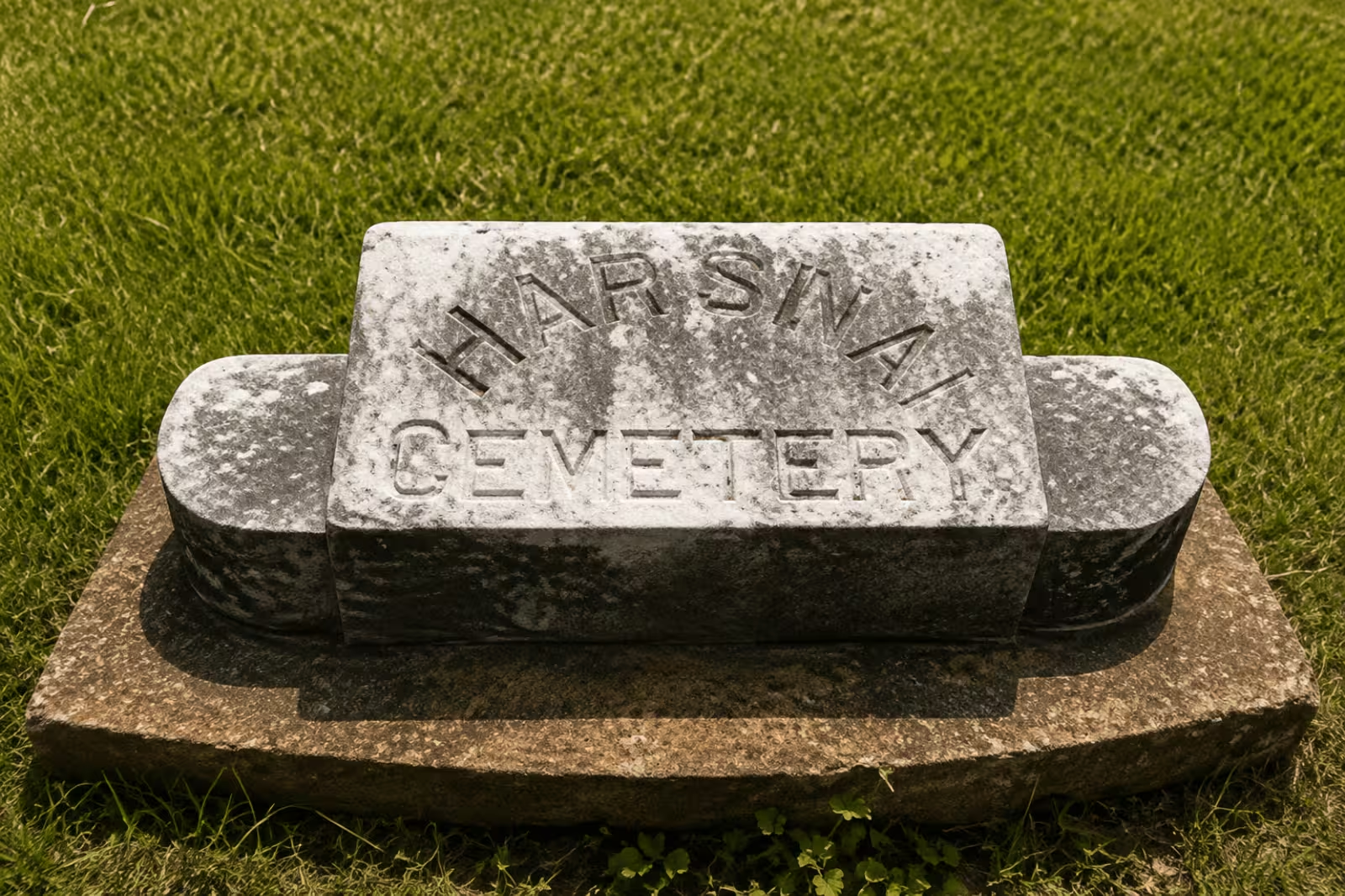
Har Sinai Cemetery does not have one universal headstone rule for every grave. The memorial options available to a family depend primarily on the cemetery section where the grave is located.
This is the most important point for families to understand before choosing a memorial. One Har Sinai section may permit upright granite monuments, while another may be designated for flush bronze markers. Family sections may offer options for larger granite memorials, while mausoleum memorialization follows a different format.
Cemetery sections are typically planned around particular memorial styles, layouts, and maintenance needs. Because requirements vary by section, families should confirm the current standards for their specific section before selecting a memorial.
Maryland cemetery guidance also recognizes that cemeteries may designate the types of markers or monuments permitted and that memorial options are governed by cemetery rules.
For Har Sinai Cemetery, the practical answer is simple: the grave section must be identified before the memorial type can be confirmed.
Memorial Types Allowed in Different Har Sinai Cemetery Sections
Har Sinai Cemetery has sections where upright single headstones, double headstones, flush bronze markers, granite markers, larger family monuments, and community mausoleum memorialization may be used. The available option depends on the rules for that particular section.
Families often begin the process with a preferred design in mind. That is helpful, but the design must be matched to the cemetery section. The cemetery’s standards control what may be installed at the grave.
Upright Single Headstones
An upright single headstone is a vertical memorial placed at the head of one grave. It usually includes the person’s name, dates, Hebrew name if desired, religious emblem, and a short inscription.
At Har Sinai Cemetery, upright single headstones may be used in sections that permit upright monuments. These memorials are commonly made from granite and may include a base, shaped top, polished face, carved lettering, Hebrew inscription, Star of David, or other approved design elements.
A single upright memorial creates a clear, traditional presence at the grave. It is often chosen when the cemetery section allows vertical memorialization and the family wants a permanent headstone with room for meaningful lettering.
Double Headstones and Companion Memorials
A double headstone is a shared memorial for two people, usually placed across companion graves. It may be used for spouses, parents, siblings, or other loved ones buried side by side.
Har Sinai Cemetery has sections where double headstones may be available, but the graves must be located in a section that permits companion monuments. The cemetery must also confirm that the graves are positioned properly for one shared memorial.
A double headstone needs careful design planning. One inscription may be completed immediately, while the second inscription may be added later. The lettering, spacing, Hebrew text, and emblem placement should be designed so the memorial remains balanced after both inscriptions are complete.
Flush Bronze Markers
A flush bronze marker is a bronze memorial plaque installed level with the ground, typically on a supporting base. These markers are commonly used in lawn-level sections because they preserve a uniform appearance and allow cemetery groundskeeping equipment to move safely through the section.
Har Sinai Cemetery has sections where flush bronze markers may be used. A bronze marker can include a name, dates, Hebrew lettering, border, emblem, vase, and personal inscription, depending on the approved size and cemetery standards.
Flush bronze markers can be single, companion, or family-oriented in layout, depending on the section and the available marker dimensions. Even when an upright monument is not permitted, a bronze marker can still be highly dignified and personal.
Granite Markers
A granite marker is a memorial made from granite rather than bronze. It may be flat and flush with the ground, or it may be part of a larger family memorial depending on the section.
Har Sinai Cemetery information identifies family sections where larger monuments and granite markers can be used. This means granite may be available beyond traditional upright monuments, but the specific section still determines the permitted size, placement, and design.
Granite markers are valued for durability, clean lettering, and the ability to coordinate with existing family memorials. A granite marker may include sandblasted lettering, carved symbols, polished panels, or laser-etched design features if allowed by the cemetery.
Larger Family Monuments
Family sections at Har Sinai Cemetery may allow larger monuments. These memorials can create a shared family presence and may include a family surname, individual names, companion inscriptions, or coordinated markers within a family lot.
A larger family monument requires more planning than a single grave marker. The design must account for the number of graves, future inscriptions, cemetery placement, foundation requirements, and the visual relationship between the monument and the surrounding lot.
A family memorial should be designed for both the present and the future. If additional names may be added later, the layout should reserve proper space and maintain consistent lettering.
Community Mausoleum Memorialization
Har Sinai Cemetery also has a community mausoleum for above-ground burials. Mausoleum memorialization provides an alternative to traditional in-ground burial and follows its own inscription and design considerations.
Mausoleum memorialization differs from an in-ground headstone. Instead of a freestanding monument or flush marker, the memorial may involve crypt-front lettering, approved inscription formats, emblems, nameplates, or bronze and granite elements controlled by the mausoleum’s rules.
Families considering above-ground burial may also review whether a custom cemetery mausoleum is suitable for their long-term family memorial plans. The cemetery’s inscription and design standards should still be confirmed before any work begins.
Upright Headstone Sections at Har Sinai Cemetery

Upright headstones at Har Sinai Cemetery are appropriate only in sections that permit vertical monuments. A family should confirm that the grave is in an upright monument section before choosing a single or companion headstone.
An upright headstone is usually the most visible form of in-ground memorialization. It stands above the grave and creates a traditional cemetery presence. For families who want Hebrew and English text, religious symbols, a family name, and a meaningful epitaph, an upright granite memorial often provides more design space than a smaller flat marker.
The basic parts of an upright monument are the die and the base. The die is the vertical stone that carries the inscription. The base supports the die and helps stabilize the memorial. Some cemeteries require specific base dimensions, maximum heights, minimum thicknesses, and foundation standards.
A cemetery-approved upright headstone may include:
- English name and dates
- Hebrew name or Hebrew inscription
- Star of David or other approved symbol
- Family relationship wording
- Short epitaph
- Polished or steeled granite finish
- Matching design for a nearby family memorial
These features should be included on the design proof before cemetery approval. The proof allows the cemetery, monument company, and family to review the memorial before the stone is produced.
Flush Bronze Marker Sections
Har Sinai Cemetery has sections where flush bronze markers may be used. These ground-level memorials are installed level with the surrounding lawn and are designed to maintain a consistent appearance within the section.
Bronze markers are commonly used because they are durable, readable, and well suited to lawn-level memorial areas. Depending on the approved design, a bronze plaque may include a border, emblem, lettering, dates, decorative details, and Hebrew lettering. Many bronze markers are also mounted on a granite base before installation.
A flush bronze marker has different design considerations from an upright headstone. Letter size, spacing, border style, emblem placement, inscription length, and any vase options must be planned around the approved marker dimensions.
At Har Sinai Cemetery, the permitted memorial type depends on the specific section. Families should confirm whether a flush bronze marker is required or simply permitted, along with the approved marker size, base specifications, and installation requirements, before selecting a design.
A well-planned bronze marker can remain highly personal while fitting the cemetery’s section standards. Clear names and dates, carefully arranged Hebrew lettering if desired, and a limited number of meaningful symbols can help keep the memorial balanced and easy to read.
Granite Marker and Family Section Options
Granite markers and larger family monuments may be used in certain Har Sinai Cemetery family sections. These options are especially important for families who want a coordinated family memorial rather than a single individual marker.
Granite has several practical advantages. It is durable, stable, and suitable for carved lettering. It is available in many colors, although cemetery rules may limit what is approved in a specific section. Granite can also be matched to existing family monuments when a new memorial is being added near relatives.
In a family section, granite memorial planning may involve:
- A shared family surname
- Individual names and dates
- Companion inscriptions
- Future inscription space
- Matching footstones or markers
- Hebrew and English lettering
- Larger monument proportions
- Coordinated granite color and finish
The cemetery’s standards still control the final design. A family may own multiple graves, but ownership of burial rights does not automatically allow any memorial size or style. Families should confirm the permitted memorial placement, footprint, foundation requirements, and relationship to surrounding graves before the design is finalized.
Community Mausoleum Memorial Rules

Community mausoleum memorialization at Har Sinai Cemetery should be handled separately from in-ground headstone planning. Above-ground burial spaces usually have different inscription rules than graves in traditional sections.
A mausoleum is a structure for above-ground entombment. A community mausoleum contains multiple crypts within a shared structure. The memorial is usually placed on or near the crypt front, rather than on a freestanding stone in the ground.
The cemetery may control:
- Lettering style
- Name format
- Date format
- Emblem selection
- Vase placement
- Hebrew inscription options
- Bronze or granite nameplate standards
- Crypt-front layout
Because community mausoleum spaces are visually connected, uniformity is often an important consideration. Families should confirm Har Sinai Cemetery’s current crypt-front inscription, lettering, emblem, and design requirements before any lettering or plaque work begins.
What Must Be Verified Before Ordering
Before ordering a Har Sinai Cemetery headstone, the cemetery section, grave location, memorial type, size, placement, material, foundation requirement, inscription layout, and approval process should be verified.
For a Har Sinai Cemetery memorial, choosing a headstone begins with confirming the grave location, section rule, memorial category, design size, material, inscription, cemetery fee structure, and installation authorization.
Grave Location
The grave location should include the cemetery name, section, lot, row, and grave number if available. At Har Sinai Cemetery, the exact section helps determine which memorial options and requirements apply, including whether an upright headstone, double headstone, flush bronze marker, granite marker, larger family monument, or mausoleum memorialization may be appropriate.
Har Sinai–Garrison Forest Cemetery is located at 11405 Garrison Forest Road, Owings Mills, MD 21117. Before visiting, designing a memorial, or scheduling installation, families should confirm the current cemetery information, grave section, and applicable memorial requirements with Har Sinai–Oheb Shalom Congregation or their memorial provider.
Memorial Type
The cemetery should confirm whether the grave allows an upright single headstone, double headstone, flush bronze marker, granite marker, larger family monument, or mausoleum inscription. Because memorial options vary by section, the permitted type should be verified before a design is finalized.
Size and Placement
Every memorial must fit the approved section standards. Upright monuments may have limits for height, width, base size, and foundation. Flush markers may have required dimensions and placement. Family monuments may have larger but still controlled footprints.
Material
Granite and bronze are the primary materials discussed for Har Sinai Cemetery memorials. Granite may be used for upright headstones, granite markers, and larger family monuments. Bronze may be used for flush markers in designated sections.
Inscription
The inscription should be proofed before production. Names, dates, Hebrew names, Hebrew lettering, family relationships, and epitaphs should be reviewed carefully. Names, dates, Hebrew names, Hebrew lettering, family relationships, and epitaphs should be reviewed carefully for accuracy, while the overall design should also be checked for compliance with the applicable cemetery requirements before production.
Installation
Installation should be coordinated only after the memorial has received the necessary cemetery approval. Families should confirm any foundation specifications, installation requirements, cemetery fees, and authorization procedures that apply to their section before scheduling installation.
Jewish Headstone Design Considerations
Jewish headstones at Har Sinai Cemetery may include Hebrew and English lettering, names, dates, religious symbols, and wording that reflects family tradition. Because inscription and design requirements can vary, these elements should be planned together with the cemetery’s current section-specific standards.
Common Jewish memorial elements may include the Hebrew name of the deceased, parents’ names in Hebrew, the Star of David, traditional Hebrew abbreviations, and a short English or Hebrew phrase. The exact combination should reflect the family’s preferences while remaining consistent with the cemetery’s approved design requirements.
Clarity is especially important when combining Hebrew and English text. Names and dates should be easy to read, lettering should be appropriately sized, and symbols should support the inscription without making the memorial feel crowded. If a companion inscription may be added later, both sides of the design should be planned together from the beginning.
Unveiling timing should also be considered during the planning process. In Jewish tradition, an unveiling serves as the formal dedication of the headstone, so families should allow enough time for cemetery verification, design proofing, approval, engraving, finishing, delivery, and installation before the planned ceremony.
Families should confirm the current Har Sinai Cemetery requirements and installation schedule early in the process to help avoid delays before an unveiling or other memorial observance.
Maryland Cemetery Rules That Affect Har Sinai Memorial Planning
Maryland cemetery guidance helps explain why families should confirm memorial requirements before ordering a headstone or marker. Cemeteries may establish their own standards for permitted monument types, materials, dimensions, placement, foundations, inscriptions, and installation procedures.
Har Sinai Cemetery is maintained by Har Sinai–Oheb Shalom Congregation, and its memorial options vary by cemetery section. For that reason, families should confirm the current requirements for the specific grave location before selecting a memorial or beginning production.
Maryland guidance also recognizes that cemetery rules can govern the types of markers and monuments permitted within a cemetery. However, certain state requirements that apply to registered cemetery operators may not apply in the same way to bona fide religious nonprofit cemeteries.
For families planning a memorial at Har Sinai Cemetery, the most reliable approach is to verify the cemetery section, permitted memorial type, dimensions, materials, foundation requirements, approval process, and installation procedures directly with the congregation or an experienced monument provider.
The key planning principle is simple: choose the memorial provider carefully, but confirm Har Sinai Cemetery’s current section-specific requirements before the memorial is produced or installed.
Working With a Monument Company for Har Sinai Cemetery
Working with an experienced monument company can make the memorial process easier to navigate, especially when cemetery requirements vary by section. Before production begins, the grave location, permitted memorial type, dimensions, materials, inscription details, approval requirements, and installation process should all be confirmed.
The monument company should also help the family create a memorial that feels appropriate, dignified, and lasting while staying within the cemetery’s current requirements.
A thorough memorial process should include:
- Confirming the cemetery and grave location
- Identifying the memorial options permitted in the section
- Reviewing upright, bronze, granite, family, or mausoleum options
- Preparing a cemetery-ready design proof
- Carefully proofing English and Hebrew inscriptions
- Confirming applicable cemetery fees and installation requirements
- Coordinating approval, delivery, and installation
We can assist families throughout the process, from memorial design and engraving to cemetery coordination, production, delivery, and installation. The goal is to make sure each step is handled carefully and that the finished memorial is appropriate for the cemetery section and meaningful to the family.
Planning a Har Sinai Cemetery Memorial with Confidence
Har Sinai Cemetery headstone rules depend on the section where the grave is located. Some sections have options for upright single or double headstones, while other sections are designated for flush bronze markers. Family sections may allow larger monuments and granite markers, and Har Sinai also has a community mausoleum for above-ground burial. Confirming the applicable section requirements before designing the memorial helps ensure the chosen memorial is appropriate and can proceed through the cemetery’s approval and installation process.
At Fram Monument Company, we help families verify Har Sinai Cemetery requirements before a memorial is made. We assist with upright headstones, double headstones, flush bronze markers, granite markers, larger family monuments, and mausoleum inscriptions, while handling design, engraving, cemetery approval coordination, and installation with care and respect.
Frequently Asked Questions
Does Har Sinai Cemetery allow upright headstones?
Har Sinai Cemetery allows upright single headstones in certain sections. Upright monuments are not automatically available for every grave, so the exact section must be verified before a headstone is designed or ordered.
Does Har Sinai Cemetery allow double headstones?
Har Sinai Cemetery has sections where double headstones may be used. A double headstone should only be planned after confirming that the companion graves are in a section that permits a shared memorial.
Does Har Sinai Cemetery have sections for flush bronze markers?
Yes. Har Sinai Cemetery has sections where flush bronze markers may be used. Because memorial requirements vary by section, families should confirm whether a flush bronze marker is required or permitted for the specific grave location, along with the approved size, base, and installation requirements.
Can granite markers be used at Har Sinai Cemetery?
Granite markers may be used in certain Har Sinai Cemetery sections, including family sections where larger monuments and granite markers are available. The permitted size, style, and placement must be confirmed before production.
Does Har Sinai Cemetery have family sections?
Yes, Har Sinai Cemetery has family sections where larger monuments and granite markers can be used. These memorials require section-specific review because size, placement, inscription planning, and future lettering all matter.
Does Har Sinai Cemetery have a mausoleum?
Yes. Har Sinai Cemetery has a community mausoleum for above-ground burials. Families interested in mausoleum space should confirm current availability, memorial options, inscription requirements, and other applicable details before making arrangements.
Written by
CEO, Fram Monument Company
Niv Fishbein has helped families design, engrave, and install headstones since 2010. He brings deep knowledge of memorial traditions across many cultures, religions, and cemetery requirements.
More from Niv