

A custom cemetery mausoleum is right for families who want above-ground entombment, a lasting family estate memorial, and a highly personalized structure, but it requires careful planning, cemetery approval, a larger budget, and enough time for design, fabrication, foundation work, and installation.
For many families, a mausoleum is not simply an alternative to in-ground burial. It is an architectural memorial that can hold one person, a couple, or multiple generations in a dignified above-ground setting. Visiting a local showroom can help families review materials, explore design possibilities, and better understand the planning process before making permanent decisions. The final choice should balance personal wishes, family tradition, cemetery rules, religious considerations, cost, timeline, and long-term maintenance.
Key Takeaways
- A custom mausoleum is an above-ground cemetery structure that contains one or more crypts for entombment.
- Cemetery approval should be confirmed before design begins because rules vary by cemetery, section, lot size, foundation requirements, and allowed materials.
- Cost depends on crypt count, granite selection, design complexity, foundation work, cemetery fees, delivery, installation, and personalization.
- Custom mausoleums usually require advance planning because design, approval, fabrication, and installation can take months.
- A mausoleum is best suited for families who want a permanent architectural memorial and are comfortable with the added cost, visibility, and planning process.
What Is a Custom Cemetery Mausoleum?

A custom cemetery mausoleum is a privately designed above-ground structure built to hold human remains in one or more crypts. It may be designed for one person, two people, or an entire family, depending on the cemetery property, structure size, and long-term memorial plan.
A mausoleum is often described as an above-ground burial option, but the more precise term is above-ground entombment. Instead of placing a casket in the earth, the casket is placed inside a crypt within a stone, granite, concrete, or masonry structure.
Custom cemetery mausoleums can be modest and compact, or they can become elaborate family estate memorials with doors, stained glass, carved granite, benches, walkways, religious symbols, and multiple crypt spaces. The right design depends on the family’s wishes, the cemetery’s requirements, the available lot, and the number of people the structure is intended to memorialize.
Mausoleum Meaning in Cemetery Planning
In cemetery planning, a mausoleum is both a memorial and a structure. It marks a resting place, but it also physically houses the crypt spaces used for entombment.
That makes a mausoleum different from a traditional upright headstone or flat grave marker. A headstone identifies an in-ground burial location. A mausoleum contains the entombment space itself.
This difference affects nearly every part of the planning process. A mausoleum requires more design coordination, more cemetery review, a stronger foundation, heavier installation equipment, and a more detailed written quote than most standard memorials.
Mausoleum vs. Crypt vs. Columbarium
Families often hear these terms together, but they do not mean the same thing.
A mausoleum is the structure.
A crypt is the chamber inside the mausoleum where a casket is placed.
A columbarium is a structure or section designed for cremation niches.
A niche is the individual space that holds an urn.
Some custom mausoleums are built only for casket entombment. Others combine casket crypts with cremation niches, allowing families with different end-of-life preferences to be memorialized together in one estate setting.
Private Mausoleum vs. Community Mausoleum
A private mausoleum is built for an individual, couple, or family. It is usually located on cemetery property purchased or assigned for that purpose. It offers the greatest level of privacy, design control, and family identity.
A community mausoleum is a larger shared structure owned or managed by a cemetery. Families purchase or reserve individual crypt spaces inside the building. This option typically costs less than commissioning a private structure because the building, foundation, maintenance systems, and common areas are shared.
Both options involve above-ground entombment, but they serve different needs. A community mausoleum may be right for families who want entombment without designing a structure from scratch. A private mausoleum may be right for families who want a distinctive, long-term memorial presence and a dedicated place for future generations.
Is a Custom Mausoleum Right for Every Family?
A custom mausoleum is not right for every family. It is most appropriate when the family wants above-ground entombment, has cemetery space that allows a private structure, wants a highly personalized memorial, and is prepared for the cost and timeline of a custom architectural project.
The word “custom” matters. A custom mausoleum involves decisions about crypt count, granite, layout, doors, lettering, symbols, foundation, cemetery placement, and future use. It is more than choosing a memorial from a catalog.
For some families, that level of planning is meaningful. For others, a traditional headstone, bronze marker, ledger, cremation memorial, or community mausoleum may be more practical.
When a Mausoleum May Be the Right Choice
A custom mausoleum may be a strong fit when a family wants a permanent above-ground resting place with architectural presence.
It may also be appropriate when several family members want to be memorialized together. A family mausoleum can create a central estate location rather than separating memorials across multiple grave spaces or cemetery sections.
Some families choose mausoleums because they prefer not to use in-ground burial. Others value the accessibility of above-ground entombment, especially when family members may find it difficult to visit ground-level grave markers.
A mausoleum can also provide a private place for reflection. Walk-in mausoleums, family estate layouts, benches, and landscaped surroundings can create a quiet setting where relatives return for anniversaries, religious observances, unveilings, or personal visits.
When Another Memorial May Be a Better Fit
A mausoleum may not be the best choice when the cemetery does not allow private mausoleums, the available lot is too small, or the family prefers a simpler memorial.
Cost is another important factor. Public cemetery mausoleum crypts may be priced closer to other cemetery options in some areas, but private custom mausoleums are typically far more expensive because they require a dedicated structure, foundation, design work, delivery, and installation. Public-facing cost guides describe community mausoleum spaces as costing far less than custom private family structures, with published examples ranging from several thousand dollars for single crypt entombment in a public mausoleum to far higher amounts for private custom buildings.
Timeline can also make a custom mausoleum difficult in an immediate need situation. If a funeral or entombment service is already scheduled, a standard crypt in an existing mausoleum may be more practical than commissioning a new custom structure.
Questions Families Should Ask Early
Before choosing a mausoleum, families should answer several practical questions.
Does the cemetery allow private mausoleums in the desired section?
How many crypts are needed now, and how many may be needed in the future?
Will the structure include only casket crypts, or should it also include cremation niches?
What level of design detail feels appropriate for the family’s traditions and budget?
Who will be responsible for maintenance over time?
Are there religious or cultural expectations that should guide the decision?
These questions help families avoid designing a memorial that later conflicts with cemetery rules, family expectations, or long-term needs.
Types of Custom Cemetery Mausoleums
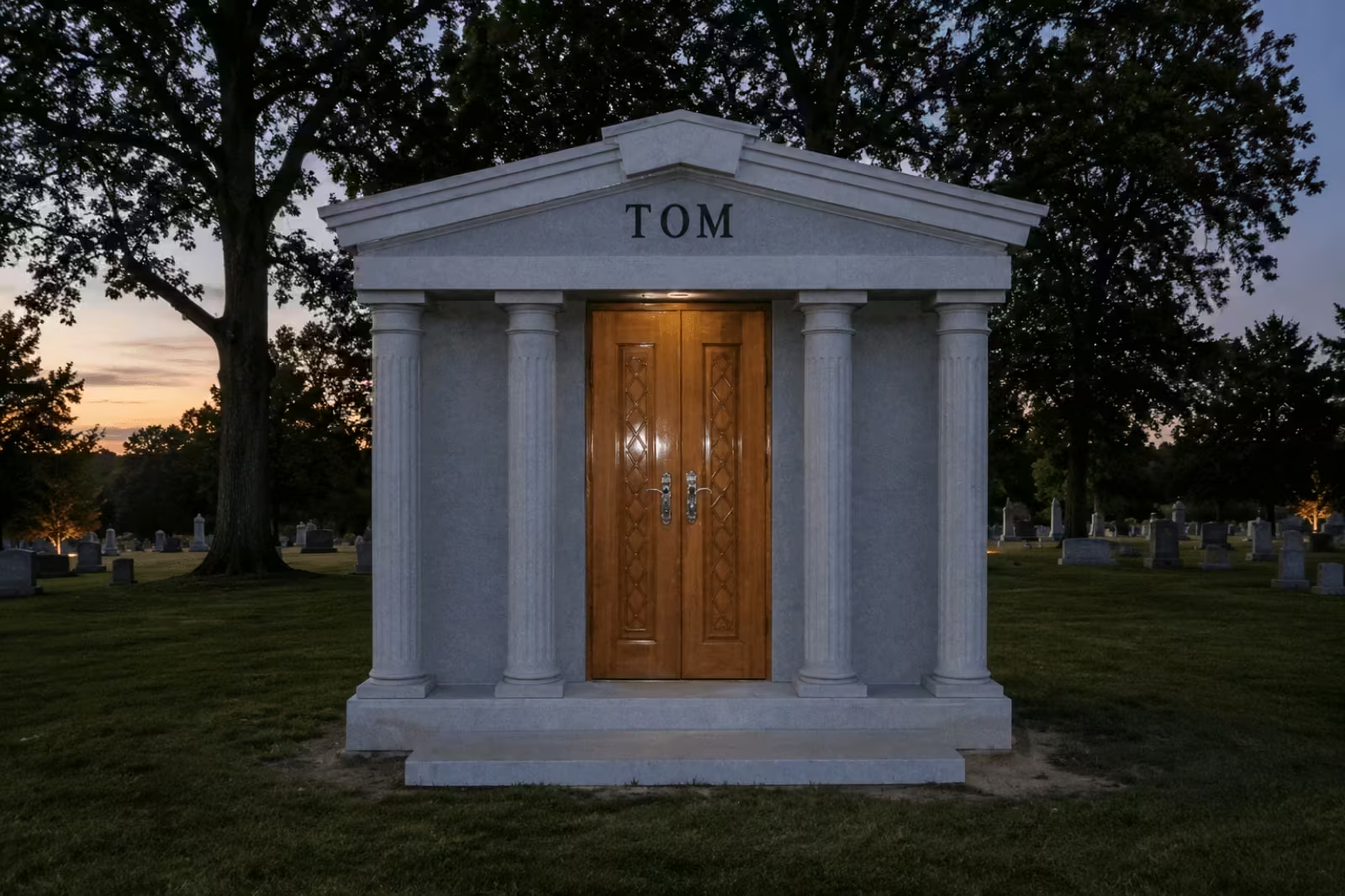
The main types of custom cemetery mausoleums include single crypt mausoleums, companion mausoleums, family mausoleums, walk-up mausoleums, walk-in mausoleums, and mausoleums that include cremation niches. The best type depends on family size, cemetery space, budget, and visitation preferences.
Choosing the right type begins with one simple question: who is the mausoleum meant to serve?
A mausoleum for one person has very different design needs from a family estate intended for several generations. The number of crypts affects size, cost, foundation requirements, cemetery approval, and future inscription planning.
Single Crypt Mausoleums
A single crypt mausoleum is designed for one person. It may be a compact above-ground structure with one crypt chamber and exterior inscription space.
This option may appeal to someone making pre-need arrangements or to a family that wants above-ground entombment without building a larger family estate. It still requires cemetery approval, foundation planning, and proper installation.
Companion Mausoleums
A companion mausoleum is designed for two people, usually spouses, partners, or close family members.
Companion designs may use side-by-side crypts or a stacked arrangement, depending on the structure, cemetery rules, and family preference. The exterior may include both names, shared inscriptions, religious emblems, or a family surname.
This is one of the most common private mausoleum concepts because it allows two people to be memorialized together in a unified design.
Family Mausoleums
A family mausoleum contains multiple crypt spaces. Smaller family mausoleums may hold two to eight people, while larger custom structures can be designed for many more, depending on cemetery property and engineering requirements.
Family mausoleums are often part of a larger cemetery estate. They may include a central structure, surrounding benches, granite coping, walkways, pavers, gardens, or coordinated family markers.
This type of mausoleum requires careful future planning. Families should think about available crypt spaces, future inscriptions, whether cremation niches should be included, and how the memorial should serve later generations.
Walk-Up Mausoleums
A walk-up mausoleum is accessed from the outside. Visitors approach the structure, view the inscription, and pay respects from the exterior.
This style can be simpler than a walk-in mausoleum while still offering the dignity and permanence of above-ground entombment. Walk-up mausoleums may be appropriate for single, companion, or smaller family designs.
Walk-In Mausoleums
A walk-in mausoleum includes an interior space that visitors can enter, when allowed by cemetery rules and design. These structures may include bronze doors, granite floors, interior walls, stained glass, religious imagery, benches, and more elaborate architectural details.
Walk-in mausoleums are often chosen for family estates because they create a private and sheltered place for reflection. They also require more planning because doors, flooring, ventilation, drainage, interior dimensions, and visitor access must be designed properly.
Mausoleums With Cremation Niches
Modern families often include both casket burial and cremation preferences. A custom mausoleum can sometimes be designed with casket crypts and cremation niches in the same structure.
This hybrid approach allows families to preserve a shared memorial location even when different relatives choose different forms of disposition. It also makes better use of available estate space.
Cemetery rules should be checked early because not every cemetery allows every combination of crypts, niches, and private structures.
How Much Does a Custom Mausoleum Cost?
A custom mausoleum can range from tens of thousands of dollars to several hundred thousand dollars or more, depending on crypt count, granite, design complexity, cemetery fees, foundation work, delivery, installation, and site conditions. Community mausoleum crypts usually cost less than private custom mausoleums.
Cost is one of the most important questions families ask, and it is also one of the hardest to answer without a site-specific quote.
Published cost guides commonly separate community mausoleum entombment from private mausoleum construction. One current source describes single crypt entombment in a public indoor mausoleum as averaging about $7,000 to $8,000 in the United States, while private family walk-up mausoleums and custom structures cost substantially more. Another current cost guide notes that private mausoleum pricing depends heavily on whether the family is purchasing space in an existing structure or commissioning a private building from scratch.
Because cemetery fees, property costs, foundation requirements, freight, and installation may be separate, families should not compare mausoleum prices by headline number alone.
Why Mausoleum Prices Vary So Widely
A small single crypt structure and a walk-in family mausoleum are both mausoleums, but they are very different projects.
A larger mausoleum needs more stone, more crypt spaces, a larger foundation, more installation planning, and often more cemetery review. A structure with bronze doors, stained glass, carved columns, interior granite, custom religious symbols, and surrounding hardscape will cost more than a simpler exterior-access design.
Location also matters. Cemetery property, local labor costs, crane access, freight distance, permit requirements, and cemetery charges can change the final cost significantly.
Main Factors That Affect Cost
The largest mausoleum cost drivers usually include:
- Number of crypts
- Walk-up or walk-in design
- Granite color, thickness, and finish
- Overall footprint and height
- Foundation size and engineering
- Cemetery fees and approval charges
- Delivery and crane access
- Installation complexity
- Bronze doors or specialty hardware
- Stained glass or decorative panels
- Interior flooring and wall finishes
- Engraving, lettering, emblems, and artwork
- Benches, pavers, pathways, coping, and landscaping
- Future crypt or niche capacity
Cost should always be evaluated as a complete project, not just as a stone structure.
What Should Be Included in a Written Quote?
A complete mausoleum quote should clearly state what is included and what is not included.
Families should look for written details on design work, drawings, crypt count, stone type, finishes, lettering, doors, glass, foundation, cemetery coordination, delivery, installation, taxes, cemetery fees, engineering, permit-related costs, and warranty or service terms.
If a quote excludes cemetery foundation fees, lot costs, freight, crane work, or installation, the final project may cost much more than the initial number suggests.
The safest comparison is not “Which quote is lowest?” It is “Which quote clearly accounts for every part of the project?”
Cemetery Costs vs. Mausoleum Construction Costs
A mausoleum project may involve both cemetery charges and memorial construction charges.
The cemetery may charge for the lot, private estate space, foundation review, installation oversight, permits, perpetual care, entombment, opening and closing, or future services. The monument or mausoleum provider may charge for design, fabrication, granite, crypt construction, engraving, delivery, foundation construction, and installation.
Some cemeteries bundle certain charges. Others separate them. Families should ask for itemized written estimates from every party involved.
Cemetery Rules and Approval Requirements
Cemetery approval should come before final mausoleum design because every cemetery controls where private mausoleums may be placed, how large they may be, what materials are allowed, what foundation is required, and who may install the structure.
A custom mausoleum cannot be planned in isolation. The cemetery’s rules shape the project from the beginning.
Even if a family owns cemetery property, that does not automatically mean a private mausoleum can be built there. Many cemeteries restrict mausoleums to certain estate sections or require minimum lot sizes.
Why Cemetery Approval Comes First
Cemetery approval protects the family from costly redesigns. If a mausoleum is designed before the rules are confirmed, the cemetery may reject its height, footprint, style, material, placement, door orientation, foundation plan, or installation method.
Approval should include more than a casual verbal answer. Families should request written confirmation of the cemetery’s requirements whenever possible.
Common Mausoleum Restrictions
Common cemetery restrictions may involve:
- Minimum lot size
- Maximum height
- Maximum footprint
- Setback from lot lines
- Granite color or material requirements
- Foundation specifications
- Door type and swing direction
- Crypt count limitations
- Drainage and grade requirements
- Installation access
- Required cemetery inspections
- Approved contractor or installer rules
- Rules for benches, coping, walkways, or landscaping
These details can affect both the design and the final cost.
Private Land and Family Cemetery Considerations
Some families ask whether a mausoleum can be built on private land. This depends on state law, local regulations, zoning, burial permits, environmental rules, access rights, deed restrictions, and long-term maintenance responsibilities.
Private land burial or entombment should never be assumed. Families should consult the appropriate local authorities before purchasing materials or beginning design.
Design Options for a Custom Mausoleum

A custom mausoleum can be personalized through granite color, architectural shape, crypt layout, doors, glass, carving, lettering, religious symbols, family names, benches, walkways, coping, and landscaping, but every design choice must fit cemetery rules and structural requirements.
The visible design is often what families think about first. They may imagine a dignified granite structure, bronze doors, stained glass, or a quiet family estate surrounded by benches and plantings.
Those details matter. They help the memorial feel personal rather than generic. Still, design should always be balanced with durability, cemetery approval, and long-term care.
Granite, Shape, and Architectural Style
Granite is commonly used for custom cemetery mausoleums because of its strength, weather resistance, and range of colors and finishes.
Traditional mausoleums may use classic gray, black, mahogany, pink, or other cemetery-approved granite colors. Architectural styles may be simple and rectangular, chapel-inspired, classical, contemporary, religious, or estate-like.
The best design should feel appropriate in the cemetery setting. A mausoleum should be distinctive without feeling disconnected from the surrounding memorial landscape.
Doors, Windows, Floors, and Interior Details
Walk-in mausoleums may include bronze doors, decorative grilles, stained glass, granite floors, interior walls, carved panels, or symbolic artwork.
These features should be chosen carefully. Bronze doors and glass can add beauty, but they also introduce hardware, weather exposure, security considerations, and maintenance needs.
Interior details should support reflection, not overwhelm the purpose of the memorial.
Engraving, Lettering, Symbols, and Personalization
Personalization may include names, birth dates, death dates, family surnames, epitaphs, religious symbols, emblems, portraits, languages, and decorative carving.
For family mausoleums, inscription planning is especially important. Future names and dates should have a clear location. Lettering style, spacing, panel size, and overall balance should be considered before the first inscription is carved.
This prevents later additions from feeling crowded or mismatched.
Surrounding Estate Features
A mausoleum often becomes the central element of a family cemetery estate.
Surrounding features may include granite benches, pavers, pathways, coping, ledgers, vases, planters, flower spaces, and landscaping. These elements can make visitation easier and create a defined family area.
They may also require separate cemetery approval. A cemetery may allow the mausoleum but restrict benches, borders, plantings, or walkway materials.
Structural and Technical Considerations
A mausoleum must be designed as a permanent outdoor structure, not only as a memorial. Foundation strength, drainage, ventilation, sealing, roof design, stone joints, site grading, and installation access all affect long-term durability.
The beauty of a mausoleum is visible. The performance of a mausoleum depends on what many visitors never see.
A well-planned structure must manage weight, moisture, weather, ground movement, and cemetery conditions over time. Current mausoleum construction resources commonly emphasize adequate drainage, foundation planning, crypt construction, and site conditions as core quality concerns.
Foundation and Site Preparation
A mausoleum is heavy. Granite, stone, concrete crypt components, doors, and roof sections place significant load on the ground below.
The foundation must be appropriate for the structure’s weight, footprint, soil conditions, drainage, and cemetery requirements. Poor foundation planning can lead to settling, cracking, misalignment, water issues, or costly repairs.
Site preparation may include excavation, subgrade evaluation, concrete work, drainage planning, and coordination with cemetery staff.
Drainage, Ventilation, and Sealing
Drainage matters because water is one of the main threats to long-term cemetery structures. Rain, snow, groundwater, surface runoff, and freeze-thaw cycles can all affect a mausoleum if water is not directed properly.
Ventilation and sealing also matter. Mausoleum crypt systems are designed to contain and manage the entombment environment in a controlled way. Some technical construction discussions describe mausoleum systems as incorporating drainage, venting, and crypt sealing considerations to protect the structure and maintain proper performance over time.
Families do not need to become engineers, but they should ask whether the design addresses drainage, sealing, ventilation, and long-term weather exposure.
Roof Design, Joints, and Weather Resistance
The roof, joints, seams, and stone connections are critical. These areas are exposed to water, temperature changes, and movement over time.
A mausoleum roof should shed water properly. Joints should be planned and finished carefully. Stone panels should be selected and installed with long-term stability in mind.
A mausoleum is intended to stand for generations, so construction quality matters as much as appearance.
Delivery, Access, and Installation
Installation is another major part of the project.
Custom mausoleum components are heavy and may require specialized equipment, cemetery coordination, crane access, road clearance, and careful staging. Limited cemetery access can increase cost or affect the installation method.
A good design is only successful if it can be safely delivered, placed, leveled, sealed, and completed according to cemetery requirements.
Mausoleum Timeline: From Planning to Entombment
A custom mausoleum often takes several months because the process may include cemetery approval, design revisions, material selection, fabrication, foundation work, delivery, installation, and final cemetery coordination. Advance planning is usually the safest approach.
The original decision often begins during funeral planning, estate planning, or pre-need conversations. Whenever possible, custom mausoleum planning should begin before there is an immediate need.
Pre-Need Planning vs. At-Need Planning
Pre-need planning means making arrangements before death. For mausoleums, this can be especially helpful because the family has time to choose cemetery property, review designs, compare quotes, and make decisions without the pressure of funeral timing.
At-need planning happens after a death has occurred. A custom mausoleum may still be possible, but the family may need temporary arrangements or an existing crypt option if the structure cannot be completed before the funeral or entombment service.
Step-by-Step Mausoleum Process
A typical custom mausoleum process may include:
- Confirming cemetery rules and estate property
- Determining crypt count and future family needs
- Selecting a walk-up, walk-in, companion, or family design
- Choosing granite, finishes, doors, glass, symbols, and inscriptions
- Reviewing drawings and written estimates
- Securing cemetery approval
- Finalizing engineering or foundation details
- Fabricating the mausoleum components
- Preparing the cemetery foundation
- Delivering and installing the structure
- Completing lettering, sealing, inspection, and final preparation
The order may vary, but cemetery approval and written scope should be addressed early.
Can a Mausoleum Be Completed Before a Funeral?
A custom mausoleum usually should not be assumed to be available within a short funeral timeline.
Some simple or pre-designed structures may be completed faster than complex walk-in family mausoleums, but custom work often requires design, approval, fabrication, foundation construction, and installation. These steps take time.
Families who know they want a mausoleum should begin planning as early as possible.
Pros and Cons of Custom Mausoleums
The main benefits of a custom mausoleum are above-ground entombment, family estate memorialization, personalization, accessibility, and architectural presence. The main drawbacks are higher cost, cemetery restrictions, longer timelines, maintenance responsibilities, and greater visual prominence.
A mausoleum can be deeply meaningful, but it is not the simplest cemetery memorial option.
The best decision comes from understanding both sides clearly.
Benefits of Above-Ground Entombment
A custom mausoleum offers a permanent and visible memorial presence.
It can bring family members together in one location. It can be personalized with meaningful architecture, inscriptions, symbols, and materials. It can provide an above-ground resting place for those who prefer not to use in-ground burial.
For some families, the ability to create a defined estate space is the most important benefit. A mausoleum can become a place of remembrance for children, grandchildren, and future generations.
Potential Drawbacks
The most common drawback is cost. A custom mausoleum is typically a major investment.
The second drawback is approval complexity. The family must work within cemetery rules, site limitations, and installation requirements.
The third drawback is time. Unlike a standard grave marker, a mausoleum may involve months of planning and production.
Maintenance should also be considered. Doors, joints, glass, stone surfaces, landscaping, and surrounding hardscape may need attention over time.
Mausoleum vs. In-Ground Burial
In-ground burial usually involves a cemetery plot, casket, vault where required, grave opening and closing, and a headstone or marker. A mausoleum involves above-ground crypt space, a structure, foundation, installation, and often a more detailed memorial design.
Neither option is universally better. They serve different preferences.
In-ground burial may be more traditional, more widely accepted by cemeteries, and less expensive. A mausoleum may provide greater architectural presence, above-ground entombment, family estate planning, and design personalization.
Religious, Cultural, and Family Considerations
Religious and cultural views on mausoleums vary, so families should confirm expectations with clergy, cemetery staff, and relatives before finalizing an above-ground entombment plan. Cemetery permission alone does not always resolve family or faith-based concerns.
Mausoleum decisions are not only practical. They can involve deeply held beliefs about burial, tradition, modesty, family continuity, and remembrance.
Some faiths and communities readily accept mausoleum entombment. Others may discourage it, restrict it, or prefer in-ground burial. Even within the same religion, customs may vary by denomination, congregation, family practice, and local cemetery tradition.
Faith Traditions and Above-Ground Entombment
Families should avoid relying on assumptions. A cemetery may allow mausoleums, but a family’s religious tradition may have separate expectations.
The safest approach is to ask early. Speak with clergy, cemetery personnel, and family decision-makers before finalizing the design.
This is especially important when the mausoleum will serve multiple generations. Future family members may have different preferences, including cremation, traditional burial, or religious inscription requirements.
Multi-Generational Planning
A family mausoleum should be planned with the future in mind.
How many crypts should be included? Should there be space for spouses of descendants? Should cremation niches be added? Who decides how future spaces are used? How will inscriptions be arranged? Who will maintain the structure?
These questions can feel sensitive, but they prevent confusion later.
Cremation, Caskets, and Hybrid Memorial Planning
Many families now include both casket burial and cremation. A custom mausoleum may be able to accommodate both, depending on cemetery rules and design.
Hybrid planning can help families preserve one memorial location while respecting individual preferences.
A family may include casket crypts for some members and cremation niches for others. This should be decided before construction because niche placement, inscription panels, and interior layout need to be designed intentionally.
Maintenance and Long-Term Care
Custom mausoleums may require long-term care, including cleaning, joint inspection, door and hardware checks, glass care, drainage review, foundation monitoring, and landscape maintenance. Responsibility depends on the cemetery agreement, family arrangements, and service terms.
A mausoleum is built to be permanent, but permanence does not mean it should be ignored.
Outdoor memorial structures are exposed to weather, moisture, temperature changes, plant growth, and natural settling. Regular observation helps preserve dignity and prevent small issues from becoming larger problems.
What Maintenance May Be Needed
Possible maintenance includes cleaning granite surfaces, checking joints and seams, inspecting door hardware, reviewing stained glass, clearing drainage areas, caring for benches or pavers, trimming surrounding landscaping, and watching for signs of settling.
The cemetery may handle some surrounding grounds care, but that does not always include the mausoleum structure itself.
Who Is Responsible for Maintenance?
Responsibility varies.
Some cemeteries include certain care services. Some families purchase perpetual care. Some monument providers offer service support or warranty terms. Some responsibilities remain with the family.
Before approving a mausoleum, families should ask exactly what the cemetery maintains and what the family must maintain.
How to Compare Mausoleum Providers

Families should compare mausoleum providers by experience, cemetery rule knowledge, design ability, technical construction understanding, itemized estimates, installation capability, and long-term accountability, not by price alone.
A custom mausoleum requires coordination among the family, cemetery, designer, fabricator, foundation crew, delivery team, and installer.
The provider should understand both memorial design and cemetery construction.
Cemetery Rule Experience
A provider should know how to verify cemetery requirements and translate those rules into a buildable design.
This includes lot size, section rules, foundation specifications, approved materials, installation procedures, and inspection requirements.
Design and Engineering Knowledge
A mausoleum should be attractive, but beauty alone is not enough.
The provider should be able to discuss crypt layout, foundation needs, drainage, ventilation, sealing, granite selection, inscriptions, installation logistics, and future use.
Families should ask to see drawings, examples, and a clear explanation of how the structure will be built.
Complete Written Estimates
A complete estimate should be specific.
It should not leave families guessing about whether foundation work, delivery, installation, cemetery fees, lettering, doors, glass, or future inscriptions are included.
A lower quote may not be better if it excludes major project components.
Installation Accountability
Installation is one of the most important parts of the process.
Families should ask who installs the mausoleum, who coordinates with the cemetery, who is responsible for foundation timing, who handles delivery, and who resolves issues after placement.
A custom mausoleum is too important for unclear responsibility.
Plan a Custom Mausoleum With Confidence
A custom cemetery mausoleum can be a meaningful choice for families who want above-ground entombment, architectural personalization, and a lasting family estate memorial. It offers privacy, presence, and continuity, but it also requires more planning than a traditional headstone or grave marker.
The most successful mausoleum decisions begin with clarity. Families should confirm cemetery rules, understand the types of mausoleums available, decide how many crypts or niches are needed, review cost factors carefully, and ask detailed questions about foundation, installation, maintenance, and future inscriptions.
A custom mausoleum is right for a family when the structure fits their wishes, respects their traditions, meets cemetery requirements, and can be planned with the patience and care such a permanent memorial deserves.
For families considering a private mausoleum, family estate memorial, or above-ground entombment option, Fram Monument Company can help explain cemetery requirements, design possibilities, materials, timelines, and installation details so the decision feels clear, respectful, and carefully guided from the beginning.
Frequently Asked Questions
What is the difference between a mausoleum and a crypt?
A mausoleum is the above-ground structure. A crypt is the chamber inside the mausoleum where a casket is placed.
How many people can a mausoleum hold?
A mausoleum may hold one person, two people, or multiple family members. Large family mausoleums can be designed with many crypts, depending on cemetery space, rules, engineering, and budget.
Can cremated remains be placed in a mausoleum?
Yes, some mausoleums include cremation niches or urn spaces. Cemetery rules and the mausoleum design determine whether cremated remains can be included.
How long does a custom mausoleum take to build?
A custom mausoleum often takes several months because the process may include design, cemetery approval, fabrication, foundation construction, delivery, and installation.
Do all cemeteries allow private mausoleums?
No. Some cemeteries allow private mausoleums only in certain estate sections, while others do not allow them at all. Rules must be confirmed before design begins.
Are mausoleums sealed?
Mausoleum crypts are designed with sealing and closure systems appropriate for entombment. The exact method depends on the structure, cemetery requirements, and construction system.