
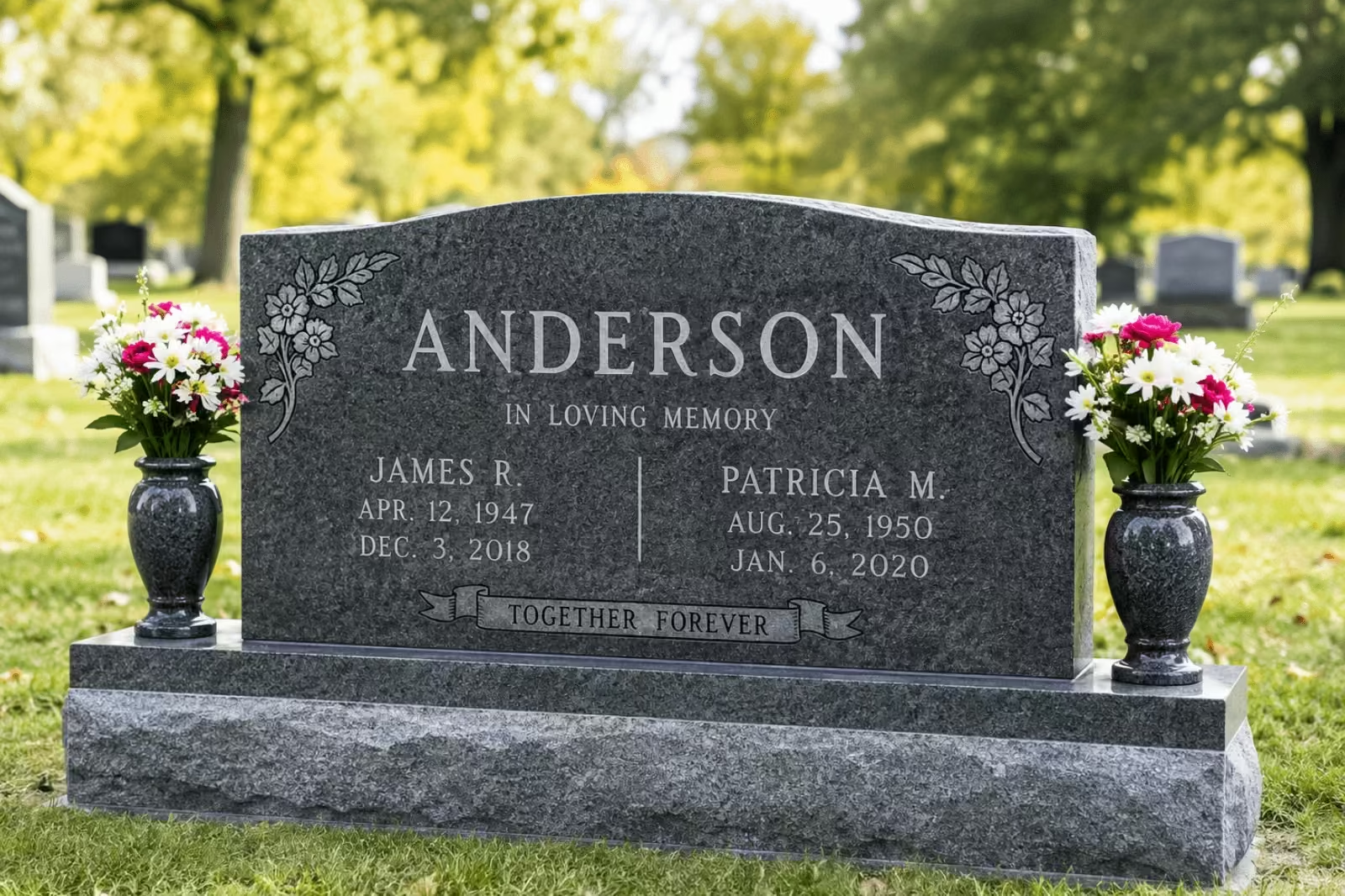
Most headstones take about two to six months from order approval to final cemetery installation, although simple in-stock markers may be completed sooner and highly customized memorials can take longer.
The exact timeline depends on the cemetery’s rules, the memorial type, material availability, design details, proof approval, cemetery authorization, fabrication, and installation scheduling. A headstone is not simply purchased and placed. It must be selected, designed, approved, crafted, transported, and installed according to cemetery requirements.
Key Takeaways
- Most headstones take 8 to 24 weeks from order to installation.
- Simple in-stock granite markers may be completed faster than custom bronze, upright, bench, ledger, or estate memorials.
- Cemetery authorization is one of the most important timing factors.
- Delays often come from proof revisions, cemetery paperwork, material availability, weather, and installation scheduling.
- Fram’s in-house process can help reduce delays by coordinating design, fabrication, delivery, and installation through one local team.
How Long Does It Take to Get a Headstone?
A typical headstone takes two to six months to complete and install. Some simple memorials can be finished much faster when the material is already available, the cemetery approval process is straightforward, and the family approves the design promptly. Larger upright monuments, bronze markers, custom shapes, imported granite colors, benches, ledgers, coping, mausoleum features, or estate memorials may take longer depending on complexity.
The most common mistake families make is assuming the “production time” is the same as the “installation time.” In reality, the process includes several separate stages:
- Consultation and order placement
- Material reservation or ordering
- Design proof and family approval
- Cemetery authorization and foundation coordination
- Fabrication, engraving, painting, or casting
- Final photo review and balance payment
- Delivery and cemetery installation
Each step can move quickly when information is complete. Each step can also slow down if a cemetery permit, family approval, special material, or seasonal installation window is involved.
Average Headstone Timeline From Order to Installation
Most headstone orders follow a predictable sequence. The exact timing varies by cemetery, material, memorial type, and installation conditions, but this is a realistic planning range for many families.
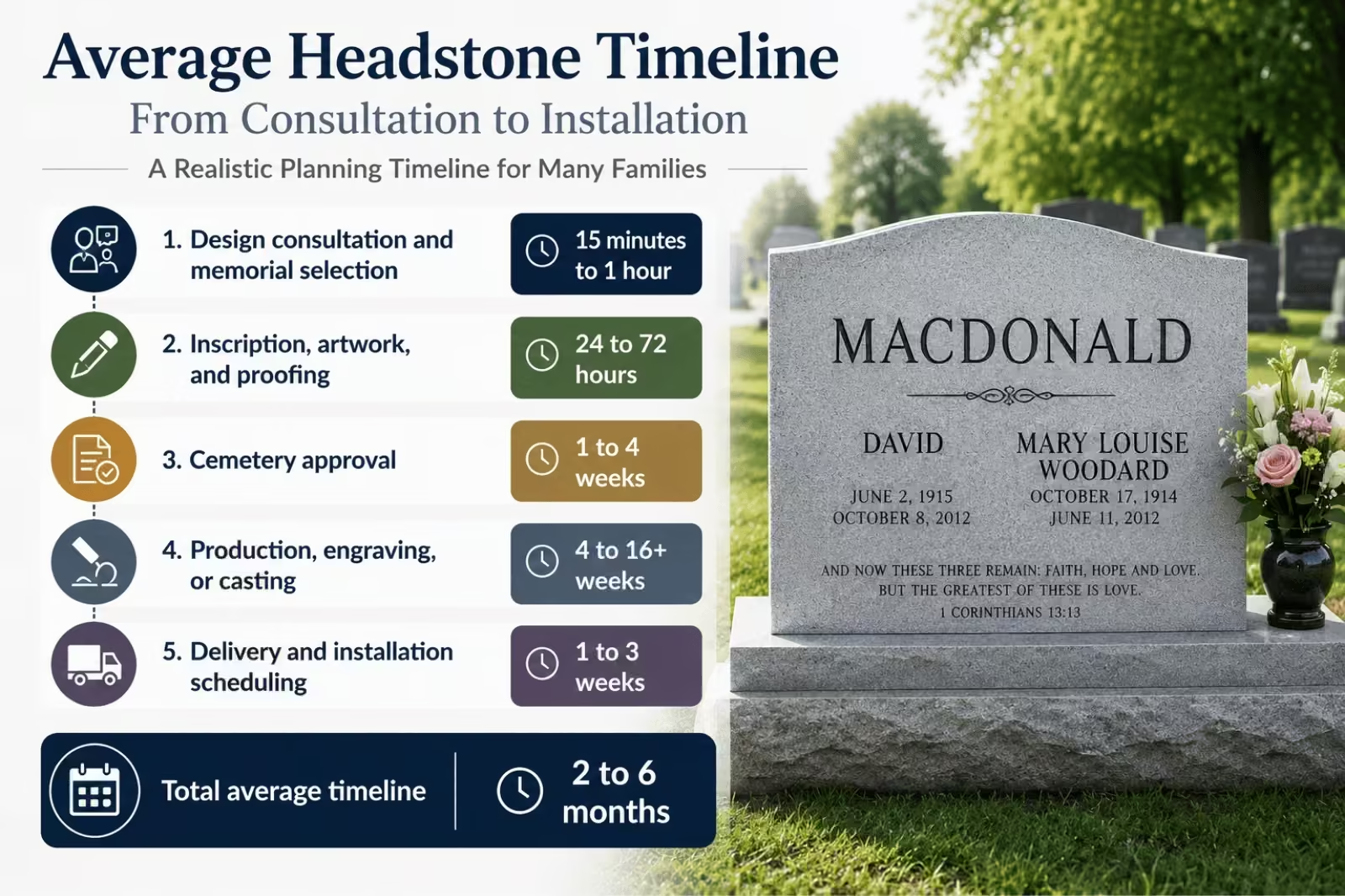
Most headstone orders follow a predictable sequence. The exact timing varies by cemetery, material, memorial type, and installation conditions, but this is a realistic planning range for many families.
| Step | Typical Timeframe |
|---|---|
| Design consultation and memorial selection | From 15 minutes to 1 hour |
| Inscription, artwork, and proofing | 24 to 72 hours |
| Cemetery approval | 1 to 4 weeks |
| Production, engraving, or casting | 4 to 16+ weeks |
| Delivery and installation scheduling | 1 to 3 weeks |
| Total average timeline | 2 to 6 months |
Our company can often move faster because the process is handled in-house. Instead of depending on outside wholesalers, separate engraving vendors, freight carriers, or cemetery crews for every stage, the team manages design, engraving, painting, delivery, and installation directly. That gives families more clarity, tighter scheduling, and better control over quality.
Traditional monument workflows can stretch for months when families are waiting on third-party production or vendor availability. Our company’s in-house process helps reduce those delays by moving each memorial from design to production to installation through one coordinated local team.
1. Consultation and Order Placed
The process begins with a consultation. Families meet with a memorial counselor to share their vision, review options, and select materials that reflect their preferences, cemetery requirements, and budget.
This is when the family provides cemetery information, inscription details, names, dates, religious symbols, epitaphs, language preferences, emblems, and any design inspiration. The counselor also helps identify what type of memorial the cemetery allows, such as a flat marker, upright monument, bronze plaque, companion headstone, bench, ledger, coping, or family estate feature.
This stage may take as little as 15 minutes for a simple memorial or closer to an hour for a more detailed design conversation.
2. Materials Ordered or Reserved
Once the order is confirmed, materials are reserved from available inventory or ordered as needed. If the granite color, bronze marker, base, or special shape is already available, the timeline is usually shorter. If the material must be custom ordered, quarried, cut, shipped, or matched to an existing family memorial, the timeline may extend.
Material availability is one of the biggest differences between a fast project and a slower one. Standard granite colors and common marker sizes are usually easier to schedule. Premium colors, unusual shapes, imported stone, large monuments, and custom bronze plaques require more lead time.
3. Design Proof and Approval
After the memorial style and materials are selected, a detailed design proof is created for family review. This proof shows the inscription, layout, dates, names, symbols, borders, spacing, artwork, and overall design before fabrication begins.
For many standard memorials, proofing can take 24 to 72 hours. More complex memorials may take longer, especially if they include non-English lettering, Hebrew inscriptions, portraits, military emblems, custom artwork, or matching requirements for an existing stone.
Families should review the proof carefully. Names, dates, spellings, spacing, and symbols should be checked against official records, cemetery paperwork, prayer cards, family documents, or other reliable sources. Once the proof is approved, the memorial moves closer to fabrication, and later changes may be difficult or costly.
4. Cemetery Authorization
Cemetery authorization is often the step families underestimate most.
Before a headstone can be installed, the cemetery may need to confirm the grave location, burial rights, lot ownership, memorial dimensions, material, section rules, foundation requirements, placement, and design layout. Some cemeteries approve memorials quickly. Others require signed paperwork, lot owner authorization, foundation orders, or review by cemetery staff.
Fram’s team works directly with the cemetery to submit required paperwork and coordinate the foundation. Families may still be asked to sign cemetery authorization documents, but they do not have to manage the process alone.
Cemetery approval often takes 1 to 4 weeks, though timing varies by cemetery workload, staffing, burial schedules, seasonal conditions, and internal policies.
5. Fabrication
After the design and cemetery requirements are approved, the memorial moves into fabrication. Granite memorials may be sandblasted, engraved, shaped, polished, painted, lithichromed, or laser etched depending on the design. Bronze markers are cast through a foundry process and may then be mounted onto a granite base.
Fram’s fabrication is completed in-house, which helps reduce delays and gives the team direct control over quality. Skilled sandblasters and craftsmen prepare the memorial with care, accuracy, and attention to detail.
Once fabrication is complete, the family receives a photo through the customer portal for review. After final review and payment of the remaining balance, installation can be scheduled.
6. Delivery and Installation
The final step is delivery and installation at the cemetery. The finished memorial is transported safely, handled with proper equipment, and installed according to cemetery rules.
Installation may involve a concrete foundation, leveling, alignment, and placement requirements. Upright monuments often need more installation coordination than flat markers because they include a base and die. Flat granite markers and bronze-on-granite markers may need to be set flush with the ground or positioned according to cemetery specifications.
Delivery and installation scheduling often takes 1 to 3 weeks, though weather, cemetery access, ground conditions, holidays, and foundation backlogs can affect timing.
Headstone Timeline by Memorial Type

Different memorials move at different speeds. The more standard the memorial, the faster it usually can be completed.
Flat Granite Markers
A flat granite marker is often one of the fastest options. These markers are usually rectangular, low-profile, and simpler to engrave than upright monuments. If the cemetery allows the size and the granite is available, a flat marker may be completed in six to ten weeks.
Delays can still happen if the cemetery requires a specific foundation, if the family requests a custom emblem, or if the granite color is not in stock.
Upright Granite Headstones
Upright headstones usually take longer than flat markers because they involve more stone, a base, foundation requirements, and often more design detail. A standard upright monument may take two to six months.
Custom upright monuments can take longer if they include:
- Unusual shapes
- Multiple polished surfaces
- Sculpted edges
- Carved roses or religious symbols
- Long inscriptions
- Matching companion footstones
- Imported granite
- Multi-language lettering
The cemetery must also allow upright memorials in that section. Some cemeteries permit upright monuments only in certain areas.
Bronze Grave Markers
Bronze markers often take two to three months, though the timing varies by foundry, design complexity, and cemetery rules. Bronze markers are cast rather than engraved in the same way as granite. They may include raised lettering, emblems, borders, background textures, vases, and a granite base.
Some cemeteries require bronze instead of granite. In regions where flat bronze memorials are common, the bronze plaque is often mounted onto a granite base and installed into a prepared foundation. Bronze markers may also need to match the size, border, background, fonts, spacing, and emblems of nearby family markers or existing cemetery memorials.
Companion and Family Monuments
Companion headstones and family monuments often take two to six months, just like individual upright monuments. They may span multiple graves, require precise cemetery placement, and include multiple inscriptions, surnames, vases, footstones, or future inscription planning.
Families should also consider whether one side of the memorial will be completed now and another side left blank for a surviving spouse. That design choice affects layout, spacing, and future engraving.
Memorial Benches, Ledgers, Coping, and Estate Memorials
Custom memorials such as benches, ledgers, coping, and family estates usually take longer than standard markers. A bench may require cemetery approval for placement, foundation, size, and safety. A ledger may cover a large portion of the grave and require specific cemetery section approval. Coping may need custom measurements around a grave or family plot.
Large estate memorials, private family memorial spaces, mausoleums, columbaria, patios, walkways, and multi-piece installations may take many months because they involve design, engineering, cemetery coordination, stone fabrication, foundation work, and phased installation.
Adding Lettering to an Existing Headstone
Adding a final date or new inscription to an existing monument may be faster than ordering a new stone, but it is still a careful process. The memorial may need to be inspected at the cemetery, measured, matched, approved, and engraved on-site.
On-site cemetery engraving can save time because the stone does not always need to be removed. However, weather, cemetery access, and exact matching requirements can affect the schedule.
Why Do Headstones Take So Long?
Headstones take time because they are permanent, regulated, heavy, customized memorial objects. Every detail matters.
A headstone is not like a product pulled from a shelf. Even when a stone blank is available, the inscription is personal. The cemetery rules are specific. The installation must be safe. The final memorial must stand for generations.
Cemetery Rules Must Be Verified First
Cemetery rules are one of the most common reasons a headstone cannot move forward immediately. Two cemeteries in the same city may have completely different requirements. Even two sections in the same cemetery may allow different memorials.
One section may allow upright granite monuments. Another may require flat bronze markers. A veteran section may have its own regulations. A religious section may have specific traditions. A lawn-level section may prohibit raised stones to allow mowing equipment to pass safely.
Skipping this step can cause costly delays.
The Stone May Need to Be Ordered or Cut
Granite comes in many colors, and not every color is always available. Classic gray granite is often easier to source because it is common and traditional. Premium black, blue, red, pink, mahogany, or imported granite colors may require longer lead times.
A custom size or shape also adds time. The stone may need to be cut, polished, shaped, crated, and shipped before engraving even begins.
Bronze Markers Require Casting
Bronze is made through a foundry process. The marker must be designed, approved, molded, cast, finished, and mounted. Bronze plaques may also include background textures, emblems, scrolls, borders, and vase attachments.
If the cemetery requires bronze, families should account for foundry timing in addition to installation timing.
Custom Designs Require Extra Proofing
Custom memorials often need more than one proof. That is not a problem. It is part of making sure the finished memorial feels right.
However, extra proofing adds time when families are deciding between epitaphs, changing artwork, adding portraits, adjusting language, matching another headstone, or waiting for approval from several relatives.
Installation Depends on Weather, Ground Conditions, and Cemetery Scheduling
The final stage depends on physical conditions. Heavy stone cannot always be installed safely in poor weather. Wet ground, snow, frozen soil, or cemetery access restrictions can pause installation.
Cemetery crews also prioritize burials and urgent grounds needs. A completed headstone may be ready before the cemetery is ready to set it.
Common Headstone Delays Families Should Know About
Most delays are understandable, but many can be reduced with preparation.
Spelling, Date, and Layout Corrections
The most painful delay is often the most preventable: correcting an inscription after the proof has already been prepared.
Families should check names and dates against official records, prayer cards, birth certificates, family documents, or cemetery records when available. For non-English inscriptions, ask a fluent reader to review the proof before approval.
Missing Cemetery Paperwork
A cemetery may require authorization from the lot owner or next of kin. If ownership records are outdated, the cemetery may need additional signatures or documentation.
This can delay approval even when the memorial design itself is acceptable.
Family Decision Delays
Memorial decisions can be emotional. Families may need time to agree on wording, religious symbols, language, nicknames, titles, military service, or whether to include a portrait.
That time is valid. Still, families with a ceremony date should know that the production timeline usually does not begin until the design and proof are approved.
Out-of-Stock Granite Colors
A stone color may look available online or in a showroom sample, but the required size may not be in stock. If the granite must be ordered from a quarry or supplier, the project may take longer.
Choosing an available stone color is one of the simplest ways to shorten the timeline.
Seasonal Demand Around Holidays
Memorial Day, Mother’s Day, Father’s Day, religious holidays, spring cemetery cleanup, and fall unveiling seasons can increase demand. Families often want markers installed before a holiday or anniversary, which can create backlogs for memorial companies and cemeteries.
Ordering earlier is the safest approach.
Winter, Rain, and Soft Ground
Weather affects installation more than design. A headstone may be finished, but the cemetery may delay setting it if the ground is frozen, muddy, unstable, or inaccessible.
In colder climates, winter installation may be limited. In rainy seasons, soft ground can delay foundation work.
Cemetery Backlogs and Foundation Delays
Some cemeteries pour foundations on a schedule rather than on demand. Others require their own crews to handle installation. If the cemetery is behind, even a finished marker may wait.
This is why families should ask who handles installation and whether the cemetery has its own installation schedule.
How to Get a Headstone Faster Without Rushing the Wrong Details
A faster timeline is sometimes possible, but the goal should be efficiency without mistakes.
Choose an In-Stock Granite Color
Standard in-stock granite is usually faster than rare or imported stone. If timing matters more than a specific color, ask which materials are immediately available.
Approve the Inscription Carefully the First Time
Proof approval is the family’s best chance to prevent mistakes. Read the proof more than once. Ask another family member to review it. Check dates, spelling, spacing, and symbols before signing off.
Confirm Cemetery Rules Before Final Design
Do not design a memorial first and check cemetery rules later. The cemetery’s regulations should shape the design from the beginning.
This is especially important for bronze-only cemeteries, lawn-level sections, veterans’ areas, religious sections, and family plots with existing monuments.
Avoid Unnecessary Custom Changes After Approval
Changes after approval can restart the clock. If a family is unsure about an epitaph, emblem, portrait, or language choice, it is better to pause briefly before approval than to change direction after production begins.
Ask About Expedited Options Early
Expedited production is sometimes possible when the material is available, the design is simple, the cemetery approves quickly, and the installer has scheduling flexibility. While typical processing may be 8 to 12 weeks, some urgent memorials can be completed and installed in less than a week when necessary, although planning ahead is still preferred.
Expedited service is not always possible. A custom bronze casting, imported stone, complicated cemetery permit, or winter installation restriction may still require time.
Set Ceremony Dates Carefully
If a family is planning an unveiling, anniversary gathering, or graveside dedication, the ceremony date should be chosen with production and cemetery timing in mind.
A memorial may be completed before the ceremony, but installation still depends on cemetery scheduling. Families should avoid printing invitations or confirming travel until the timeline has been reviewed.
How Long Before an Unveiling Should You Order a Headstone?
For an unveiling or formal dedication, families should usually begin the headstone process three to four months in advance, and earlier for custom memorials.
In Jewish tradition, an unveiling can take place after Shloshim, the first 30 days after the funeral, although many families traditionally wait 11 months to one year. Allowing 3 to 4 months to prepare a memorial is often preferred when planning an unveiling.
This planning window gives time for:
- Cemetery rule verification
- Design decisions
- Hebrew or religious inscription review
- Proof approval
- Production
- Delivery
- Installation
- Veiling preparation
- Clergy or family scheduling
If the unveiling date is already set, the memorial provider should know immediately. Some situations can be expedited, but not every cemetery or material allows a compressed schedule.
What Happens After You Approve the Headstone Proof?

Once the proof is approved, the order usually moves into final production. Families may not see much visible progress during this stage, but several important steps are happening.
Final Review and Production Release
The approved proof is checked against cemetery rules, order details, stone size, and inscription requirements. This helps prevent production errors before engraving begins.
Engraving, Sandblasting, Laser Etching, and Finishing
Granite headstones are commonly engraved through sandblasting. Detailed portraits, fine artwork, and some photographic designs may be created through laser etching, especially on dark granite.
The engraving process may include:
- Stencil preparation
- Letter carving
- Emblem carving
- Shape work
- Portrait etching
- Cleaning
- Paint or lithichrome application
- Final polish and inspection
Laser etching can be especially useful for complex designs, emblems, and photos. It is often effective for detailed artwork, religious or personal symbols, and photographic elements in black and white or color.
Delivery Coordination
After production, the memorial must be transported safely. Headstones are heavy and fragile at the edges, so delivery requires proper equipment and handling.
The cemetery may require advance notice before delivery or may accept delivery only during certain hours.
Installation and Final Setting
The final installation should leave the memorial level, secure, and aligned according to cemetery rules. For upright monuments, the base and die must be set properly. For flat markers, the stone or bronze-on-granite marker should be flush or positioned according to cemetery specifications.
A good installation is not only about appearance. It protects the memorial from shifting, settling, and damage.
Frequently Asked Questions
How long does it take for a headstone to arrive after it is ordered?
A headstone may arrive at the cemetery several weeks before it is actually installed. Arrival depends on stone production, engraving, delivery scheduling, and whether the cemetery is ready to receive it. Families should ask for both the estimated completion date and the expected installation date, since those are not always the same.
Does the headstone timeline start when I place the order or when I approve the proof?
In most cases, the true production timeline starts after the final proof is approved and cemetery requirements are confirmed. An order may be opened earlier, but the memorial usually cannot move into engraving, casting, or final production until the inscription, layout, material, and cemetery approval are complete.
Can I visit the grave before the headstone is installed?
Yes. Families can usually visit the grave before the permanent headstone is installed. Many cemeteries place a temporary marker after burial, but policies vary. A temporary marker can help identify the grave while the permanent memorial is being designed, approved, produced, and scheduled for installation.
What happens if there is a mistake on the headstone after it is made?
If a mistake is found after production, the next step depends on the type of error and where it occurred. Minor lettering issues may sometimes be corrected, but major mistakes in names, dates, layout, or bronze casting may require significant repair or replacement. This is why the proof should be reviewed carefully before approval.
Does a larger headstone take longer to install?
A larger headstone often takes longer because it may require heavier equipment, a larger foundation, additional cemetery approval, and more installation coordination. Companion monuments, family memorials, benches, ledgers, and estate memorials usually need more preparation than a small flat marker.
Can I order a headstone before someone passes away?
Yes. A headstone can be ordered in advance through pre-need planning. Some families choose this option to make decisions calmly, reserve matching materials, reduce future stress, or ensure a companion monument is prepared consistently. Final dates can usually be added later when needed.
What to Remember About Headstone Timelines
A headstone usually takes two to six months because it must pass through design, proofing, cemetery approval, production, delivery, and installation. The process can feel slow, especially when a family is waiting to see a loved one’s grave properly marked, but each step protects the accuracy, dignity, and permanence of the memorial.
At Fram Monument Company, we help coordinate the details that often slow families down, including cemetery requirements, design proofing, engraving, production, delivery, and installation. Because our work is handled in-house, families are not left trying to manage separate vendors or unclear timelines on their own.
The best way to reduce delays is to confirm cemetery rules early, choose available materials, review the proof carefully, complete paperwork promptly, and allow extra time before an unveiling or family ceremony. A well-planned timeline gives families space to make thoughtful decisions without unnecessary pressure.
Contact us to discuss your cemetery, memorial type, unveiling date, or installation needs. Our team can help you understand what timeline to expect and coordinate the next steps with care.