
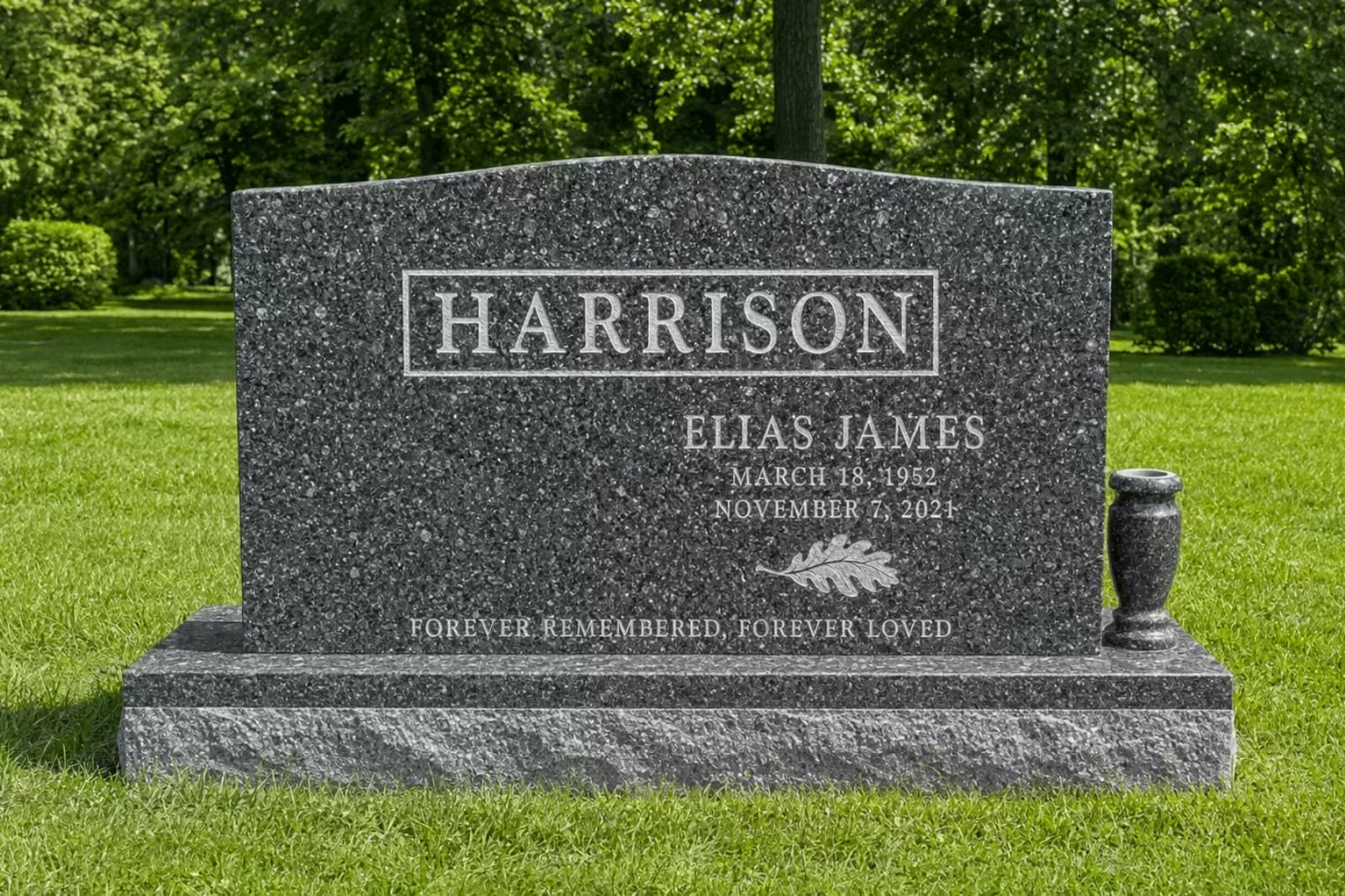
Ordering a headstone begins with a consultation, then moves through material selection, design approval, cemetery authorization, fabrication, and final installation. The process includes both personal decisions and practical requirements, so it helps to understand what happens before the memorial is made. Families usually need to consider the cemetery’s rules, the type of headstone allowed, the inscription, the material, and the timing of installation. Knowing these details early can make the experience feel more organized during a difficult time.
For many families, ordering a headstone is not simply a purchase. It is a permanent act of remembrance for someone deeply loved. The process can feel unfamiliar at first, especially when cemetery rules, materials, inscriptions, approvals, and installation details all need to be handled carefully. Understanding what happens from the first conversation to the finished cemetery installation helps families feel more prepared, understand the factors that affect headstone costs, make thoughtful decisions, and avoid unnecessary delays.
Key Takeaways
- Ordering a headstone begins with a consultation and formal order.
- Cemetery rules should be reviewed early because they affect size, material, color, and style.
- The design proof must be checked carefully before production begins.
- Cemetery authorization is required before most headstones can be installed.
- Fabrication, delivery, and installation are the final stages of creating a lasting memorial.
The Headstone Ordering Process
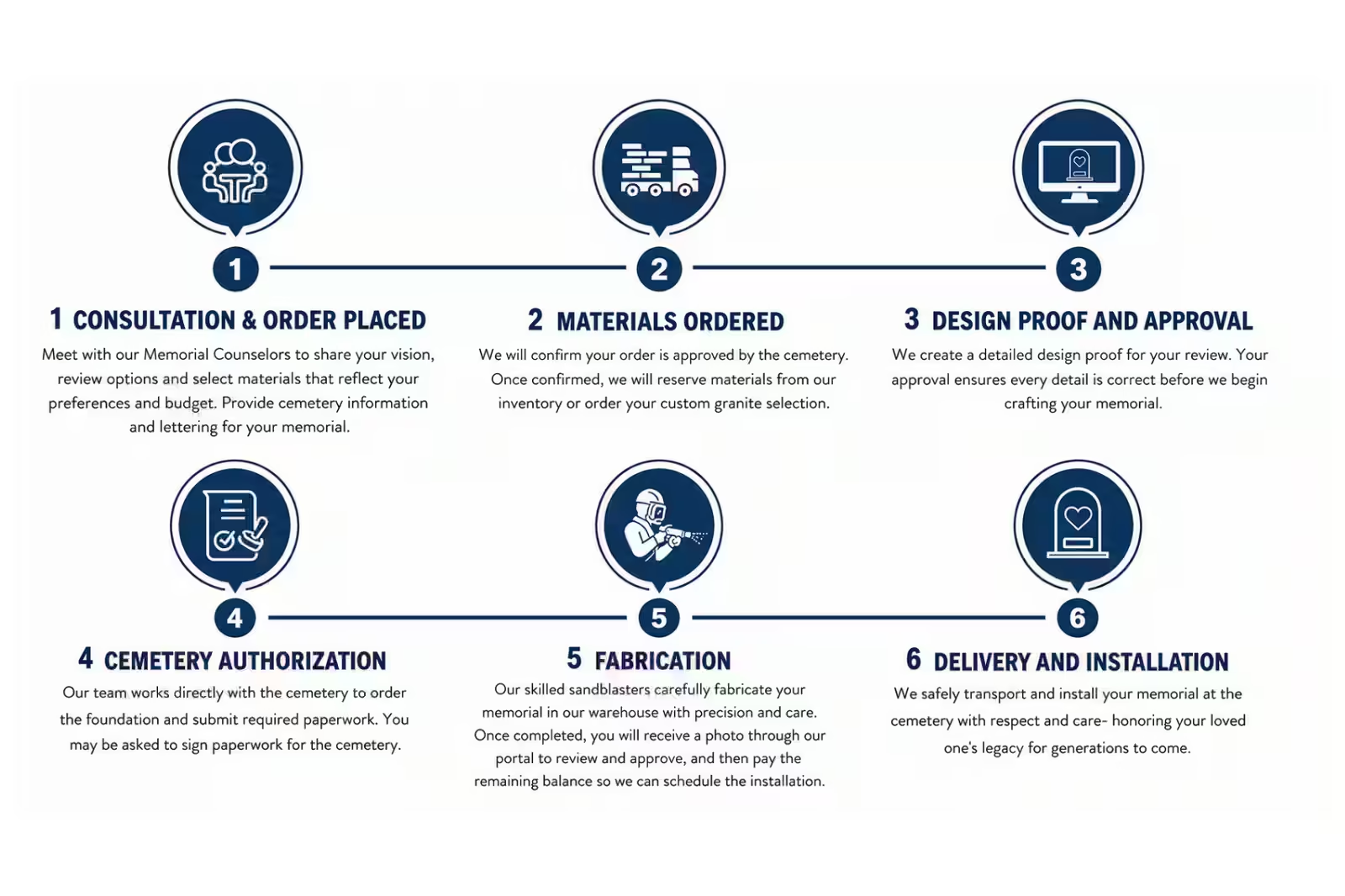
Step 1: Consultation and Order Placed
The first step in ordering a headstone is the consultation. This is where the family shares their wishes, reviews memorial options, discusses cemetery requirements, and places the order.
During the consultation, the memorial counselor will usually ask for basic information, including the cemetery name, grave location, name of the deceased, birth date, date of death, and whether the memorial is for one person, two people, or a family lot. If the exact grave location is not available yet, the cemetery can often provide the section, lot, and grave number.
This step is also when families begin discussing the overall vision for the headstone. Some families already know exactly what they want. Others need help understanding the difference between an upright headstone, flat grave marker, bronze marker, companion monument, ledger, or memorial bench.
Common decisions discussed during the consultation include:
- Memorial type
- Granite or bronze options
- Cemetery rules
- Headstone size
- Shape and style
- Inscription wording
- Religious or cultural symbols
- Portraits, emblems, or artwork
- Budget
- Timeline
- Installation needs
The consultation should also include a discussion of cemetery fees, foundation requirements, and what is included in the order. This is important because headstone pricing can vary widely depending on the cemetery, material, size, design, and installation requirements.
A helpful consultation does more than collect information. It gives the family clarity. By the end of this step, the family should understand what type of memorial is possible, what information is still needed, and what happens next.
Step 2: Materials Ordered
After the order is placed, the next step is confirming and ordering the materials. For most cemetery headstones, the main material is either granite, bronze, or a combination of bronze mounted on granite.
Before materials are finalized, cemetery approval requirements must be considered. Cemeteries often have specific rules about memorial material, granite color, bronze marker dimensions, foundation size, vase placement, and whether upright monuments are allowed in a particular section.
Granite Headstones
Granite is one of the most common materials used for headstones because it is durable, weather-resistant, and available in many colors. It can be shaped, polished, sandblasted, carved, and laser etched.
Popular granite colors may include gray, black, red, pink, mahogany, blue-toned, and specialty imported granites. Gray granite is often traditional and cost-effective, while black granite is frequently chosen for its strong contrast and ability to show detailed laser-etched artwork.
When choosing granite, families may consider:
- Cemetery color restrictions
- Durability
- Price
- Availability
- How the lettering will appear
- Whether the stone will include laser etching
- Whether the memorial should match nearby family stones
Bronze Markers
Bronze markers are often required in memorial parks or cemetery sections that do not allow upright granite headstones. A bronze marker is typically cast with raised lettering, borders, emblems, and decorative panels. It is commonly mounted to a granite base and installed flat or slightly raised, depending on cemetery rules.
Bronze can be a beautiful option for families who want a classic and formal appearance. It is also commonly used for veteran markers, companion markers, and cemetery sections with uniform memorial guidelines.
Why Material Availability Matters
Some materials are kept in inventory, while others may need to be specially ordered. In-stock granite may allow the memorial to move through production more quickly. Custom granite colors, unusual sizes, imported stone, and bronze casting may take longer.
This step is important because no headstone can be properly produced until the right material is selected, confirmed, and available for fabrication.
Step 3: Design Proof and Approval
Once the material and memorial type are selected, the next step is creating the design proof. A design proof is a detailed visual layout that shows how the finished headstone will look before it is made.
The proof usually includes:
- Name or names
- Birth and death dates
- Lettering style
- Epitaph
- Religious symbols
- Emblems
- Borders
- Artwork
- Portrait placement
- Spacing
- Overall layout
This is one of the most important steps in the entire headstone ordering process. The design proof gives the family a chance to review every detail before engraving, carving, etching, or casting begins.
Families should review the proof slowly and carefully. It is wise to check the spelling of every name, including middle names, maiden names, Hebrew names, nicknames, and family names. Dates should be verified against official records whenever possible. Even small details, such as punctuation, capitalization, spacing, and line breaks, should be reviewed.
For companion headstones, the proof should also account for future lettering. If one person is still living, the layout should leave enough space for the second inscription to be added later in a matching style.
A good design proof helps prevent costly and painful errors. Once the family approves the proof, the memorial can move forward with confidence.
Step 4: Cemetery Authorization
Before a headstone can be installed, the cemetery usually must authorize the memorial. Cemetery authorization confirms that the proposed headstone follows the rules for that exact grave, lot, section, or memorial garden.
This step may involve submitting paperwork, design details, dimensions, material information, and foundation requirements to the cemetery. In some cases, the cemetery may also require signatures from the lot owner, next of kin, executor, or authorized family representative.
Cemetery authorization may cover:
- Memorial size
- Memorial type
- Granite or bronze material
- Color
- Inscription
- Emblems or symbols
- Foundation requirements
- Placement on the grave
- Installation procedure
- Cemetery fees
This step protects the family from ordering a memorial that cannot be installed. A headstone may look appropriate in a showroom or catalog, but the cemetery has the final authority over what is permitted on its grounds.
Common causes of cemetery authorization delays include missing grave location details, unpaid cemetery fees, incomplete paperwork, unavailable lot owners, or a design that does not meet cemetery regulations.
Cemetery rules vary widely. One cemetery may allow upright granite monuments, while another may require only flat bronze markers. Even within the same cemetery, one section may have different rules from another. That is why authorization must happen before installation and, in many cases, before production moves too far forward.
Step 5: Fabrication
After the design is approved and cemetery authorization is handled, the headstone moves into fabrication. Fabrication is the hands-on process of turning the selected material into a finished memorial.
Depending on the memorial type, fabrication may include:
- Cutting granite to size
- Shaping the stone
- Polishing selected surfaces
- Creating borders or panels
- Sandblasting lettering
- Carving emblems
- Laser etching portraits or artwork
- Painting or highlighting letters
- Casting a bronze marker
- Mounting bronze to granite
- Final inspection
For granite headstones, sandblasting is commonly used for traditional lettering and carved designs. This process creates depth in the stone and produces clean, readable inscriptions. Laser etching may be used for detailed portraits, landscapes, religious artwork, or fine decorative elements, especially on darker granite.
For bronze markers, the design is cast into bronze, finished, and prepared for mounting or installation according to cemetery requirements.
Fabrication requires precision. The name, dates, inscription, spacing, and artwork must match the approved proof. Skilled production work is essential because a headstone is meant to withstand weather, time, and cemetery conditions for generations.
The time needed for fabrication depends on material availability, design complexity, cemetery approval, seasonal demand, and whether the memorial includes custom artwork, special carving, or bronze casting.
Step 6: Delivery and Installation
The final step is delivery and installation at the cemetery. Once the memorial is complete, it must be transported safely and installed according to cemetery requirements.
Installation may involve preparing or confirming the foundation, setting the memorial level, aligning it properly with the grave, and making sure it is stable and secure. Flat markers, upright headstones, ledgers, benches, and bronze markers each require different handling.
For upright headstones, the base and tablet must be set carefully so the memorial remains balanced and secure. For flat markers, the stone or bronze-on-granite memorial must be placed so it sits properly in the ground and aligns with cemetery standards. Larger memorials may require more extensive equipment and preparation.
After installation, the family is usually notified that the memorial has been placed. Some families visit the cemetery right away. Others wait until an unveiling, anniversary, birthday, holiday, or private gathering.
This final step is meaningful. It is the moment when the design, inscription, material, and craftsmanship become a permanent tribute at the gravesite.
How Long Does It Take to Order a Headstone?
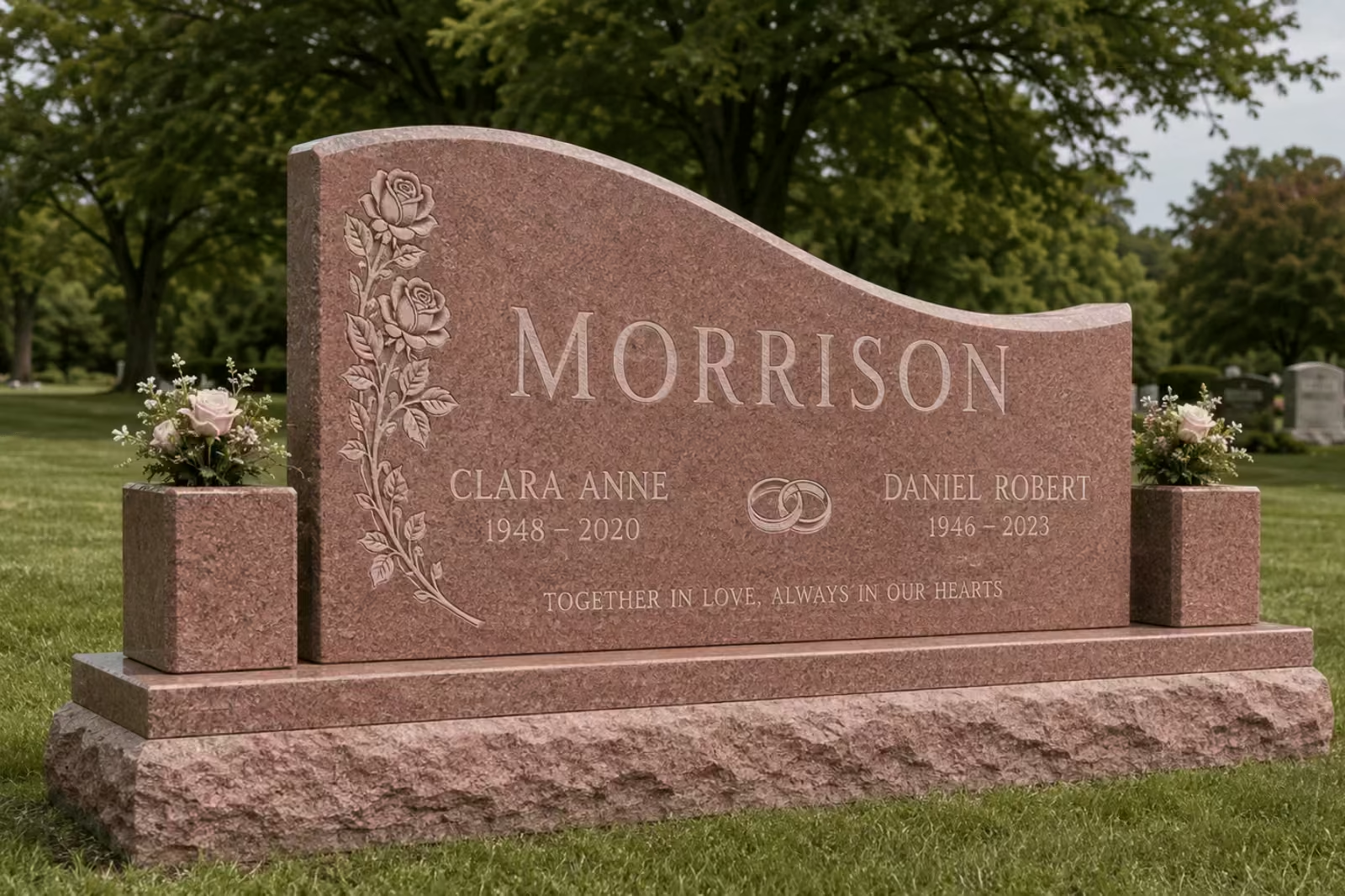
The timeline for ordering a headstone can range from a short period to several months, depending on the memorial type, cemetery approval, material availability, and design complexity.
A simple in-stock granite marker may move faster than a custom upright monument or bronze marker. Imported granite, special shapes, detailed artwork, laser etching, hand carving, cemetery paperwork, and foundation scheduling can all affect the timeline.
Families planning for a religious unveiling, anniversary, or memorial gathering should begin as early as possible. It is better to allow extra time for proofing and cemetery approval than to rush an inscription or compromise the design.
What Information Do You Need to Order a Headstone?
To order a headstone, it helps to gather:
- Cemetery name
- Cemetery location
- Section, lot, plot, or grave number
- Deceased person’s full name
- Birth date and death date
- Preferred inscription
- Religious or cultural symbols
- Desired memorial type
- Photos or artwork, if desired
- Information about nearby family memorials that should be matched
Not every family has all of this information at the beginning. The most important starting point is the cemetery name and the person’s basic details. Additional information can often be gathered during the process.
Common Mistakes to Avoid When Ordering a Headstone
One of the most common mistakes is choosing a headstone before confirming cemetery rules. Cemetery regulations determine what can be installed, so those rules should guide the design from the beginning.
Another mistake is rushing the inscription. Names, dates, and wording should be reviewed by more than one person whenever possible. A headstone is permanent, and the proofing stage deserves careful attention.
Families should also avoid comparing prices without understanding what is included. Some quotes may include engraving, foundation, delivery, installation, and cemetery coordination. Others may not. A lower starting price can become more expensive once required services are added.
For companion memorials, families should also think about future engraving. The design should leave enough room for a second name, future dates, and matching lettering.
Frequently Asked Questions
Can a headstone be ordered if the burial has not happened yet?
Yes. A headstone can often be ordered before the burial, especially when the cemetery space has already been purchased and the family has the required grave information. In some cases, the final installation may still need to wait until after the burial, cemetery paperwork, foundation preparation, or ground settling requirements are complete.
Can you match a new headstone to an existing family memorial?
Yes. A new headstone can often be designed to match an existing family memorial by comparing the granite color, size, shape, lettering style, spacing, finish, emblems, and overall layout. This is especially important for family plots, companion memorials, and cemetery sections where families want a consistent appearance across multiple graves.
What happens if there is a mistake on the design proof?
A mistake on the proof should be corrected before the family gives final approval. The proofing stage is the best time to fix spelling, dates, punctuation, artwork, spacing, or layout concerns. Once fabrication begins, changes may be more difficult, may delay the order, or may require additional work depending on the type of correction needed.
Can artwork, symbols, or photos be added to a headstone?
Yes. Many headstones can include religious symbols, floral designs, military emblems, cultural artwork, portraits, or custom images. The available options depend on the cemetery’s rules, the memorial material, and the engraving method. Laser etching is often used for detailed portraits or scenes, while sandblasting is commonly used for traditional lettering and simpler carved designs.
Who approves the final headstone before it is made?
The final headstone design is usually approved by the person authorized to place the order, such as the lot owner, next of kin, executor, or designated family representative. The cemetery may also need to approve the memorial before it can be installed. This is why both family approval and cemetery authorization are important before fabrication moves forward.
Bringing the Headstone Ordering Process Together
Ordering a headstone becomes easier to understand when you know what happens from the first consultation through final cemetery installation. The process includes consultation and order placement, material selection, design proof approval, cemetery authorization, fabrication, and delivery and installation.
Each part serves an important purpose. The consultation clarifies the family’s wishes. Material selection determines the appearance and durability of the memorial. The design proof helps prevent mistakes. Cemetery authorization confirms the headstone can be installed. Fabrication brings the memorial to life, and installation completes the tribute at the gravesite.
A headstone is a lasting marker of identity, memory, and love. At Fram Monument, we help families move through each part of the process with care, clarity, and attention to detail so the finished memorial is accurate, cemetery-approved, beautifully made, and placed with respect. Contact us to begin planning a headstone or to ask questions about cemetery requirements, design options, and installation.