

Granite is usually the better choice for affordability, low maintenance, color variety, and long-term flexibility, while bronze markers are often better for formal flat memorials with raised lettering, sculptural detail, and cemetery-required memorial park designs. The right choice depends first on cemetery rules, then on budget, appearance, maintenance expectations, and the type of memorial presence a family wants.
Granite and bronze are both respected, long-lasting cemetery marker materials. Granite is natural stone that can be carved, polished, sandblasted, or laser etched. Bronze is a cast metal plaque, usually installed on a granite or concrete base. The best material is the one that is allowed by the cemetery and best reflects the person being remembered.
Key Takeaways
- Granite is typically more affordable, lower maintenance, and available in more colors, shapes, and memorial styles.
- Bronze offers raised lettering, cast artwork, and a formal appearance often required in memorial park cemeteries.
- Many bronze markers are not installed alone; they are commonly mounted on a granite or concrete base.
- Cemetery regulations may determine the material, size, placement, and installation method before design choices begin.b
- Both materials can last for generations when properly made, installed, and maintained.
Granite vs Bronze Marker: The Short Answer
A granite grave marker is best for families who want a durable, low-maintenance memorial with broad design flexibility. A bronze grave marker is best for families who want raised lettering, refined cast detail, or need to meet cemetery rules that require bronze plaques. Granite is stone. Bronze is metal. Both are lasting materials, but they age in different ways.
The U.S. Department of Veterans Affairs recognizes both flat granite and flat bronze grave marker options, and its bronze flat marker specification notes that the government provides mounting hardware but not the base, which reflects a common real-world installation difference between the two materials.
What Is a Granite Grave Marker?

A granite grave marker is a cemetery memorial made from quarried natural stone. Granite is widely used for flat markers, footstones, upright headstones, companion memorials, ledgers, benches, family monuments, and mausoleum-related memorial work.
Granite is valued because it is hard, weather-resistant, and adaptable. It can be polished for a reflective finish, steeled for a softer gray appearance, rock-pitched around the edges, carved into shapes, or engraved with names, dates, epitaphs, symbols, and artwork.
How Granite Markers Are Made
A granite marker begins as a block of stone removed from a quarry. The stone is cut into slabs or monument shapes, finished on selected surfaces, and then lettered or designed. Most lettering on granite is created by sandblasting, which cuts the inscription into the surface. Dark granite can also support detailed laser etching, especially for portraits, landscapes, religious imagery, and fine artwork.
The finished marker is then installed according to cemetery requirements. Depending on the cemetery, that may mean a flat flush placement, a raised bevel marker, a slant marker, a ledger, or an upright monument on a base.
Common Granite Marker Styles
Granite can be used for many cemetery memorial types, including:
- Flat granite markers set flush with the ground
- Bevel markers with a slight raised angle
- Slant markers with a sloped face
- Upright headstones
- Companion markers for two people
- Grave ledgers covering much of the grave
- Memorial benches
- Family estate monuments
- Footstones and individual grave markers
This flexibility is one of granite’s strongest advantages. A bronze marker is usually a plaque. Granite can be a plaque-like flat marker, a full monument, or part of a larger family memorial setting.
Granite Colors and Finishes
Granite is available in many colors, including classic gray, black, red, pink, mahogany, blue-toned, and speckled varieties. Granite color affects appearance, contrast, price, and design possibilities.
Black granite is often preferred for laser etching because it provides strong contrast. Gray granite is traditional and often cost-effective. Red, pink, blue, and mahogany granites create a more distinctive appearance but may cost more depending on quarry source and availability.
Best Uses for Granite Memorials
Granite is often the better choice when a family wants:
- Lower maintenance
- More color choices
- A larger memorial
- Upright or slant options
- A traditional headstone
- Laser-etched imagery
- A memorial that can match existing family monuments
- Strong long-term value
Granite is also practical for families who want a memorial that can be cleaned gently with water and a soft brush rather than polished or waxed.
What Is a Bronze Grave Marker?
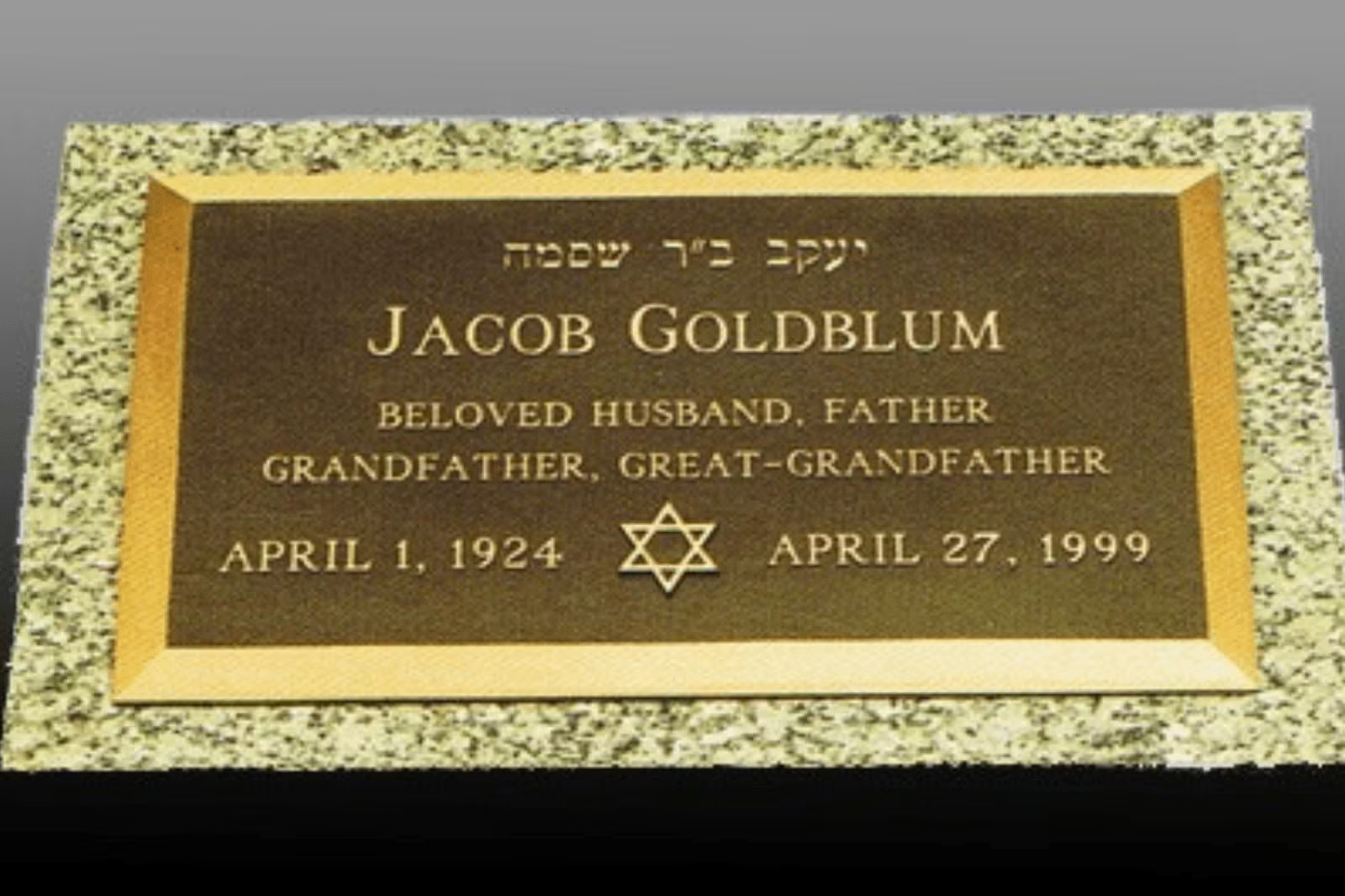
A bronze grave marker is a cast metal cemetery plaque, usually made from a bronze alloy. Bronze markers often feature raised lettering, raised borders, emblems, floral designs, religious symbols, military insignia, and background textures.
Bronze is common in memorial park cemeteries because it creates a uniform, elegant, lawn-level appearance. Many cemeteries that prioritize open landscaping and easier grounds maintenance require flat bronze markers rather than upright headstones.
How Bronze Markers Are Made
Bronze markers are typically cast from a mold. The lettering and decorative elements are raised from the surface rather than cut into it. After casting, the plaque is finished with background color, protective coatings, and highlighted lettering or design elements.
This process gives bronze its distinctive sculptural look. Names, dates, borders, emblems, and artwork can have depth and relief that differs from engraved stone.
Why Bronze Is Often Mounted on Granite
A bronze marker is commonly installed on a granite base because the bronze plaque itself is relatively thin compared with a stone marker. The base provides weight, stability, visual framing, and a proper installation surface.
This is one of the most important cost and planning differences. A family comparing “bronze vs granite” may actually be comparing an all-granite marker with a bronze plaque mounted to a granite base. The bronze option can involve both materials, not just one.
Common Bronze Marker Styles
Bronze markers are commonly available as:
- Individual flat bronze markers
- Companion bronze markers
- Infant bronze markers
- Veteran bronze markers
- Bronze plaques on granite bases
- Bronze niche markers
- Bronze memorial plaques
- Bronze markers with vases
- Bronze markers with religious, military, civic, or personal emblems
Best Uses for Bronze Memorials
Bronze is often the better choice when a family wants:
- Raised lettering
- Cast borders and emblems
- A formal memorial park appearance
- A cemetery-required flat plaque
- A veteran marker style
- A plaque mounted on granite
- A refined, traditional metal finish
Bronze can feel especially appropriate in cemeteries where surrounding graves already use bronze plaques. Matching the section’s visual standard can help the marker feel harmonious rather than out of place.
Granite vs Bronze Marker Comparison Chart
| Feature | Granite Marker | Bronze Marker |
|---|---|---|
| Material | Natural stone | Cast metal alloy |
| Typical appearance | Carved, polished, natural, substantial | Raised lettering, sculptural, formal |
| Cost | Usually more affordable | Usually more expensive |
| Maintenance | Very low | Periodic cleaning, possible waxing or refinishing |
| Customization | Shapes, colors, carving, etching, size options | Raised text, borders, emblems, cast designs |
| Cemetery use | Common in traditional cemeteries | Common in memorial parks |
| Installation | Can be flat, raised, slant, upright, ledger, or base-mounted | Usually flat and mounted to granite or concrete |
| Aging | Stone surface weathers slowly | Patina and oxidation develop over time |
| Theft risk | Very low scrap value | Higher risk than granite because it is metal |
| Best for | Flexibility, low maintenance, value | Uniform flat markers, raised detail, formal plaque style |
Which Lasts Longer: Granite or Bronze?
Granite and bronze can both last for generations, but they do not age the same way. Granite usually wins for low-maintenance outdoor permanence. Bronze wins for metal strength and raised cast detail, but it changes color as it oxidizes and may require periodic care to preserve its original finish.
Granite Durability
Granite is one of the most durable memorial materials because it resists normal weathering, scratching, and environmental exposure better than softer stones such as marble or limestone. It does not rust. It does not develop metal patina. It has no scrap metal value.
The main long-term concerns with granite are not usually the stone itself. They are installation movement, cemetery equipment damage, loss of inscription contrast, biological growth, or improper cleaning.
A well-made granite marker can remain structurally sound for many decades and often much longer. The inscription may need repainting or contrast restoration over time, especially if the lettering was painted after sandblasting.
Bronze Durability
Bronze is structurally durable and does not crack like stone. Its surface, however, naturally changes through oxidation. Over time, bronze may darken, dull, or develop a greenish patina. Some families appreciate that aged appearance because it feels historic and dignified. Others prefer the original warm brown or golden bronze tone and may need periodic cleaning, waxing, or professional refinishing.
Bronze markers can also be vulnerable to scratches, mower damage, chemical exposure, and metal theft in some locations. Theft is not the most common issue, but it is a practical difference because bronze has scrap value and granite does not.
Structural Longevity vs Visual Aging
The phrase “which lasts longer” can be misleading. A bronze marker may remain structurally intact while its finish changes noticeably. A granite marker may remain visually stable while its painted lettering needs refreshing.
A better question is: which material will look the way the family expects with the least care?
For most families, the answer is granite. For families who prefer raised lettering, cast ornamentation, or a memorial park style, bronze may still be the better choice.
Climate, Soil, and Cemetery Conditions
Local conditions matter. Freeze-thaw cycles, drainage, soil movement, irrigation, fertilizers, coastal air, shade, tree debris, and mower traffic can all affect how a marker looks over time.
Granite generally handles climate variation with less visible change. Bronze can be more affected by moisture, pollutants, lawn chemicals, and oxidation. However, proper installation and routine care can help either material remain dignified for generations.
Appearance: Natural Stone vs Cast Metal
Granite and bronze create very different emotional impressions.
Granite feels natural, permanent, and substantial. Bronze feels formal, refined, and sculptural. Neither is inherently more respectful. The better appearance depends on the cemetery setting, family preference, and the personality of the person being honored.
Granite’s Color, Texture, and Form
Granite offers visual variety. A family can choose a quiet gray flat marker, a polished black upright headstone, a red companion memorial, a mahogany slant, or a full ledger with carved details.
Granite also allows greater control over shape and size when cemetery rules permit it. It can be understated or prominent. It can match nearby family stones. It can support traditional inscriptions or highly personalized artwork.
Bronze’s Raised Lettering and Sculptural Detail
Bronze has a different strength: relief. Raised lettering and cast emblems give the marker depth. Borders, flowers, religious symbols, military insignia, and decorative panels can be cast into the plaque with a refined appearance.
Bronze often looks especially appropriate in lawn-style memorial parks where the cemetery is designed around flat, uniform markers. In that setting, bronze may look more natural than an upright granite monument would, even if upright monuments are preferred elsewhere.
How Each Material Ages Visually
Granite tends to age subtly. Its polish may soften over many years, and engraved lettering may lose contrast, but the stone itself usually remains stable.
Bronze ages more visibly. Its finish can darken, patina, or dull. This is not necessarily damage. Patina is a natural surface change in bronze. The question is whether the family wants an aged bronze look or a brighter maintained finish.
Cost: Is Granite or Bronze More Affordable?
Granite is usually more affordable than bronze for comparable flat grave markers. Bronze often costs more because it involves casting, metal material cost, finishing, and in many cases a granite or concrete base.
Competitor comparisons consistently describe granite as the more budget-friendly material and bronze as the higher-cost option, particularly when a base is required.
Why Granite Is Often Less Expensive
Granite pricing depends on size, color, finish, thickness, carving, installation, and cemetery requirements. A simple flat gray granite marker is often one of the most economical permanent cemetery memorials.
Granite becomes more expensive when families choose premium colors, larger sizes, polished margins, custom shapes, hand carving, photo etching, porcelain portraits, or complex artwork. Still, granite usually offers more memorial presence per dollar than bronze.
Why Bronze Usually Costs More
Bronze pricing reflects the metal casting process, plaque size, finish, raised design, emblems, background texture, protective coating, and mounting requirements. If the bronze plaque must be attached to a granite base, the total cost includes both the bronze and the base.
Bronze may also involve manufacturer timelines and design proofing steps that differ from granite production.
Hidden Cost Factors
The visible marker is only part of the total cost. Families should also ask about:
- Cemetery permit fees
- Foundation fees
- Installation charges
- Granite base requirements
- Vase additions
- Final date engraving
- Design proof changes
- Shipping or delivery
- Matching existing family markers
- Cemetery inspection requirements
A marker that appears less expensive at first can become more costly if installation, foundation, base, or cemetery coordination is not included.
Long-Term Value
Granite often provides the strongest long-term value because it is durable, low maintenance, and versatile. Bronze can also be a strong value when cemetery rules require it or when the family specifically wants raised cast detail.
The best financial decision is not always the lowest price. It is the marker that meets cemetery rules, honors the person appropriately, and avoids preventable future expenses.
Maintenance: Which Marker Is Easier to Care For?
Granite is easier to maintain than bronze. Most granite markers need only occasional gentle cleaning. Bronze may need more regular attention if the family wants to preserve its original finish rather than allow a natural patina.
Cleaning Granite Safely
Granite should usually be cleaned with clean water, a soft brush, and gentle non-ionic cleaner when needed. Families should avoid harsh chemicals, wire brushes, pressure washers, acidic cleaners, and household products that can damage finishes or surrounding grass.
A granite marker does not need to look new to be cared for. Gentle cleaning that preserves the stone is better than aggressive scrubbing that harms it.
Cleaning Bronze Safely
Bronze should be cleaned carefully because harsh products can strip finishes or create uneven coloring. Many bronze markers have manufacturer-applied protective coatings. Once that coating wears, the bronze may darken more quickly.
Some families periodically wax bronze markers with appropriate products to help maintain the finish. Others prefer to let the marker age naturally.
What Not to Use on Either Material
Avoid bleach, vinegar, ammonia, abrasive pads, metal brushes, power washers, and acidic cleaners unless a qualified memorial professional specifically approves the method for that material and finish.
The most common maintenance mistake is trying to make an old marker look brand new in one afternoon. Cemetery memorials require conservation-minded care, not household cleaning shortcuts.
When Professional Restoration Is Needed
Professional help may be needed if:
- Bronze finish is uneven, heavily oxidized, or scratched
- Granite lettering has lost paint or contrast
- The marker has shifted or settled
- A base has separated from the plaque
- Cemetery equipment has damaged the surface
- An older family marker needs matching or repair
Restoration should preserve the memorial’s dignity and material integrity rather than over-polish or distort its original character.
Cemetery Rules: The Factor That Often Decides Everything

Cemetery regulations often matter more than personal preference. A family may prefer granite, but the cemetery may require bronze. A family may prefer bronze, but the cemetery may require granite dimensions, a specific base, or a certain installation method.
Many cemeteries set rules for material, size, color, height, placement, foundation, vase use, emblems, borders, and installation procedures.
Why Memorial Parks Often Require Bronze
Memorial parks frequently require flat bronze markers to maintain a uniform lawn appearance and simplify grounds maintenance. Flat markers allow mowers to pass across sections more easily than upright monuments.
This is why bronze is strongly associated with modern memorial parks. The material is not chosen only for appearance. It is often part of the cemetery’s landscape design.
Why Traditional Cemeteries Often Allow Granite
Traditional cemeteries may allow a wider range of granite memorials, including upright headstones, slants, bevels, ledgers, benches, and family monuments. In these cemeteries, granite is often preferred because it can create a stronger individual or family presence.
However, rules vary by section. One cemetery may allow upright granite monuments in one area and only flat bronze markers in another.
Flat Marker, Upright Monument, Ledger, and Base Requirements
Before ordering, families should verify:
- Whether the cemetery allows granite, bronze, or both
- Whether the marker must be flat
- Maximum and minimum dimensions
- Required thickness
- Whether bronze must be mounted on granite
- Whether a concrete foundation is required
- Whether vases are allowed
- Whether companion markers are permitted
- Whether final installation must be done by the cemetery or an approved installer
The safest approach is to confirm cemetery rules before finalizing the design.
Customization Options
Both granite and bronze can be personalized, but they support different types of design.
Granite offers more flexibility in shape, size, color, carving, and etching. Bronze offers raised cast detail, decorative borders, and refined plaque-style design.
Inscriptions and Epitaphs
Both materials can include names, dates, relationships, religious text, short epitaphs, and meaningful phrases.
Granite inscriptions are usually engraved into the stone. Bronze inscriptions are usually raised from the surface. Engraved granite can feel quiet and traditional. Raised bronze can feel formal and prominent.
Religious Emblems, Military Emblems, and Symbols
Bronze markers commonly include cast emblems such as crosses, Stars of David, praying hands, flowers, military insignia, fraternal symbols, or custom icons. Granite can also include religious and personal symbols through sandblasting, carving, or etching.
The best choice depends on the desired visual effect. Raised bronze emblems have sculptural depth. Granite emblems can be subtle, bold, carved, polished, or etched.
Portraits, Photos, and Laser Etching
Granite, especially black granite, is often the stronger choice for detailed portraits and photo-like etching. Laser etching can reproduce fine details that are difficult to achieve in cast bronze.
Bronze can include cameo-style portraits, ceramic photos, or cast imagery, depending on manufacturer options, but it generally does not offer the same photographic contrast as laser-etched black granite.
Companion and Family Markers
Both materials can be used for companion markers. Granite companion markers often provide more room for inscriptions, family names, and shared epitaphs. Bronze companion plaques can be elegant and uniform, especially in memorial parks.
Families planning for future inscriptions should ask how final dates will be added later and whether the material, layout, and cemetery rules make that process practical.
Matching Existing Memorials
If a family already has nearby markers, matching matters. Granite matching may involve color, finish, size, font, carving style, and placement. Bronze matching may involve plaque size, border, background texture, lettering style, emblem placement, and patina.
A new marker does not need to be identical to older family memorials, but it should feel visually respectful within the family lot.
Bronze Marker on Granite Base vs All-Granite Marker
A bronze marker on a granite base is not the same as an all-bronze memorial. In many cemetery installations, bronze provides the visible plaque, while granite provides the foundation-like support and border.
This distinction matters because families may compare bronze and granite as if they are mutually exclusive. In practice, bronze often depends on granite.
When Bronze Needs a Base
Bronze plaques are commonly mounted on granite or concrete. The base adds strength, thickness, weight, and cemetery-compliant installation depth. It also frames the bronze and can make the memorial look more substantial.
The VA’s bronze flat marker specifications illustrate this concept clearly: the bronze marker includes fastening hardware, but the government does not furnish the base.
How Bases Affect Appearance, Cost, and Installation
A granite base changes the total look and cost of a bronze marker. A bronze plaque on a polished granite base may feel more formal and finished than bronze alone. It may also cost more than a flat granite marker of similar size.
Families should compare complete installed memorials, not just plaque prices.
Veteran Markers: Granite and Bronze Options

Veteran grave markers are an important part of the granite vs bronze discussion because eligible veterans may qualify for government-furnished markers in approved styles.
The VA lists multiple government marker types, including flat granite and flat bronze grave markers, with specific dimensions and requirements.
VA Bronze Markers
A VA bronze marker has a recognizable formal appearance and is commonly used in many cemeteries. It may be installed on a private cemetery grave, subject to cemetery rules. Families often need to arrange or purchase the base and installation separately.
VA Granite Markers
A VA flat granite marker may be appropriate where cemetery rules allow granite. Granite can provide a simple, dignified, low-maintenance veteran memorial.
Private Cemetery Requirements
Even when a marker is government-furnished, the cemetery may still control what is allowed in a particular section. Families should confirm whether the cemetery permits the VA marker type, whether a base is required, and who may install it.
Which Marker Is Better for Different Situations?
There is no single answer for every family. The better marker depends on the practical and emotional situation.
Best for Lowest Maintenance
Granite is usually best for low maintenance. It does not require polishing or waxing and can usually be cleaned gently with water and a soft brush.
Best for Detailed Raised Artwork
Bronze is best for raised lettering, raised borders, and cast emblems. Its relief gives names and symbols a sculptural quality.
Best for Larger Memorial Presence
Granite is best for a larger memorial presence because it can be made into upright headstones, slants, ledgers, benches, and family monuments. When choosing between ground-level and raised options, families should consider cemetery rules, visibility, maintenance, and budget.
Best for Strict Memorial Parks
Bronze is often best, or required, in memorial parks that mandate flat bronze plaques for uniformity.
Best for Matching Family Lots
Granite is often best when the family lot already has granite headstones or monuments. Bronze is best when the surrounding section uses bronze plaques.
Best for Budget-Conscious Families
Granite is usually best for budget-conscious families because it often costs less and does not require the same finish maintenance as bronze.
Best for Long-Term Readability
Both can remain readable for generations. Bronze raised lettering can remain physically legible even as the finish changes. Granite engraved lettering can remain readable for decades, especially with strong contrast and proper lettering depth. For the lowest-maintenance readability, granite with well-designed engraving is often preferred.
Pros and Cons of Granite Grave Markers
| Pros | Cons |
|---|---|
| Granite is highly durable and built to withstand long-term outdoor exposure. | Granite may not be allowed in cemeteries or sections that require bronze markers. |
| It is versatile and widely accepted in many traditional cemeteries. | Some granite colors, finishes, and premium stone types cost more than standard options. |
| It comes in many colors, shapes, sizes, and memorial styles. | Painted lettering may need to be refreshed over time to maintain strong contrast. |
| It offers strong long-term value and typically requires minimal maintenance. | Larger granite memorials may require special foundations, cemetery approvals, or additional installation fees. |
| It supports traditional engraving, custom carving, sandblasting, and laser-etched artwork. | Granite can be less suitable in cemeteries that require a uniform flat bronze plaque appearance. |
| It has very low theft risk because it has no scrap metal value. | Granite memorials may take longer to produce and install depending on customization and cemetery approval timelines. |
Pros and Cons of Bronze Grave Markers
| Pros | Cons |
|---|---|
| Bronze offers elegant raised lettering and detailed cast ornamentation. | Bronze usually costs more than granite. |
| It has a formal plaque appearance that works well in memorial park cemeteries. | It commonly requires a granite or concrete base, which can add to the total cost. |
| It is often the required material in lawn-style cemeteries with uniform flat marker sections. | Bronze naturally develops patina and may darken, dull, or turn greenish over time. |
| It works well for emblems, borders, vases, and refined decorative details. | It may need periodic cleaning, waxing, or refinishing to preserve its original appearance. |
| It can be an excellent choice when surrounding markers are already bronze plaques. | Because bronze is metal, it has a higher theft risk than granite in some areas. |
Common Mistakes to Avoid
Choosing Before Checking Cemetery Rules
The most expensive mistake is choosing a marker the cemetery will not approve. Always confirm rules before finalizing material, size, color, style, and installation.
Ignoring Installation Requirements
A marker is only as secure as its installation. Foundation requirements, base thickness, cemetery inspections, and approved installation procedures all matter.
Choosing a Finish Based Only on Photos
Granite and bronze can look different in person than they do online. Lighting, polish, patina, background color, and surrounding grass can change the appearance.
Using Harsh Cleaners
Harsh cleaners can permanently damage stone finishes, bronze coatings, painted lettering, and surrounding cemetery grounds. Gentle cleaning is safer.
Forgetting Future Inscriptions
Companion markers and pre-need memorials should be designed with future lettering in mind. Families should ask how final dates or additional inscriptions will be added later.
Frequently Asked Questions
Is bronze better than granite for grave markers?
Bronze is better for raised lettering, cast detail, and cemeteries that require flat metal plaques. Granite is better for affordability, low maintenance, size flexibility, color options, and traditional headstone styles.
Is granite cheaper than bronze?
Granite is usually cheaper than bronze for comparable flat markers. Bronze often costs more because it involves metal casting, finishing, and often a granite or concrete base.
Do bronze grave markers turn green?
Bronze can develop a greenish patina over time as it oxidizes. Some families like this natural aging. Others maintain the bronze with cleaning and protective care to preserve a darker or brighter finish.
Do granite grave markers fade?
Granite itself does not fade the way paint or softer materials can. However, polished surfaces may soften slightly over many years, and painted inscriptions may lose contrast and need refreshing.
Can bronze markers be placed directly in the ground?
Bronze markers are commonly mounted on granite or concrete bases rather than placed directly into the ground by themselves. Cemetery rules determine the required base, foundation, and installation method.
Which marker requires less maintenance?
Granite requires less maintenance than bronze. Granite usually needs occasional gentle cleaning, while bronze may require cleaning, waxing, or refinishing if the family wants to preserve its original appearance.
Can you put a bronze plaque on granite?
Yes. Bronze plaques are commonly mounted on granite bases. This combination provides the raised detail of bronze with the stability and visual frame of granite.
Are bronze grave markers more expensive than granite?
Yes. Bronze grave markers are usually more expensive than granite markers because bronze requires a casting process, metal finishing, protective coatings, and often a granite or concrete base for installation. A flat granite marker is typically the more budget-friendly option, while bronze is often chosen when the cemetery requires it or when the family prefers raised lettering and a formal plaque appearance.
How long will a granite grave marker last?
A well-made granite grave marker can last for generations and often for centuries when it is properly installed and gently maintained. Granite is one of the most durable cemetery memorial materials because it resists weather, moisture, freezing temperatures, and normal outdoor exposure. Over time, the stone usually remains strong, although painted lettering or inscription contrast may eventually need refreshing.
How long will a bronze grave marker last?
A bronze grave marker can last for generations, often 50 years or longer, when it is properly made, installed, and maintained. The bronze itself is highly durable, but its surface will naturally age over time through oxidation, darkening, and patina. Regular gentle cleaning and occasional protective waxing can help preserve the marker’s original finish, while families who prefer a naturally aged appearance may allow the patina to develop.
Final Decision: Granite or Bronze?
Choose granite if the cemetery allows it and the family wants a durable, lower-maintenance, cost-effective memorial with more design flexibility. Granite is especially strong for traditional headstones, flat markers, companion memorials, family lots, ledgers, benches, and custom etched designs.
Choose bronze if the cemetery requires it, if the family prefers raised lettering and cast ornamentation, or if the memorial will be placed in a lawn-style cemetery section where bronze plaques are the standard.
The most practical decision starts with cemetery regulations, then moves to budget, appearance, personalization, maintenance, and long-term care. Granite and bronze are both dignified materials. The right marker is the one that satisfies the cemetery, honors the life accurately, and gives the family confidence that the memorial will remain respectful for generations.
Not sure whether granite or bronze is the right choice for your loved one’s memorial? At Fram Monument Company, we help families understand cemetery requirements, compare design options, and choose a marker that feels meaningful, beautiful, and built to last. You can contact us for thoughtful guidance from design through installation, so every detail is handled with clarity and care.